
Jul 30
Jul 30
Jul 29
Jul 22
Jul 19
Jul 17
Electric toothbrushes have been around for years, yet many users still struggle with missed areas, excessive pressure, and inconsistent habits. As people become more aware of the connection between oral health and overall wellness, expectations for daily brushing have changed. Users no longer want a toothbrush that vibrates — they want guidance, insight, and results. That shift in expectations is why more users are switching to BrushO, a smart toothbrush designed to actively improve how people brush, not just how often.
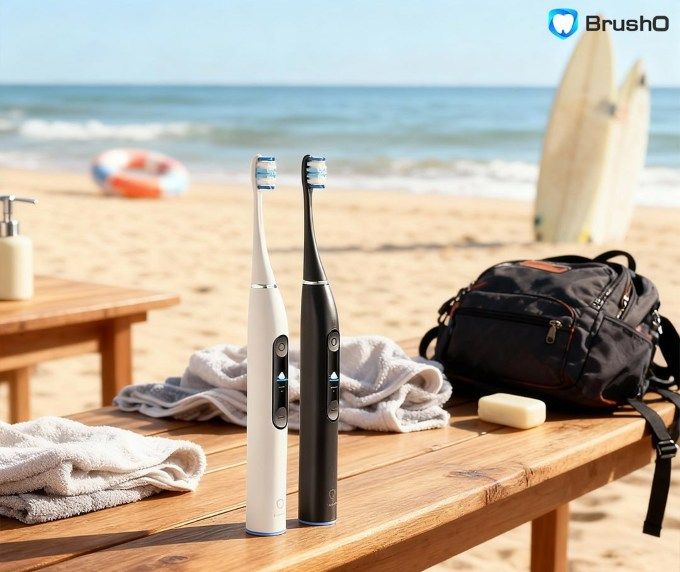
Most electric toothbrushes focus on speed and vibration, but leave technique entirely up to the user. Common problems include:
• Brushing too hard without realizing it
• Missing molars, inner surfaces, or the gumline
• Relying only on timers instead of actual coverage
• No way to measure or improve brushing quality
Over time, these issues can lead to gum irritation, plaque buildup, enamel wear, and frustration — even for users who brush twice a day.
BrushO was built around one core idea: better brushing comes from better feedback. Instead of guessing, BrushO uses AI-powered sensing and analysis to guide users in real time.
BrushO tracks pressure, movement, coverage, and brushing duration as you brush. If you press too hard or miss a zone, the toothbrush alerts you immediately — before bad habits cause damage.
Rather than relying on outdated 30-second quadrant timers, BrushO analyzes brushing paths across 6 zones and 16 tooth surfaces, ensuring true full-mouth cleaning.
After each session, users receive a brushing score and a visual report in the app. This helps identify patterns, track progress, and improve technique over time — something traditional brushes simply cannot offer.
Many users switch to BrushO after experiencing gum sensitivity or enamel wear. Pressure detection and adaptive feedback help prevent overbrushing while still ensuring effective plaque removal.
BrushO turns brushing into a habit you can actually improve. Streaks, scores, and progress tracking motivate consistency without guilt or reminders from others.
Households with multiple users often struggle with shared routines. BrushO solves this with:
• Personalized user profiles
• Visual brushing reports for parents and kids
• Gamified motivation that encourages children to brush properly
• Clear differentiation between users, even with the same model
This makes BrushO especially appealing for families looking to build healthier habits together.
People don’t switch to BrushO just for technology — they stay because they feel the difference:
• Cleaner teeth with fewer missed spots
• Healthier gums with less irritation
• More confidence in daily oral care
• A routine that feels guided, not mechanical
Once users experience brushing with real feedback, it’s hard to go back to guessing.
More users are switching to BrushO because it addresses what traditional toothbrushes ignore: how people actually brush. By combining AI guidance, real-time feedback, and habit-building insights, BrushO transforms brushing from a routine task into a smarter, healthier daily practice.
For users who want results — not just vibrations — BrushO represents a clear upgrade.
Jul 30
Jul 30
Jul 29
Jul 22
Jul 19
Jul 17

Hyperdontia is the presence of one or more teeth in excess of the normal dental formula, and the resulting teeth are described as supernumerary. The condition is common enough to appear in routine practice but variable enough in presentation that the decision to intervene is rarely straightforwar...

Few patients complete orthodontic treatment without asking whether their teeth will move back. The honest answer is that they will, to some degree, in the majority of cases. Relapse is not a failure of treatment but a predictable biological response, and understanding why it happens is the basis ...

The mandible is the largest and most frequently fractured bone of the facial skeleton, and its management sits at the interface between trauma surgery and restorative dentistry. Treatment has shifted over four decades from prolonged maxillomandibular fixation towards rigid internal fixation with ...

Chronic liver disease affects hundreds of millions of people worldwide, and its prevalence continues to rise with the epidemic of metabolic liver disease. The liver is central to haemostasis, drug metabolism and immune competence, and its failure therefore alters the risk profile of almost every ...

Excessive gingival display, commonly described as a gummy smile, is one of the most frequent aesthetic concerns presented to dental practitioners. The condition is not a single entity but a clinical presentation that can arise from skeletal, gingival, muscular or dental factors, and the treatment...

Drug-induced gingival overgrowth is a well-recognised adverse effect of several widely prescribed medications, and it remains one of the most common drug-related findings in periodontal practice. The condition produces firm, fibrous enlargement of the gingiva that can interfere with speech, masti...

Denture stomatitis is an inflammatory condition of the denture-bearing mucosa that affects a large proportion of removable prosthesis wearers, yet it is frequently dismissed as a cosmetic annoyance. The condition is driven by a Candida biofilm on the fitting surface of the prosthesis, and it is m...

Chronic kidney disease affects an estimated 850 million people worldwide, and the number of patients surviving on dialysis or with a renal transplant continues to rise. These patients carry an oral disease burden that is substantially higher than that of the general population, and their medical ...

Angular cheilitis is an inflammatory lesion of the labial commissures that presents with erythema, fissuring and crusting at the corners of the mouth. It is one of the most common conditions encountered in general dental practice, yet it is frequently treated as a simple fungal infection and allo...

Adverse reactions to dental materials are uncommon but they are not rare, and they are frequently misdiagnosed because the oral mucosa responds to allergens in a limited number of ways. A burning sensation, a persistent ulcer or an unexplained area of erythema may all represent a hypersensitivity...

Die BrushO KI-Elektrozahnbürste bietet Echtzeit-Anleitung, Druckfeedback, Abdeckungsverfolgung und Fortschrittsberichte in der App für eine sauberere tägliche Routine.
Die BrushO KI-Elektrozahnbürste bietet Echtzeit-Anleitung, Druckfeedback, Abdeckungsverfolgung und Fortschrittsberichte in der App für eine sauberere tägliche Routine.


Address: RM 1427, 14/F RADIO CITY 505, HENNESSY RD CAUSEWAY BAY, HONG KONG
Code: 000000
Phone: +852-53758652
Email: customerservice@brusho.com