
Jul 30
Jul 30
Jul 29
Jul 22
Jul 19
Jul 17
In modern oral care, brushing twice a day is the standard recommendation — but most people still miss critical areas, brush too hard, or develop inconsistent habits. Dental professionals are increasingly recommending smart toothbrushes that support better technique and real‑time feedback. Among them, BrushO stands out. From general dentists to specialists in periodontal care, many clinicians are recommending BrushO not just as a toothbrush, but as a tool to help patients improve habits that contribute to long‑term oral health.
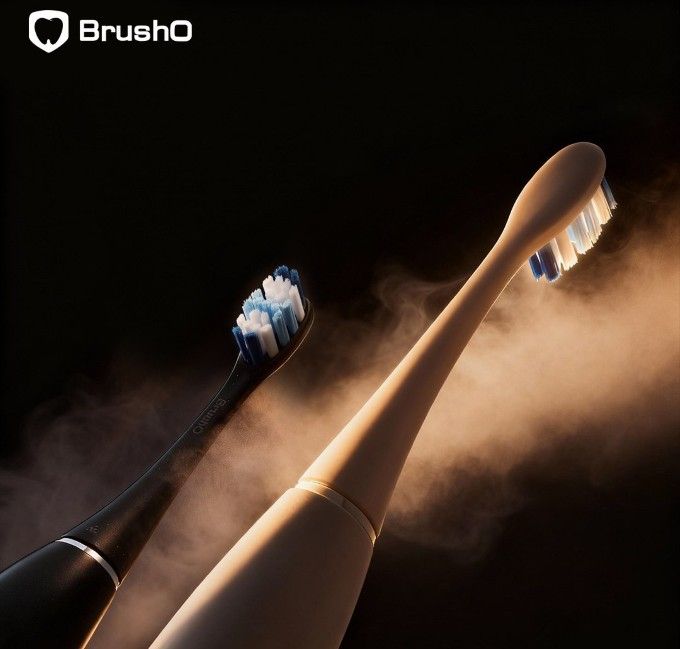
Dentists have long emphasized proper brushing technique, coverage, and pressure control — yet traditional electric or manual toothbrushes offer no feedback beyond basic timers. As a result, clinicians frequently see common issues such as:
• Gum irritation caused by aggressive brushing
• Plaque buildup in hard‑to‑reach areas
• Uneven brushing patterns
• Missed inner surfaces and molars
• Poor long‑term habit consistency
These are exactly the areas where dental professionals believe intervention — not just instruction — is most needed.
According to oral health professionals, BrushO helps close the gap between what patients think they are doing and what they are actually doing when brushing their teeth. Here’s what dentists are specifically highlighting:
Dentists report that patients often don’t realize they are brushing too hard or missing zones — until it’s too late. BrushO’s real‑time pressure guidance and coverage tracking help patients make corrections as they brush, which clinicians say can significantly reduce gum abrasion and plaque retention.
“Patients often think two minutes is enough, but they miss entire surfaces. A smart toothbrush like BrushO helps them see and correct that in real time.” — General Dentist.
Visual feedback — like heatmaps and brushing scores — helps patients understand where they’re falling short. Dentists say this transforms what used to be abstract advice into actionable insight.
“When patients see a brushing report, they immediately understand the problem areas. This accelerates habit change.” — Periodontal Specialist.
Too much pressure is a common cause of gingival recession and enamel wear. Dentists find that BrushO’s pressure sensors help patients develop a gentler, more effective brushing style — one that protects both gums and enamel.
“Teaching patients to use lighter pressure is hard without feedback. With BrushO, they learn without us having to repeat instructions at every visit.” — Family Dentist.
Clinicians frequently mention that compliance with oral care advice tends to drop over time. The gamified and visual elements of BrushO — daily scores, streaks, progress reports — help keep patients engaged and consistent.
“BrushO encourages patients to keep brushing well beyond the first few weeks, which matters greatly in preventive care.” — Dental Hygienist.
Dentists aren’t replacing routine professional care — but they’re increasingly adding smart brushing tools like BrushO to their preventive strategies.
• Professional cleanings every 6 months
• Flossing daily
• Brushing twice a day
• Monitoring periodontal health
• Using smart tools to reinforce home care techniques
BrushO supports these recommendations by helping patients execute them more effectively.
Beyond professionals, patients also notice the difference:
• They feel cleaner after brushing
• They see progress in their brushing scores
• They become more aware of missed zones
• They feel more motivated to maintain daily brushing
Many report fewer gum flare‑ups and better checkups after switching to BrushO.
Dental professionals value tools that help patients improve real‑world brushing — not just tell them what to do. BrushO’s real‑time guidance, pressure monitoring, and visual feedback turn everyday brushing into a guided training session, which clinicians say can reduce common oral health problems over time. For patients and clinicians alike, BrushO is more than a toothbrush — it’s part of a smarter, data‑driven approach to oral care.
BrushO is an AI‑powered smart toothbrush that provides real‑time pressure and coverage feedback, personalized brushing scores, heatmaps, and habit tracking. Designed to bridge the gap between dental advice and everyday brushing performance, BrushO empowers users to brush smarter and achieve healthier oral outcomes.
Jul 30
Jul 30
Jul 29
Jul 22
Jul 19
Jul 17

Hyperdontia is the presence of one or more teeth in excess of the normal dental formula, and the resulting teeth are described as supernumerary. The condition is common enough to appear in routine practice but variable enough in presentation that the decision to intervene is rarely straightforwar...

Few patients complete orthodontic treatment without asking whether their teeth will move back. The honest answer is that they will, to some degree, in the majority of cases. Relapse is not a failure of treatment but a predictable biological response, and understanding why it happens is the basis ...

The mandible is the largest and most frequently fractured bone of the facial skeleton, and its management sits at the interface between trauma surgery and restorative dentistry. Treatment has shifted over four decades from prolonged maxillomandibular fixation towards rigid internal fixation with ...

Chronic liver disease affects hundreds of millions of people worldwide, and its prevalence continues to rise with the epidemic of metabolic liver disease. The liver is central to haemostasis, drug metabolism and immune competence, and its failure therefore alters the risk profile of almost every ...

Excessive gingival display, commonly described as a gummy smile, is one of the most frequent aesthetic concerns presented to dental practitioners. The condition is not a single entity but a clinical presentation that can arise from skeletal, gingival, muscular or dental factors, and the treatment...

Drug-induced gingival overgrowth is a well-recognised adverse effect of several widely prescribed medications, and it remains one of the most common drug-related findings in periodontal practice. The condition produces firm, fibrous enlargement of the gingiva that can interfere with speech, masti...

Denture stomatitis is an inflammatory condition of the denture-bearing mucosa that affects a large proportion of removable prosthesis wearers, yet it is frequently dismissed as a cosmetic annoyance. The condition is driven by a Candida biofilm on the fitting surface of the prosthesis, and it is m...

Chronic kidney disease affects an estimated 850 million people worldwide, and the number of patients surviving on dialysis or with a renal transplant continues to rise. These patients carry an oral disease burden that is substantially higher than that of the general population, and their medical ...

Angular cheilitis is an inflammatory lesion of the labial commissures that presents with erythema, fissuring and crusting at the corners of the mouth. It is one of the most common conditions encountered in general dental practice, yet it is frequently treated as a simple fungal infection and allo...

Adverse reactions to dental materials are uncommon but they are not rare, and they are frequently misdiagnosed because the oral mucosa responds to allergens in a limited number of ways. A burning sensation, a persistent ulcer or an unexplained area of erythema may all represent a hypersensitivity...

BrushO AI Electric Toothbrush offers real-time brushing guidance, pressure feedback, coverage tracking, and app-based progress reports for a cleaner daily routine.
BrushO AI Electric Toothbrush offers real-time brushing guidance, pressure feedback, coverage tracking, and app-based progress reports for a cleaner daily routine.


Address: RM 1427, 14/F RADIO CITY 505, HENNESSY RD CAUSEWAY BAY, HONG KONG
Code: 000000
Phone: +852-53758652
Email: customerservice@brusho.com