
Jul 30
Jul 30
Jul 29
Jul 22
Jul 19
Jul 17
Breathing is automatic — but how you breathe has long-term consequences for your oral health. While nose breathing supports natural filtration, optimal humidity, and oral balance, chronic mouth breathing disrupts this harmony. It can lead to dry mouth, bad breath, tooth decay, and even facial development issues in children. This article explores the science behind both breathing methods and their impact on your teeth, gums, and brushing effectiveness.
Breathing might seem unrelated to dental care, but your airway choice has ripple effects on oral hygiene.
When you breathe through your mouth — whether due to nasal congestion, sleep posture, or habit — you expose your oral cavity to air unfiltered and unhumidified. This leads to:
• Dry mouth (xerostomia): Saliva production decreases, removing its natural cleaning and protective function.
• Bad breath: Lack of saliva lets bacteria flourish, especially anaerobic types that cause odor.
• Enamel erosion: Without sufficient moisture, enamel is more prone to wear and acid attacks.
• Gum inflammation: Dry tissues are more susceptible to bleeding, irritation, and plaque buildup.
Mouth breathing isn’t just a dental issue — it’s a whole-system concern that begins with the airway.
Breathing through your nose supports a healthy oral environment by:
• Humidifying air before it enters the throat and mouth
• Producing nitric oxide, a natural vasodilator that improves oxygen efficiency and may inhibit bad bacteria
• Promoting closed-mouth posture, which helps maintain jaw alignment and facial symmetry (especially important in children)
In short, nose breathing is a protective, supportive habit — for both oral and systemic health.
Nighttime mouth breathing is especially harmful. During sleep:
• Saliva production drops, intensifying dry mouth
• Bacteria accumulate without being naturally flushed away
• Bruxism (grinding) and snoring are more common among mouth breathers
Left unchecked, this can worsen periodontal conditions, increase cavity risk, and reduce brushing effectiveness.
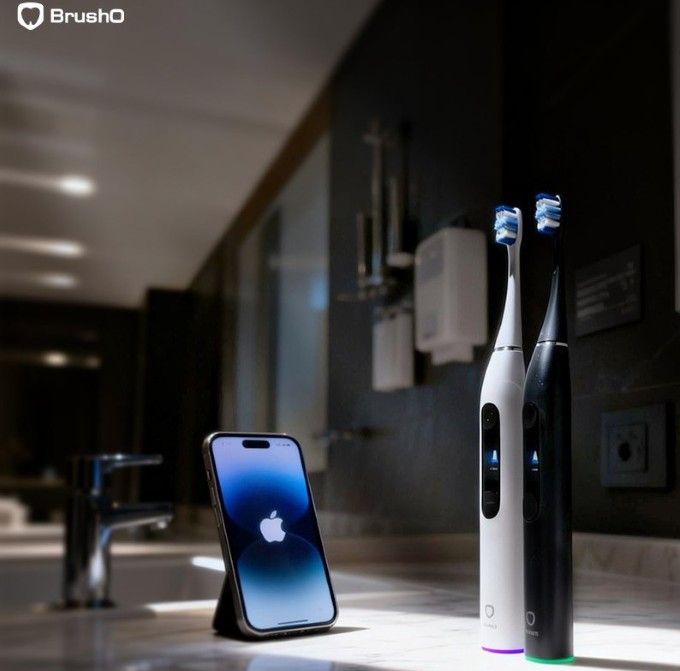
If you’re already a mouth breather, awareness is the first step. The next is oral hygiene that adapts to your condition. That’s where BrushO makes a difference:
BrushO ensures that every tooth and gumline is reached — even those often missed due to dry plaque buildup from open-mouth breathing.
Custom modes like Gum Care and Deep Clean accommodate sensitive, dry tissues that result from habitual mouth breathing.
If you mouth breathe during sleep, BrushO’s smart heatmaps help you correct missed spots in your morning routine, reducing accumulated bacteria.
With scoring, reminders, and app support, BrushO helps reinforce better oral hygiene behaviors — compensating for risks caused by poor breathing mechanics.
Children who mouth-breathe may develop:
• Narrower dental arches
• Misaligned teeth
• Higher cavity risk
Early detection and dental consultation are key. Encourage nasal breathing awareness and regular brushing with smart tools to reduce long-term risk.
Mouth breathing may seem harmless — but over time, it silently erodes oral health. From cavities to gum disease, the consequences are real. Prioritizing nasal breathing and combining it with precision brushing from BrushO can help restore balance and protect your smile.
Jul 30
Jul 30
Jul 29
Jul 22
Jul 19
Jul 17

Hyperdontia is the presence of one or more teeth in excess of the normal dental formula, and the resulting teeth are described as supernumerary. The condition is common enough to appear in routine practice but variable enough in presentation that the decision to intervene is rarely straightforwar...

Few patients complete orthodontic treatment without asking whether their teeth will move back. The honest answer is that they will, to some degree, in the majority of cases. Relapse is not a failure of treatment but a predictable biological response, and understanding why it happens is the basis ...

The mandible is the largest and most frequently fractured bone of the facial skeleton, and its management sits at the interface between trauma surgery and restorative dentistry. Treatment has shifted over four decades from prolonged maxillomandibular fixation towards rigid internal fixation with ...

Chronic liver disease affects hundreds of millions of people worldwide, and its prevalence continues to rise with the epidemic of metabolic liver disease. The liver is central to haemostasis, drug metabolism and immune competence, and its failure therefore alters the risk profile of almost every ...

Excessive gingival display, commonly described as a gummy smile, is one of the most frequent aesthetic concerns presented to dental practitioners. The condition is not a single entity but a clinical presentation that can arise from skeletal, gingival, muscular or dental factors, and the treatment...

Drug-induced gingival overgrowth is a well-recognised adverse effect of several widely prescribed medications, and it remains one of the most common drug-related findings in periodontal practice. The condition produces firm, fibrous enlargement of the gingiva that can interfere with speech, masti...

Denture stomatitis is an inflammatory condition of the denture-bearing mucosa that affects a large proportion of removable prosthesis wearers, yet it is frequently dismissed as a cosmetic annoyance. The condition is driven by a Candida biofilm on the fitting surface of the prosthesis, and it is m...

Chronic kidney disease affects an estimated 850 million people worldwide, and the number of patients surviving on dialysis or with a renal transplant continues to rise. These patients carry an oral disease burden that is substantially higher than that of the general population, and their medical ...

Angular cheilitis is an inflammatory lesion of the labial commissures that presents with erythema, fissuring and crusting at the corners of the mouth. It is one of the most common conditions encountered in general dental practice, yet it is frequently treated as a simple fungal infection and allo...

Adverse reactions to dental materials are uncommon but they are not rare, and they are frequently misdiagnosed because the oral mucosa responds to allergens in a limited number of ways. A burning sensation, a persistent ulcer or an unexplained area of erythema may all represent a hypersensitivity...

A escova elétrica BrushO com IA oferece orientação em tempo real, feedback de pressão, rastreamento de cobertura e relatórios de progresso no app para uma rotina diária mais limpa.
A escova elétrica BrushO com IA oferece orientação em tempo real, feedback de pressão, rastreamento de cobertura e relatórios de progresso no app para uma rotina diária mais limpa.


Address: RM 1427, 14/F RADIO CITY 505, HENNESSY RD CAUSEWAY BAY, HONG KONG
Code: 000000
Phone: +852-53758652
Email: customerservice@brusho.com