
Jul 30
Jul 30
Jul 29
Jul 22
Jul 19
Jul 17
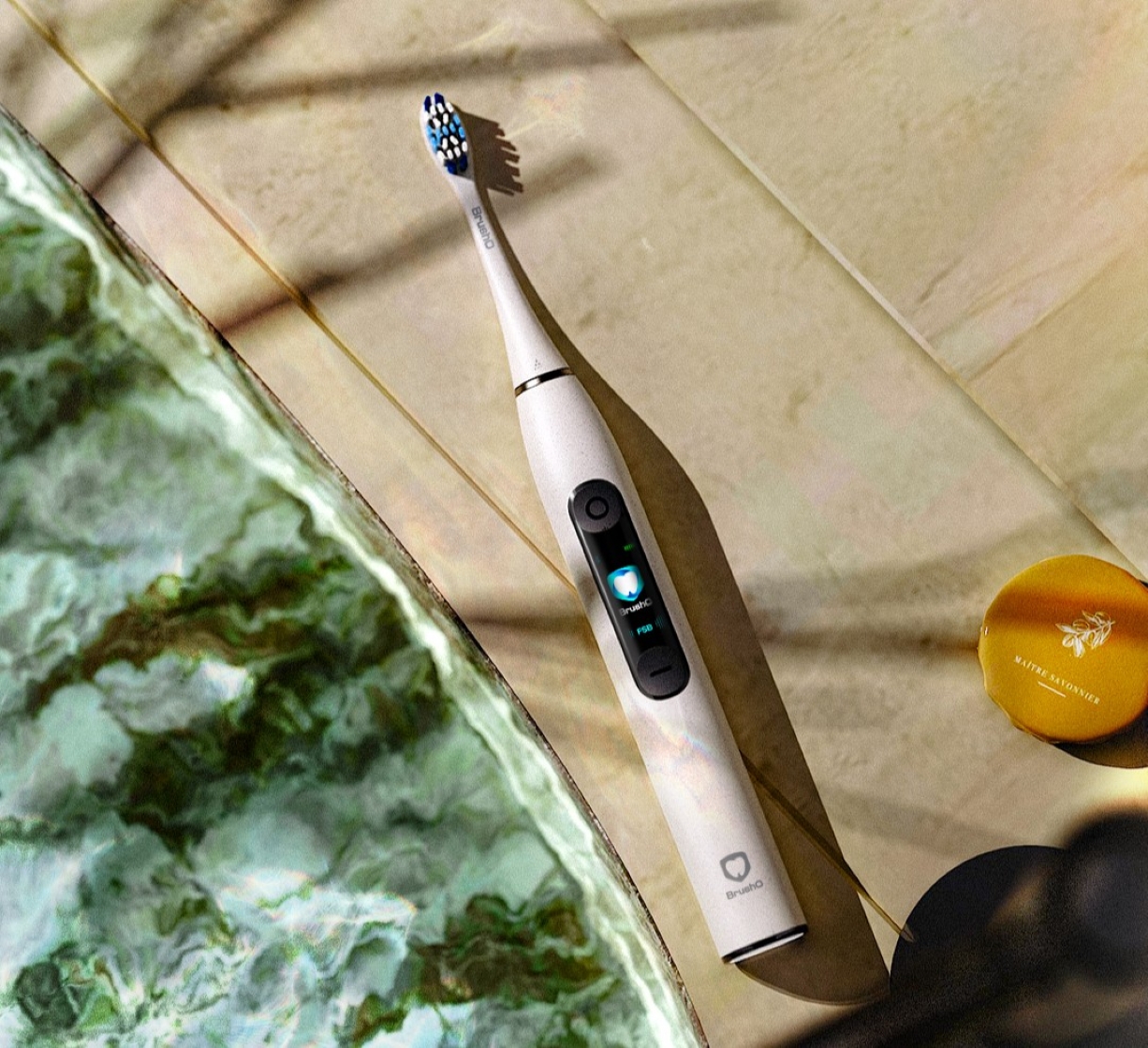
Over time, even premium brush heads wear down. Stiffness fades, bristles fray, and plaque removal power decreases. Regular replacement ensures:
✔️ Complete Plaque Clearance: Fresh end-rounded bristles effectively sweep away plaque at the gumline and interdental spaces.
✔️ Gum Protection: Intact filaments maintain gentle contact; frayed bristles can scratch or irritate.
✔️ Hygienic Freshness: Damp bristles can harbor bacteria; new heads reduce microbial buildup and risk of reinfection.
Trusted dental sources like the American Dental Association and MouthHealthy recommend changing brush heads every three to four months—or sooner if you see visible fraying. At BrushO, our wear-indicator stripe on middle and hard models provides a quick visual cue: when the pale-pink band fades significantly, it’s time for a replacement. This simple color fade aligns with clinical testing and helps you stay on schedule without guessing.
Fighting off a cold, flu, or stomach bug? Microbes can linger on bristles for days after recovery. To break the germ cycle and avoid reinfection, always swap in a new BrushO head once you’re symptom-free. We recommend keeping an extra head in your bathroom caddy or travel kit—so a clean, germ-free brush is always within reach.
With 11 brushing modes—from Standard and Gum-Care to Whitening and Deep-Clean—your usage pattern affects how quickly bristles wear:
✔️ Standard Daily Mode: Designed for gentle, everyday cleaning; most users find 3–4 months ideal.
✔️ Gum-Care & Sensitive Modes: Softer filaments deliver gentle pressure but may splay slightly faster—consider checking for wear at the 8–10 week mark.
✔️ Whitening & Deep-Clean Modes: Firmer filaments polish enamel and remove stains; check wear around 10–12 weeks to maintain peak efficacy.
Your BrushO app monitors head health and sends a “Head Replacement Recommended” alert based on actual wear indicators, so you replace exactly when needed.
Ready to swap? Follow these simple steps to install your fresh BrushO head:
1️⃣ Power Down: Turn off your BrushO handle.
2️⃣ Remove Old Head: Press the release button or twist the head off.
3️⃣ Attach New Head: Line up and slide or twist on a fresh BrushO head until it clicks securely.
4️⃣ Verify & Reset: Gently tug to confirm it’s locked in place, then open the BrushO app and tap “Reset Head Status” to restart your replacement tracker.
Proper storage extends bristle life and hygiene:
∙ Rinse Thoroughly: Flush bristles under running water to remove debris.
∙ Shake Excess Water: A quick flick removes moisture that could harbor bacteria.
∙ Dry Upright in Open Air: Avoid sealed holders until fully dry to prevent mold.
∙ Separate Multiple Heads: If sharing storage, keep brush heads apart to avoid cross-contamination.
Scenario Replace Every BrushO Reminder
Routine daily brushing 3–4 months Wear-indicator stripe + app alert
Gum-Care & Sensitive Modes ~2–2.5 months App alert when gentle filaments splay
Whitening & Deep-Clean Modes ~2.5–3 months App alert when firmer filaments show wear
After illness recovery Immediately Manual swap reminder in app
🛡️ With BrushO’s verified features—DuPont® Tynex® bristles, wear-indicator stripe, and data-driven app nudges—you can trust this guide to keep your brush head fresh and your oral care game strong.
📲 Learn more: www.brusho.com
👥 Join our community: t.me/BrushOcommunity
🛒 Try it now: AI-Powered + 40-day battery + 11 modes + IPX7 Waterproof
Aug 7
Aug 6
Jul 30
Jul 30
Jul 29
Jul 22
Jul 19
Jul 17

Fluoride in drinking water is the most cost-effective caries preventive measure in public health, and it is also the source of most avoidable fluoride exposure in young children. The balance between benefit and risk depends on concentration, on total intake from all sources and on the age of the ...

A mouthguard is the only piece of protective equipment that a dentist can prescribe, and the difference between the cheapest and the best version is often less than the cost of a single repair. This guide explains what each type of mouthguard actually protects, how to judge fit, and what to check...

Distinguishing reversible from irreversible pulpitis is the single most consequential decision in endodontic diagnosis, because one leads to a restoration and the other to root canal treatment or extraction. The distinction rests on symptoms and pulp testing rather than on radiographs alone, and ...

A pregnancy epulis is a benign overgrowth of gum tissue that appears during pregnancy, most often in the second or third trimester. It can alarm patients because it grows quickly and bleeds easily, yet in most cases it needs no surgery and settles after delivery. Understanding what drives the gro...

When several teeth are missing, the choice usually narrows to a removable partial denture or a fixed implant-supported restoration, and cost is the factor patients raise first. Upfront price is only part of the comparison, because the two options differ in maintenance, comfort, effects on neighbo...

Most root canal failures are not caused by inadequate cleaning of canals that were found, but by canals that were never located. Molar anatomy varies widely, and the variation is not random: specific teeth in specific populations have predictable additional canals. Knowing where they hide is the ...

Gum massage is one of the oldest recommendations in oral care and one of the least understood. It has been described as a treatment for bleeding gums, a route to firmer tissue and, more recently, a way to reduce brushing force. This article separates the mechanisms that are supported by physiolog...

Interdental cleaning is the part of oral hygiene most people abandon first, and the choice between a floss pick and a length of string floss is often made on convenience. Convenience matters, because a tool that is used daily outperforms a superior tool that stays in the drawer, but the two devic...

Dementia changes the way a denture is worn, cleaned and tolerated, and the people who notice the change first are usually family carers rather than clinicians. Poor denture hygiene in this group is associated with mucosal infection, reduced food intake and, in frail patients, respiratory complica...

Chewing tobacco keeps nicotine and plant irritants in prolonged contact with a small area of mucosa, and the damage that results is concentrated exactly where the quid is held. The lesions that develop are often painless, which is why they are discovered during routine examination rather than bec...

BrushO AI Electric Toothbrush offers real-time brushing guidance, pressure feedback, coverage tracking, and app-based progress reports for a cleaner daily routine.
BrushO AI Electric Toothbrush offers real-time brushing guidance, pressure feedback, coverage tracking, and app-based progress reports for a cleaner daily routine.


Address: RM 1427, 14/F RADIO CITY 505, HENNESSY RD CAUSEWAY BAY, HONG KONG
Code: 000000
Phone: +852-53758652
Email: customerservice@brusho.com