
Jul 30
Jul 30
Jul 29
Jul 22
Jul 19
Jul 17
Toothbrushing is essential for preventing plaque accumulation and maintaining oral health, yet improper brushing habits can cause microscopic surface damage known as micro-abrasions. These tiny enamel or dentin disruptions often develop gradually due to excessive pressure, abrasive toothpaste, stiff bristles, or incorrect angles. While invisible at first, repeated micro-abrasion contributes to sensitivity, enamel thinning, gum recession, and long-term structural wear. This article examines the biological mechanisms behind micro-abrasion formation, the risk factors associated with everyday brushing, and evidence-based strategies — including precision-guided smart brushing — that minimize damage while preserving effective plaque removal.
Micro-abrasions are microscopic scratches or disruptions on tooth surfaces resulting from mechanical friction.
They typically affect:
• Enamel outer layers
• Exposed dentin regions
• Cervical tooth areas near the gumline
Unlike acute damage, these changes accumulate incrementally through daily habits. Although enamel is the hardest biological substance in the body, it cannot regenerate once lost, making prevention critical.
Brushing applies mechanical energy across mineralized surfaces.
When excessive pressure is used:
• Bristles create localized stress points
• Hydroxyapatite crystals experience wear
• Surface irregularities form
Over time, repeated stress causes cumulative structural thinning.
Toothpaste contains cleaning agents that assist in stain removal.
Highly abrasive formulations:
• Increase surface friction
• Accelerate enamel wear
• Amplify dentin exposure risk
Abrasivity levels are measured through Relative Dentin Abrasivity (RDA) values.
Brush head design significantly affects micro-abrasion development.
Risk factors include:
• Hard bristles
• Aggressive scrubbing motion
• Narrow contact angles
These create uneven pressure distribution and increased surface damage probability.
Overbrushing is a primary contributor to:
• Enamel erosion
• Gum recession
• Cervical abrasion lesions
Many individuals apply force subconsciously believing it improves cleanliness.
Improper alignment against tooth surfaces can:
• Concentrate force along enamel edges
• Damage gum margins
• Miss plaque while harming tissues
Dentists typically recommend a ~45° angle toward the gumline.
Long brushing duration alone does not equal safety.
Extended aggressive brushing leads to:
• Cumulative surface wear
• Sensitivity development
• Increased root exposure
Technique precision outweighs time intensity.
Symptoms may include:
• Heightened temperature sensitivity
• Visible enamel dullness
• Notching near the gumline
• Gum margin recession
• Increased staining susceptibility
Because these changes develop slowly, they often go unnoticed until progression occurs.
Soft filaments distribute pressure evenly and reduce surface trauma.
Moderate RDA formulations support cleaning without excessive wear.
Gentle mechanical action removes plaque effectively without structural damage.
• 45° gumline angle
• Small circular motions
• Even zone coverage
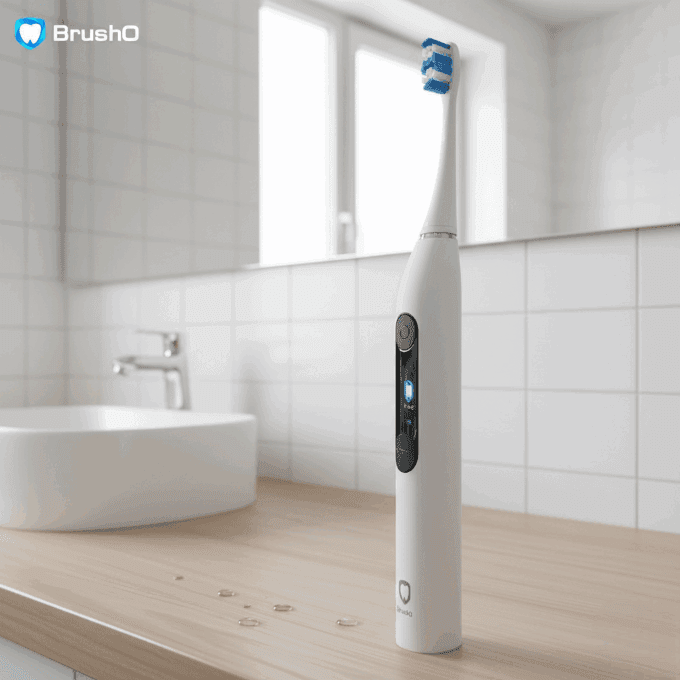
AI-guided systems like BrushO enhance protective brushing through:
• Pressure monitoring alerts
• Zone coverage mapping
• Technique feedback
• Habit consistency tracking
These capabilities reduce guesswork and encourage biomechanically optimal brushing patterns. Precision feedback ensures plaque removal while minimizing unnecessary mechanical stress on enamel and gum tissues.
Protecting against microscopic damage supports:
• Enamel longevity
• Reduced sensitivity risk
• Gum stability
• Structural tooth preservation
• Lower restorative dental intervention needs
Daily brushing should protect — not gradually degrade — oral structures.
Micro-abrasions illustrate how even beneficial habits can produce unintended biological consequences when technique is misaligned. Mechanical force, abrasive agents, and bristle dynamics interact continuously with tooth surfaces, shaping long-term dental resilience. By adopting controlled brushing methods and integrating feedback-driven tools, individuals can maintain optimal hygiene without compromising structural integrity. Effective oral care balances cleanliness with conservation — ensuring protection rather than progressive wear.
Feb 16
Feb 16
Jul 30
Jul 30
Jul 29
Jul 22
Jul 19
Jul 17

Hyperdontia is the presence of one or more teeth in excess of the normal dental formula, and the resulting teeth are described as supernumerary. The condition is common enough to appear in routine practice but variable enough in presentation that the decision to intervene is rarely straightforwar...

Few patients complete orthodontic treatment without asking whether their teeth will move back. The honest answer is that they will, to some degree, in the majority of cases. Relapse is not a failure of treatment but a predictable biological response, and understanding why it happens is the basis ...

The mandible is the largest and most frequently fractured bone of the facial skeleton, and its management sits at the interface between trauma surgery and restorative dentistry. Treatment has shifted over four decades from prolonged maxillomandibular fixation towards rigid internal fixation with ...

Chronic liver disease affects hundreds of millions of people worldwide, and its prevalence continues to rise with the epidemic of metabolic liver disease. The liver is central to haemostasis, drug metabolism and immune competence, and its failure therefore alters the risk profile of almost every ...

Excessive gingival display, commonly described as a gummy smile, is one of the most frequent aesthetic concerns presented to dental practitioners. The condition is not a single entity but a clinical presentation that can arise from skeletal, gingival, muscular or dental factors, and the treatment...

Drug-induced gingival overgrowth is a well-recognised adverse effect of several widely prescribed medications, and it remains one of the most common drug-related findings in periodontal practice. The condition produces firm, fibrous enlargement of the gingiva that can interfere with speech, masti...

Denture stomatitis is an inflammatory condition of the denture-bearing mucosa that affects a large proportion of removable prosthesis wearers, yet it is frequently dismissed as a cosmetic annoyance. The condition is driven by a Candida biofilm on the fitting surface of the prosthesis, and it is m...

Chronic kidney disease affects an estimated 850 million people worldwide, and the number of patients surviving on dialysis or with a renal transplant continues to rise. These patients carry an oral disease burden that is substantially higher than that of the general population, and their medical ...

Angular cheilitis is an inflammatory lesion of the labial commissures that presents with erythema, fissuring and crusting at the corners of the mouth. It is one of the most common conditions encountered in general dental practice, yet it is frequently treated as a simple fungal infection and allo...

Adverse reactions to dental materials are uncommon but they are not rare, and they are frequently misdiagnosed because the oral mucosa responds to allergens in a limited number of ways. A burning sensation, a persistent ulcer or an unexplained area of erythema may all represent a hypersensitivity...

BrushO AI Electric Toothbrush offers real-time brushing guidance, pressure feedback, coverage tracking, and app-based progress reports for a cleaner daily routine.
BrushO AI Electric Toothbrush offers real-time brushing guidance, pressure feedback, coverage tracking, and app-based progress reports for a cleaner daily routine.


Address: RM 1427, 14/F RADIO CITY 505, HENNESSY RD CAUSEWAY BAY, HONG KONG
Code: 000000
Phone: +852-53758652
Email: customerservice@brusho.com