
Jul 30
Jul 30
Jul 29
Jul 22
Jul 19
Jul 17
Choosing between hard and soft bristles might seem minor, but it can greatly impact your oral health. Most dental professionals recommend soft bristles for safe, effective daily cleaning. Toothbrushes come in all shapes and sizes—but one of the most important choices you’ll make is the type of bristles. While hard bristles may seem like the logical choice for a better scrub, they can often do more harm than good. In this post, we’ll break down the difference between hard and soft bristles, what dentists really recommend, and why BrushO uses advanced soft bristle technology to provide a thorough yet gentle clean.
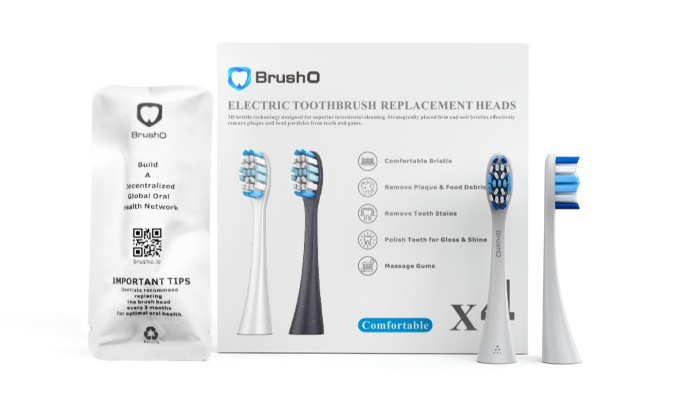
• Hard bristles are firmer and less flexible, giving the impression of a more aggressive clean. They can be useful for scrubbing heavily stained teeth occasionally, but they also come with a higher risk of damaging enamel and gums.
• Soft bristles, on the other hand, bend more easily and are designed to be gentle on gums and tooth surfaces. They’re far better suited for daily use, especially when used with proper technique and smart brushing feedback.
✅ BrushO Insight: All BrushO brush heads use soft, high-density bristles to ensure safe, effective plaque removal—without harming enamel or irritating gums.
Many people assume that harder bristles clean better. In reality, hard bristles can:
• Cause gum recession over time
• Wear down enamel, especially when paired with abrasive toothpaste
• Irritate sensitive areas or dental work like crowns, fillings, or braces
Unless specifically advised by your dentist for short-term use, hard bristles are generally discouraged for daily brushing.
According to the American Dental Association (ADA) and most dental professionals, soft bristles are not only effective but safer for everyday brushing. They:
• Remove plaque effectively without damaging soft tissues
• Adapt better to tooth contours, especially around the gumline
• Are suitable for children, older adults, and anyone with gum sensitivity or recession
The effectiveness of soft bristles increases significantly when paired with smart brushing features. BrushO takes this to the next level:
• FSB Technology adjusts pressure in real-time to prevent overbrushing
• App guidance alerts you if you’re pressing too hard
• Custom brushing modes adapt to your oral health goals—plaque removal, whitening, or sensitivity care
This means you can confidently use soft bristles, knowing you’re still getting a dentist-level clean with none of the risk.
| Bristle Type | Pros | Cons |
| Hard | May remove stubborn stains | Damages enamel, hurts gums, not dentist-recommended for daily use |
| Soft | Gentle, effective, safe for daily use, recommended by dentists | May feel “too gentle” to some, but smart tech enhances performance |
💡 Verdict: Soft bristles are the best long-term choice, especially when enhanced by smart feedback from a toothbrush like BrushO.
BrushO uses soft, rounded bristles in all its brush heads, engineered to be:
• Safe for daily use
• Effective at removing plaque and debris
• Long-lasting (each head lasts up to 3 months)
• Eco-conscious (with lifetime free replacements through our Brush & Earn program)
Combined with AI-powered pressure control and brushing zone guidance, BrushO ensures that soft bristles don’t mean weak results—they mean smarter oral care.
The type of toothbrush bristles you choose may seem trivial—but it directly affects your enamel, gum health, and long-term oral hygiene. Soft bristles, paired with smart brushing habits and tech like BrushO, deliver the safest, most effective results. Make the smarter choice, and let your brush work for—not against—your smile.
BrushO is a next-generation health technology brand focused on transforming daily oral care. Our AI-powered smart toothbrushes use soft, high-performance bristles and real-time brushing feedback to ensure every user enjoys a dentist-approved clean—safely and sustainably.
Nov 10
Nov 10
Jul 30
Jul 30
Jul 29
Jul 22
Jul 19
Jul 17

Trigeminal neuralgia (TN), also known as tic douloureux, is a chronic orofacial pain disorder characterized by recurrent, unilateral, brief, electric shock-like pain in the distribution of one or more divisions of the trigeminal nerve. It is widely regarded as one of the most severe pain conditions

Tooth whitening has become one of the most sought-after elective dental procedures worldwide. With increasing emphasis on facial aesthetics, a bright, white smile is now widely perceived as a marker of health, youth, and social confidence. This article provides a comprehensive review of contemporary

The edentulous posterior maxilla presents unique challenges for implant rehabilitation due to the pneumatization of the maxillary sinus and the progressive resorption of the alveolar ridge following tooth loss. Sinus floor elevation, or sinus lift surgery, is a predictable and well-documented surgic

Photodynamic therapy (PDT) is a minimally invasive therapeutic modality that combines a photosensitizing agent, light of a specific wavelength, and molecular oxygen to produce cytotoxic reactive oxygen species. Originally developed for oncological applications, PDT has been increasingly adopted in d

The introduction of temporary anchorage devices (TADs) has fundamentally transformed orthodontic treatment by providing skeletal anchorage that is independent of patient compliance. TADs, also known as mini-implants or miniscrews, enable tooth movements that were previously impossible or required co

Dental caries remains one of the most prevalent chronic diseases worldwide, disproportionately affecting children, elderly populations, and communities with limited access to conventional restorative care. The traditional restorative approach requires expensive equipment, cooperative patients, and m

Platelet-rich fibrin (PRF), a second-generation platelet concentrate, has emerged as one of the most widely adopted autologous biomaterials in contemporary dentistry and oral surgery. Developed by Dr. Joseph Choukroun and colleagues in France in 2001, PRF represents a conceptual evolution from first

The transition from conventional to digital impressions represents one of the most significant technological shifts in contemporary dentistry. Intraoral scanners (IOS) have evolved from experimental prototypes in the 1980s to sophisticated clinical instruments that now rival and, in several key metr

Gingival recession, defined as the apical migration of the gingival margin beyond the cementoenamel junction with exposure of the root surface, is a prevalent condition affecting a substantial proportion of the adult population. Epidemiological studies report that approximately 50% of adults exhibit

Cone beam computed tomography (CBCT) has revolutionized endodontic diagnosis and treatment planning by providing three-dimensional imaging that overcomes the inherent limitations of conventional periapical radiography. While two-dimensional radiographs remain the first-line imaging modality for endo


Address: RM 1427, 14/F RADIO CITY 505, HENNESSY RD CAUSEWAY BAY, HONG KONG
Code: 000000
Phone: +852-53758652
Email: customerservice@brusho.com
