
Jul 30
Jul 30
Jul 29
Jul 22
Jul 19
Jul 17
Sugar is widely recognized as a leading contributor to tooth decay, yet environmental dryness may pose an equally significant — and often overlooked — threat. Dry air reduces saliva production, weakening the mouth’s natural defense system responsible for neutralizing acids, repairing enamel, and controlling harmful bacteria. When oral hydration drops, plaque becomes more aggressive and enamel more vulnerable, creating conditions that accelerate cavity formation even without high sugar intake. Understanding this physiological relationship helps individuals adopt preventative strategies and leverage advanced oral-care technologies to protect long-term dental health.
Sugar contributes to tooth decay by feeding acid-producing bacteria. However, cavities develop when protective mechanisms fail, not just when sugar is present.
Key protective mechanisms include:
• Saliva buffering acids
• Mineral replenishment of enamel
• Mechanical cleansing of food particles
• Microbial balance regulation
Dry air disrupts all of these defenses simultaneously, amplifying decay risk regardless of diet.
Saliva functions as the mouth’s primary protective system.
Saliva buffers pH levels, preventing prolonged enamel exposure to acid.
Calcium and phosphate in saliva repair microscopic enamel damage.
Antimicrobial proteins regulate harmful microbial populations.
Prevents plaque adhesion and bacterial concentration.
When saliva production decreases, these protections weaken dramatically.
Dry environments accelerate evaporation from mucosal surfaces, reducing saliva availability.
Common triggers:
• Air conditioning
• Indoor heating
• Airplane travel
• Seasonal climate shifts
• Low-humidity workplaces
Low moisture allows bacteria to concentrate, producing acids more efficiently and remaining in contact with enamel longer.
Without sufficient remineralization support, enamel microdamage accumulates, progressing toward decay.
While sugar initiates bacterial acid production, dry air:
• Prolongs acid exposure
• Reduces neutralization
• Weakens enamel repair
• Enhances bacterial density
This combination creates a compounding effect that may accelerate cavity formation beyond dietary factors alone.
• Persistent dry mouth sensation
• Sticky or thick saliva
• Increased sensitivity
• Frequent plaque accumulation
• Cracked lips or tongue discomfort
• Elevated cavity occurrence
Early awareness enables preventive intervention.
• Drink water regularly
• Use humidifiers in dry seasons
• Avoid excessive caffeine or alcohol
• Sugar-free gum
• Fiber-rich foods
• Proper chewing habits
Removing bacterial biofilm becomes even more critical when natural defenses weaken.
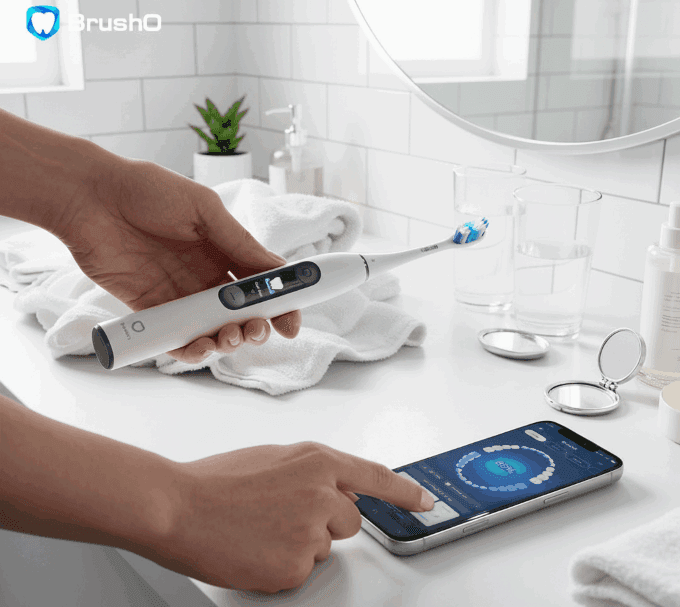
Smart brushing technologies such as BrushO enhance protection through:
• Pressure control protecting enamel
• Zone tracking eliminating bacterial buildup
• Habit analytics identifying risk patterns
• Adaptive brushing modes for sensitive conditions
These features compensate for reduced natural oral defenses.
Environmental factors are increasingly recognized as contributors to dental disease progression. Maintaining hydration, monitoring environmental exposure, and implementing intelligent brushing systems provide a comprehensive defense strategy against cavity development.
Sugar remains a well-known cavity trigger, but dry air undermines the biological systems that protect teeth daily. By reducing saliva effectiveness, altering bacterial dynamics, and weakening enamel repair mechanisms, low humidity environments create conditions that accelerate tooth decay. Adopting hydration awareness, consistent hygiene practices, and data-guided oral care solutions such as BrushO helps restore protective balance and maintain long-term dental resilience. Protecting your teeth isn’t just about limiting sugar — it’s about supporting the environment your mouth depends on to stay healthy.
Jul 30
Jul 30
Jul 29
Jul 22
Jul 19
Jul 17

Hyperdontia is the presence of one or more teeth in excess of the normal dental formula, and the resulting teeth are described as supernumerary. The condition is common enough to appear in routine practice but variable enough in presentation that the decision to intervene is rarely straightforwar...

Few patients complete orthodontic treatment without asking whether their teeth will move back. The honest answer is that they will, to some degree, in the majority of cases. Relapse is not a failure of treatment but a predictable biological response, and understanding why it happens is the basis ...

The mandible is the largest and most frequently fractured bone of the facial skeleton, and its management sits at the interface between trauma surgery and restorative dentistry. Treatment has shifted over four decades from prolonged maxillomandibular fixation towards rigid internal fixation with ...

Chronic liver disease affects hundreds of millions of people worldwide, and its prevalence continues to rise with the epidemic of metabolic liver disease. The liver is central to haemostasis, drug metabolism and immune competence, and its failure therefore alters the risk profile of almost every ...

Excessive gingival display, commonly described as a gummy smile, is one of the most frequent aesthetic concerns presented to dental practitioners. The condition is not a single entity but a clinical presentation that can arise from skeletal, gingival, muscular or dental factors, and the treatment...

Drug-induced gingival overgrowth is a well-recognised adverse effect of several widely prescribed medications, and it remains one of the most common drug-related findings in periodontal practice. The condition produces firm, fibrous enlargement of the gingiva that can interfere with speech, masti...

Denture stomatitis is an inflammatory condition of the denture-bearing mucosa that affects a large proportion of removable prosthesis wearers, yet it is frequently dismissed as a cosmetic annoyance. The condition is driven by a Candida biofilm on the fitting surface of the prosthesis, and it is m...

Chronic kidney disease affects an estimated 850 million people worldwide, and the number of patients surviving on dialysis or with a renal transplant continues to rise. These patients carry an oral disease burden that is substantially higher than that of the general population, and their medical ...

Angular cheilitis is an inflammatory lesion of the labial commissures that presents with erythema, fissuring and crusting at the corners of the mouth. It is one of the most common conditions encountered in general dental practice, yet it is frequently treated as a simple fungal infection and allo...

Adverse reactions to dental materials are uncommon but they are not rare, and they are frequently misdiagnosed because the oral mucosa responds to allergens in a limited number of ways. A burning sensation, a persistent ulcer or an unexplained area of erythema may all represent a hypersensitivity...

Электрическая зубная щетка BrushO с ИИ дает подсказки в реальном времени, обратную связь по давлению, отслеживание покрытия и отчеты о прогрессе в приложении для более чистой ежедневной рутины.
Электрическая зубная щетка BrushO с ИИ дает подсказки в реальном времени, обратную связь по давлению, отслеживание покрытия и отчеты о прогрессе в приложении для более чистой ежедневной рутины.


Address: RM 1427, 14/F RADIO CITY 505, HENNESSY RD CAUSEWAY BAY, HONG KONG
Code: 000000
Phone: +852-53758652
Email: customerservice@brusho.com