
Jul 30
Jul 30
Jul 29
Jul 22
Jul 19
Jul 17
Vitamin supplements are widely consumed to support immunity, energy levels, and overall wellness. However, many chewable, gummy, and effervescent formulas contain acids that can unintentionally harm dental enamel. Prolonged exposure to low pH compounds softens tooth surfaces, disrupts remineralization, and accelerates erosion — often without noticeable symptoms in early stages. Understanding how acidic supplements interact with oral biology allows individuals to balance nutritional goals with dental protection. Strategic brushing routines, hydration, and advanced smart-brushing technologies can significantly reduce long-term damage risk.
Many vitamin products are engineered for rapid absorption or palatability, which often involves acidic formulations such as:
• Ascorbic acid (Vitamin C)
• Citric acid stabilizers
• Flavoring acids
• Effervescent carbonation agents
These compounds lower oral pH levels, temporarily softening enamel and increasing susceptibility to mechanical wear and bacterial attack.
Unlike dietary acids consumed during meals, supplements are often taken:
• Between meals
• Before bed
• Without rinsing afterward
This increases enamel exposure time.
When pH drops below critical thresholds (~5.5), enamel minerals begin dissolving, weakening structural integrity.
Brushing immediately after acidic exposure can remove softened enamel layers, accelerating long-term thinning.
Acidic environments encourage plaque bacteria that thrive in low pH conditions, elevating cavity risk.
As enamel erodes, dentin exposure leads to temperature sensitivity and discomfort.
Remain in direct contact with teeth, prolonging acid exposure.
Sticky texture traps acids and sugars along gumlines and molars.
Carbonation and acidity lower oral pH rapidly.
Extended sipping increases exposure duration.
Capsules and swallowed tablets generally pose minimal dental risk.
• Increased tooth sensitivity
• Surface dullness or translucency
• Edge thinning
• Yellowing from dentin visibility
• Higher plaque retention
Early recognition allows preventive adjustments before irreversible erosion develops.
• Consume supplements with meals
• Avoid bedtime use
• Reduce frequency of exposure
• Rinse with water afterward
• Chew sugar-free gum
• Maintain hydration
Wait 30–60 minutes before brushing to allow enamel remineralization.
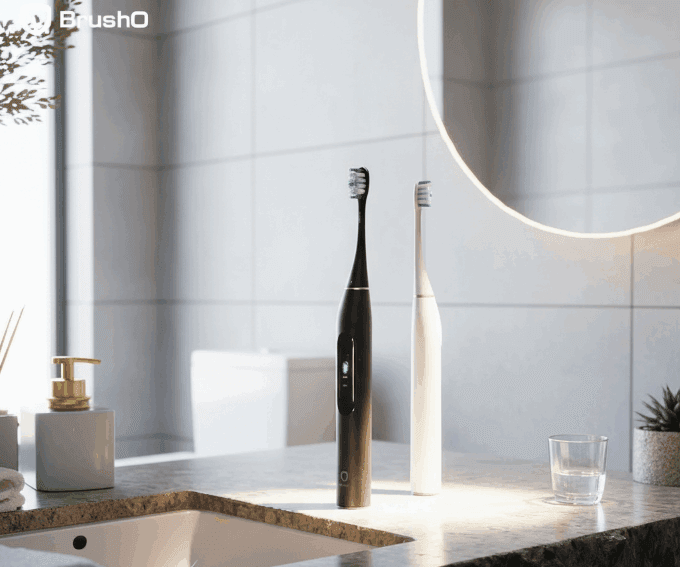
Smart brushing tools such as BrushO enhance enamel protection through:
• Pressure monitoring prevents abrasion
• Zone mapping eliminating plaque accumulation
• Personalized brushing modes for sensitivity
• Habit analytics identifying risk behaviors
These capabilities support enamel stability while maintaining hygiene effectiveness.
Modern wellness habits increasingly include supplements, yet oral impact awareness remains limited.
Balancing nutritional benefits with dental protection requires:
• Education on acidity exposure
• Preventive brushing behavior
• Intelligent oral-care technology integration
This approach ensures overall wellness does not come at the cost of enamel integrity.
Acidic vitamin supplements can unintentionally contribute to enamel erosion, sensitivity, and cavity risk when consumed improperly. The damage arises not from nutrients themselves, but from formulation acidity and exposure patterns. By adjusting timing, rinsing appropriately, delaying brushing, and utilizing guided smart-brushing systems such as BrushO, individuals can maintain both nutritional and dental health. Supporting your body should never compromise your smile — informed oral care ensures both thrive together.
Feb 6
Feb 6
Jul 30
Jul 30
Jul 29
Jul 22
Jul 19
Jul 17

Hyperdontia is the presence of one or more teeth in excess of the normal dental formula, and the resulting teeth are described as supernumerary. The condition is common enough to appear in routine practice but variable enough in presentation that the decision to intervene is rarely straightforwar...

Few patients complete orthodontic treatment without asking whether their teeth will move back. The honest answer is that they will, to some degree, in the majority of cases. Relapse is not a failure of treatment but a predictable biological response, and understanding why it happens is the basis ...

The mandible is the largest and most frequently fractured bone of the facial skeleton, and its management sits at the interface between trauma surgery and restorative dentistry. Treatment has shifted over four decades from prolonged maxillomandibular fixation towards rigid internal fixation with ...

Chronic liver disease affects hundreds of millions of people worldwide, and its prevalence continues to rise with the epidemic of metabolic liver disease. The liver is central to haemostasis, drug metabolism and immune competence, and its failure therefore alters the risk profile of almost every ...

Excessive gingival display, commonly described as a gummy smile, is one of the most frequent aesthetic concerns presented to dental practitioners. The condition is not a single entity but a clinical presentation that can arise from skeletal, gingival, muscular or dental factors, and the treatment...

Drug-induced gingival overgrowth is a well-recognised adverse effect of several widely prescribed medications, and it remains one of the most common drug-related findings in periodontal practice. The condition produces firm, fibrous enlargement of the gingiva that can interfere with speech, masti...

Denture stomatitis is an inflammatory condition of the denture-bearing mucosa that affects a large proportion of removable prosthesis wearers, yet it is frequently dismissed as a cosmetic annoyance. The condition is driven by a Candida biofilm on the fitting surface of the prosthesis, and it is m...

Chronic kidney disease affects an estimated 850 million people worldwide, and the number of patients surviving on dialysis or with a renal transplant continues to rise. These patients carry an oral disease burden that is substantially higher than that of the general population, and their medical ...

Angular cheilitis is an inflammatory lesion of the labial commissures that presents with erythema, fissuring and crusting at the corners of the mouth. It is one of the most common conditions encountered in general dental practice, yet it is frequently treated as a simple fungal infection and allo...

Adverse reactions to dental materials are uncommon but they are not rare, and they are frequently misdiagnosed because the oral mucosa responds to allergens in a limited number of ways. A burning sensation, a persistent ulcer or an unexplained area of erythema may all represent a hypersensitivity...

BrushO AI Electric Toothbrush offers real-time brushing guidance, pressure feedback, coverage tracking, and app-based progress reports for a cleaner daily routine.
BrushO AI Electric Toothbrush offers real-time brushing guidance, pressure feedback, coverage tracking, and app-based progress reports for a cleaner daily routine.


Address: RM 1427, 14/F RADIO CITY 505, HENNESSY RD CAUSEWAY BAY, HONG KONG
Code: 000000
Phone: +852-53758652
Email: customerservice@brusho.com