
Jul 30
Jul 30
Jul 29
Jul 22
Jul 19
Jul 17
This guide answers the most Googled questions about smart and electric toothbrushes—backed by science, real-life results, and our own BrushO technology.
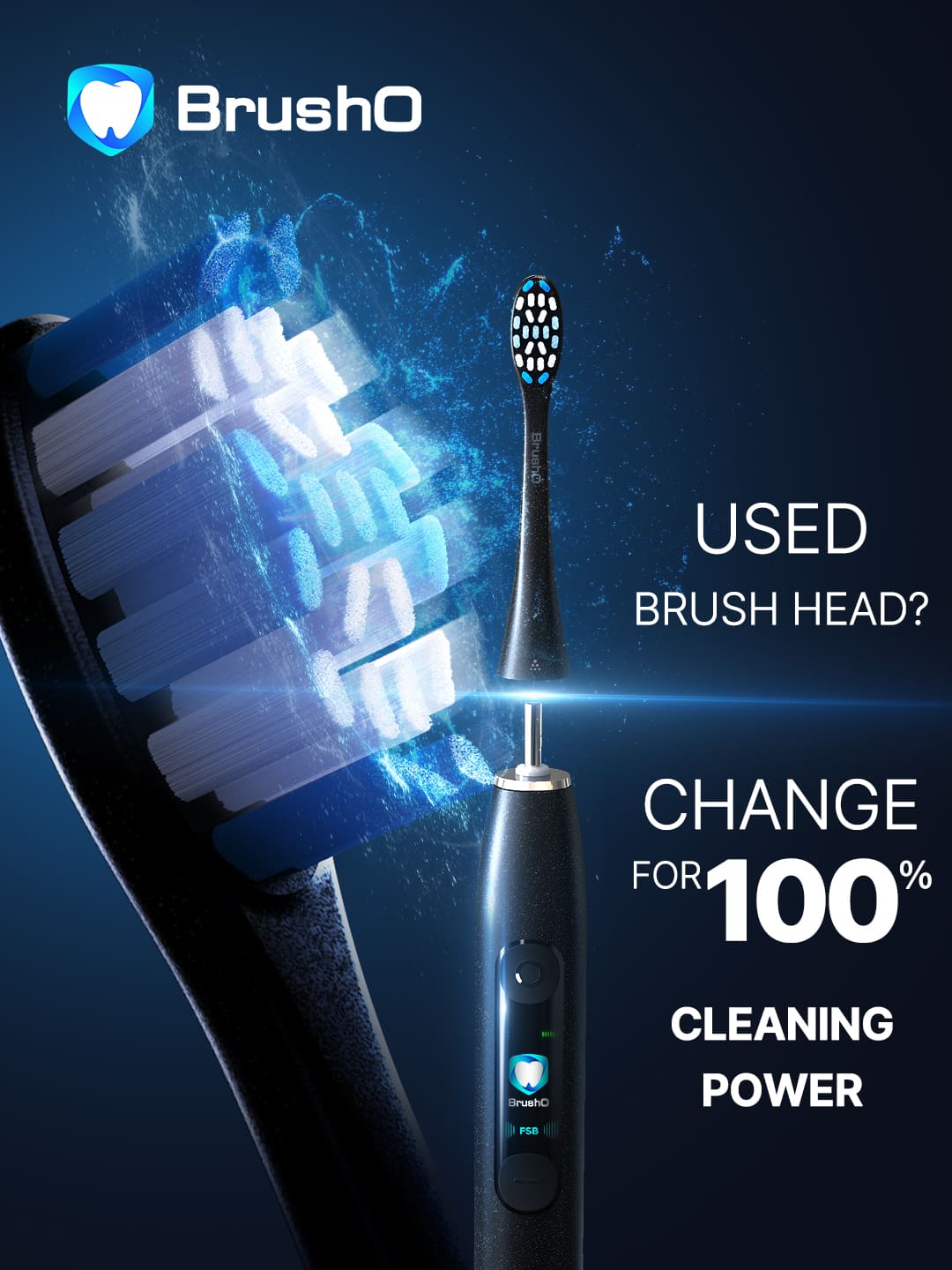
Short answer: Yes—but not in the way you might think.
Electric toothbrushes don't bleach your teeth like whitening strips or dental treatments. Instead, they improve whitening by:
High-frequency sonic vibrations (like BrushO's 40,000+ strokes/minute) help break up stains caused by coffee, wine, and smoking far more effectively than manual brushes.
The consistent power and advanced brush head design make it easier to clean between teeth and around the gumline—places where stains often start.
Many smart electric toothbrushes (including BrushO) include a "whitening" mode that increases speed and duration in targeted areas to gently polish enamel without damaging it.
Real Talk: Whitening with an electric toothbrush is a gradual, safe process. You'll notice a visible difference in brightness and cleanliness within 2–4 weeks of consistent use.
The AutoBrush and similar “mouthpiece-style” toothbrushes claim to clean all teeth at once. But here’s what the evidence shows:
Because they brush all teeth simultaneously with soft silicone bristles, they often miss plaque in between teeth and along the gumline.
Several dental studies and reviews have found that these devices don’t clean as effectively as traditional electric brushes—especially in critical zones.
Verdict: While convenient, most auto-cleaning toothbrushes do not meet clinical cleaning standards. If you want thorough cleaning, choose a smart electric toothbrush with a guided routine.
A smart toothbrush—like BrushO—isn’t just an electric brush with extra buttons. It’s a personalized oral care assistant designed to improve how (and how well) you brush.
AI-Powered Brushing Feedback
Detects your brushing angle, pressure, and coverage in real time.
Leakage & Splatter Protection (FSB Mode)
Stops the brush from splattering toothpaste if it’s turned on accidentally or removed mid-brush.
Custom Brushing Modes
With BrushO, you get 9 modes, including 3 customizable ones that let you adjust intensity, speed, and duration.
App Syncing
Tracks your brushing habits, highlights missed zones, and gives you a brushing “score” after every session.
Smart Timers & Zone Reminders
Helps you brush evenly across all mouth sections, avoiding over-brushing or missed spots.
If you care about your oral health—and want a smarter, more efficient way to maintain it—the answer is absolutely yes.
Here’s why users are switching to smart brushes like BrushO:
|
Traditional Brush |
Smart Toothbrush (BrushO) |
|
Manual, guess-based |
AI feedback + brushing guidance |
|
No data or reminders |
App tracking & improvement tips |
|
Easy to skip areas |
Smart zone timers, alerts |
|
One-speed fits all |
9 modes for different needs |
|
No whitening support |
Built-in whitening mode |
In the long run, a smart toothbrush may actually save you money by preventing cavities, gum issues, and expensive dental treatments.
“I didn't realize I was brushing wrong for years—until BrushO showed me exactly what I was missing.”
— A BrushO user, 2025
A smart toothbrush doesn’t just vibrate—it thinks. It gives you real-time feedback, customized care, and an experience tailored to your mouth. You brush better. You brush safer. And over time, you smile brighter.
Whether you're trying to whiten your teeth, clean more effectively, or just stop guessing with your routine—BrushO brings intelligence into every brushstroke.
Ready to upgrade to smarter oral care?
➡️ Try BrushO today and start brushing like it’s 2025.
Jul 30
Jul 30
Jul 29
Jul 22
Jul 19
Jul 17

When the same quadrant keeps showing weaker brushing on weekends, the issue is usually routine drift rather than random forgetfulness. Repeated misses reveal where sleep changes, social plans, and looser timing are bending the same brushing sequence each week.

Brushing without watching the mirror can expose whether your pressure stays controlled or rises when visual reassurance disappears. The exercise helps people notice hidden overpressure, uneven route confidence, and which surfaces get scrubbed harder when the hand starts guessing.

Marginal ridges on premolars help support the crown when chewing forces slide sideways instead of straight down. When those ridges wear or break, the tooth can become more vulnerable to food packing, cracks, and uneven pressure.

Dry office air can quietly reduce saliva and leave gum margins feeling tight or stingy by late afternoon. The problem is often less about dramatic disease and more about long hours of mouth dryness, light plaque retention, and irritated tissue edges.

A citrus sparkling drink with dinner can keep enamel in a softened state longer than people expect, especially when the can is sipped slowly. The problem is often repeated acidic contact, not one dramatic drink.

The curved neck of a tooth changes how chewing and brushing forces leave enamel near the gumline. That helps explain why the cervical area can feel sensitive, wear faster, and react strongly when pressure, acidity, and gum changes overlap.

Missed lunch brushing often hides inside normal work routines instead of feeling like a conscious choice. Time logs, calendar gaps, and daily patterns can reveal where the habit breaks down and why simple awareness often fixes more than extra motivation does.

Warm tea can feel soothing at first, but repeated sipping can keep a small canker sore active by extending heat, dryness, acidity, and friction across already irritated tissue. The problem is often the sipping pattern, not the tea alone.

A retainer can look freshly cleaned and still pick up old residue from its case. When moisture, biofilm, and handling build up inside the container, the case can quietly place plaque back onto the appliance each time it is stored.

Pulp horns extend higher inside the crown than many people realize, which helps explain why small wear, chips, or cavities can become sensitive faster than expected. Surface damage and inner anatomy are often closer neighbors than they appear from outside.

Электрическая зубная щетка BrushO с ИИ дает подсказки в реальном времени, обратную связь по давлению, отслеживание покрытия и отчеты о прогрессе в приложении для более чистой ежедневной рутины.
Электрическая зубная щетка BrushO с ИИ дает подсказки в реальном времени, обратную связь по давлению, отслеживание покрытия и отчеты о прогрессе в приложении для более чистой ежедневной рутины.


Address: RM 1427, 14/F RADIO CITY 505, HENNESSY RD CAUSEWAY BAY, HONG KONG
Code: 000000
Phone: +852-53758652
Email: customerservice@brusho.com