
Jul 30
Jul 30
Jul 29
Jul 22
Jul 19
Jul 17
Many people treat flossing as an optional step in their oral care routine, but is it really? While brushing removes plaque from tooth surfaces, flossing addresses areas your toothbrush simply can’t reach. In this article, we explore the clinical benefits of flossing, the long-term consequences of skipping it, and how even smart brushing tools like BrushO recognize its complementary role in full-mouth hygiene. Spoiler: Yes, flossing really makes a difference — and here’s why.
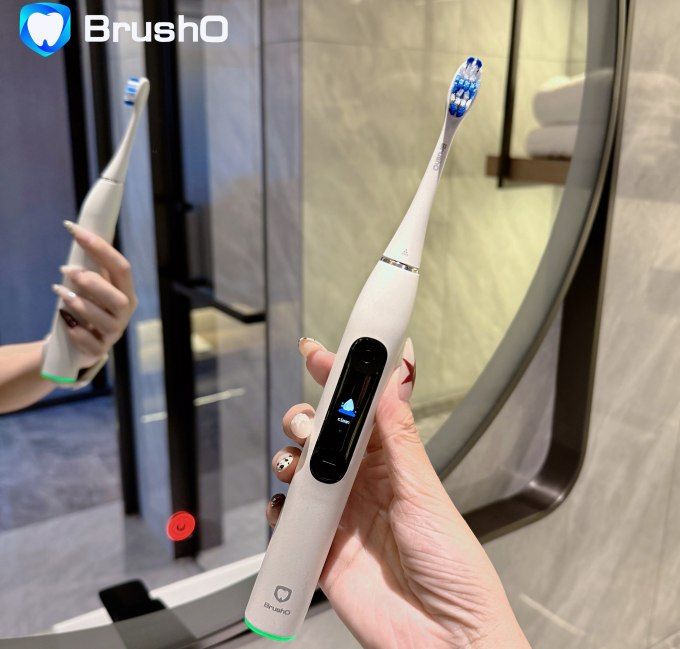
While brushing cleans the outer, inner, and chewing surfaces of your teeth, interdental spaces (the tight spots between teeth) often remain untouched. These areas account for nearly 35% of your total tooth surface — meaning over a third of your mouth is left vulnerable if you don’t floss.
Plaque is a sticky biofilm that accumulates quickly between teeth. If not removed, it:
• Hardens into tartar (calculus)
• Triggers gum inflammation (gingivitis)
• Leads to cavities in hard-to-reach areas
The first sign of neglecting flossing is often bleeding gums — a hallmark of early-stage gingivitis. Left untreated, this can escalate to periodontitis, which leads to:
• Gum recession
• Tooth mobility or even tooth loss
• Bad breath and chronic inflammation
Without flossing, plaque and food particles get stuck between teeth, creating the ideal environment for acid-producing bacteria. This leads to:
• Cavities between molars (often undetected until pain arises)
• Expensive dental interventions such as fillings or crowns
Emerging research shows a strong link between poor flossing habits and systemic inflammation. Periodontal disease has been associated with:
• Heart disease
• Diabetes complications
• Pregnancy risks (e.g., low birth weight, premature delivery)
Many assume that advanced toothbrushes — like BrushO with FSB smart zone tracking and AI-guided pressure detection — can replace flossing. But even the most sophisticated brushes can’t dislodge debris from tight interdental contacts.
Dentists agree: brushing + flossing work together, not as substitutes.
Doing it right is as important as doing it at all. Here’s a quick guide:
1. Use 18–24 inches of floss, winding most around your middle fingers.
2. Hold the floss tightly and gently guide it between teeth with a sawing motion.
3. Curve it into a “C” shape against the tooth and slide beneath the gumline.
4. Repeat for each tooth, using a clean section each time.
Pro Tip: Floss before brushing — it helps fluoride reach between teeth more effectively.
If string floss feels cumbersome, try:
• Floss picks (for convenience, though less effective around the gumline)
• Water flossers (great for sensitive gums and braces)
• Interdental brushes (effective for larger gaps and back teeth)
BrushO’s app also integrates with oral care routines that remind users to floss and track frequency — encouraging full-mouth discipline.
So, does flossing really make a difference? Absolutely.
It’s not just a dentist’s cliché — it’s a science-backed necessity. Flossing once a day:
• Prevents gum disease
• Reduces risk of interproximal cavities
• Supports better systemic health
• Enhances the effectiveness of brushing tools like BrushO
In the long run, flossing saves you from costly dental procedures and supports a healthier smile — one small string at a time.
Dec 29
Dec 29
Jul 30
Jul 30
Jul 29
Jul 22
Jul 19
Jul 17

The uncontrolled hypertension is the condition that the dental practice meets in the patient who presents with the elevated pressure that the guideline does not permit for the elective treatment, and the management of this patient requires the deferral of the dental procedure and the referral to ...

The closure of the extraction space in the orthodontic treatment is the phase that demands the careful selection of the mechanics and the monitoring of the force that the appliance delivers. The sliding mechanics that rely on the continuous archwire and the power chain that connects the brackets ...

The transverse discrepancy of the maxilla is the problem that the crowding and the posterior crossbite often hide, and the maxillary expansion is the treatment that addresses the width of the arch rather than the position of the individual tooth. The clinician who diagnoses the constriction early...

The local anaesthesia is the daily procedure that the modern dentistry treats as the routine, and the complications that follow it range from the transient and the trivial to the permanent and the serious. The clinician who injects by the habit without the anatomy in the mind is the clinician who...

The hypertension is the condition that the dental practice meets in the every day, and the patient who carries the elevated pressure without the symptoms is the patient who presents the risk that the chair-side measurement reveals. The dental team occupies the position that no other profession ho...

The glass-ceramic crown has become the default restoration for the anterior and the many posterior teeth, and the material selection within the family is the decision that determines the strength, the aesthetics, and the longevity of the result. The lithium disilicate, the leucite, and the zircon...

The dental phobia is the extreme form of the dental fear that prevents the patient from attending the treatment that the oral health requires, and the management of the phobia demands the skill that extends beyond the routine behaviour guidance. The systematic desensitization, the exposure therap...

The dental fear of the child is the condition that shapes the attitude for the lifetime, and the clinician who manages the first visits with the skill builds the patient who attends the recall without the dread. The fear that the child develops follows the many sources, and the practice that reco...

The patient with controlled hypertension is the patient who requires the dental care that the oral health demands and the treatment that the blood pressure permits, and the clinician who manages the controlled case safely follows the guideline that the evidence supports. The controlled hypertensi...

The ceramic veneer is the restoration that the aesthetic dentistry depends on, and the bond that retains the veneer on the enamel is the critical link that determines whether the restoration survives the function or fractures and debonds. The clinical technique from the preparation to the cementa...

A escova elétrica BrushO com IA oferece orientação em tempo real, feedback de pressão, rastreamento de cobertura e relatórios de progresso no app para uma rotina diária mais limpa.
A escova elétrica BrushO com IA oferece orientação em tempo real, feedback de pressão, rastreamento de cobertura e relatórios de progresso no app para uma rotina diária mais limpa.


Address: RM 1427, 14/F RADIO CITY 505, HENNESSY RD CAUSEWAY BAY, HONG KONG
Code: 000000
Phone: +852-53758652
Email: customerservice@brusho.com