
Jul 30
Jul 30
Jul 29
Jul 22
Jul 19
Jul 17
Many people think oral health ends with teeth and gums, but science now shows that chronic oral inflammation can directly impact how clearly you think, how well you remember, and how focused you feel. Gum disease allows inflammatory chemicals and bacteria to enter the bloodstream, triggering immune responses that affect blood flow to the brain, nerve signaling, and even long-term cognitive decline. This article explains the biological connection between inflamed gums and brain fog, why memory suffers when oral bacteria spread systemically, and how precision brushing with smart technology like BrushO helps protect both your mouth and your mind.
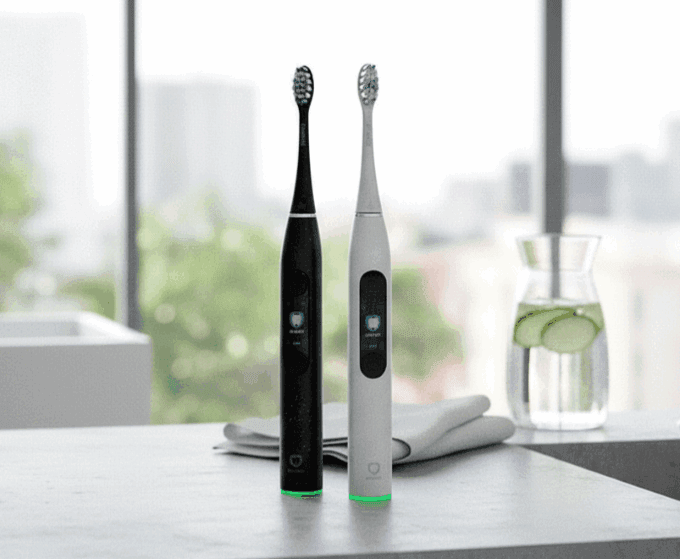
Your mouth is one of the most bacteria-dense environments in the human body. When your gums are healthy, they act as a sealed barrier. When they become inflamed, that barrier breaks down. Inflamed gums allow oral bacteria and inflammatory molecules to enter the bloodstream, where they travel to vital organs — including the brain.
This process triggers what scientists call systemic inflammation, which is now strongly linked to:
• Brain fog
• Memory lapses
• Slower thinking
• Mood changes
• Long-term neurodegeneration
In other words, your gums directly affect how your brain works.
Gum disease is not just a local problem. It produces cytokines, chemical messengers of inflammation, which circulate through the body.
When these inflammatory signals reach the brain, they:
• Reduce blood flow to neural tissue
• Disrupt neurotransmitter balance
• Damage the blood-brain barrier
• Interfere with oxygen and glucose delivery
This leads to brain fog — the feeling of mental sluggishness, poor focus, and memory gaps many people experience without realizing their mouth is involved.
Certain mouth bacteria are especially dangerous to the brain. When plaque and gum disease go untreated, bacteria such as Porphyromonas gingivalis release toxins that have been found inside brain tissue in Alzheimer’s patients.
These bacteria:
• Trigger immune overreaction
• Damage neurons
• Accelerate plaque formation in the brain
• Increase risk of dementia
That means poor oral hygiene can literally speed up memory decline.
Most people brush — but not effectively.
Common mistakes include:
• Skipping gumline zones
• Brushing too hard and causing micro-injury
• Missing molars where inflammation begins
• Uneven coverage that allows bacteria to thrive
These invisible habits allow chronic gum inflammation to continue even when teeth look clean.
This is where smart brushing changes everything. BrushO uses AI-driven oral mapping to prevent the inflammation that damages your brain.
It provides:
• Pressure monitoring so you don’t injure gums
• 6-zone, 16-surface tracking to eliminate missed areas
• Real-time feedback to stop inflammation before it spreads
• Habit reports that show long-term gum trends
By eliminating hidden plaque and calming gum inflammation, BrushO helps block inflammatory signals from ever reaching your brain.
Healthy gums = clearer thinking.
If you experience these together, your gums may be the cause:
• Chronic brain fog
• Frequent forgetfulness
• Morning fatigue
• Gum bleeding
• Bad breath
• Tooth sensitivity
These are not separate problems — they are part of the same inflammatory cycle.
Untreated oral inflammation doesn’t just cause cavities.
It increases the risk of:
• Alzheimer’s disease
• Stroke
• Depression
• Cognitive decline
• Chronic fatigue
Your toothbrush is not just a hygiene tool — it is a neurological defense system.
Your mouth is the gateway to your brain. When gum inflammation is ignored, it quietly floods your body with inflammatory signals that cloud your mind and weaken your memory. With precision-guided brushing from BrushO, you don’t just protect your smile — you protect your mental clarity, memory, and long-term cognitive health. Your brain deserves better brushing. 🧠🪥
Feb 4
Feb 4
Jul 30
Jul 30
Jul 29
Jul 22
Jul 19
Jul 17

Hyperdontia is the presence of one or more teeth in excess of the normal dental formula, and the resulting teeth are described as supernumerary. The condition is common enough to appear in routine practice but variable enough in presentation that the decision to intervene is rarely straightforwar...

Few patients complete orthodontic treatment without asking whether their teeth will move back. The honest answer is that they will, to some degree, in the majority of cases. Relapse is not a failure of treatment but a predictable biological response, and understanding why it happens is the basis ...

The mandible is the largest and most frequently fractured bone of the facial skeleton, and its management sits at the interface between trauma surgery and restorative dentistry. Treatment has shifted over four decades from prolonged maxillomandibular fixation towards rigid internal fixation with ...

Chronic liver disease affects hundreds of millions of people worldwide, and its prevalence continues to rise with the epidemic of metabolic liver disease. The liver is central to haemostasis, drug metabolism and immune competence, and its failure therefore alters the risk profile of almost every ...

Excessive gingival display, commonly described as a gummy smile, is one of the most frequent aesthetic concerns presented to dental practitioners. The condition is not a single entity but a clinical presentation that can arise from skeletal, gingival, muscular or dental factors, and the treatment...

Drug-induced gingival overgrowth is a well-recognised adverse effect of several widely prescribed medications, and it remains one of the most common drug-related findings in periodontal practice. The condition produces firm, fibrous enlargement of the gingiva that can interfere with speech, masti...

Denture stomatitis is an inflammatory condition of the denture-bearing mucosa that affects a large proportion of removable prosthesis wearers, yet it is frequently dismissed as a cosmetic annoyance. The condition is driven by a Candida biofilm on the fitting surface of the prosthesis, and it is m...

Chronic kidney disease affects an estimated 850 million people worldwide, and the number of patients surviving on dialysis or with a renal transplant continues to rise. These patients carry an oral disease burden that is substantially higher than that of the general population, and their medical ...

Angular cheilitis is an inflammatory lesion of the labial commissures that presents with erythema, fissuring and crusting at the corners of the mouth. It is one of the most common conditions encountered in general dental practice, yet it is frequently treated as a simple fungal infection and allo...

Adverse reactions to dental materials are uncommon but they are not rare, and they are frequently misdiagnosed because the oral mucosa responds to allergens in a limited number of ways. A burning sensation, a persistent ulcer or an unexplained area of erythema may all represent a hypersensitivity...

BrushO AI इलेक्ट्रिक टूथब्रश रियल-टाइम ब्रशिंग गाइड, प्रेशर फीडबैक, कवरेज ट्रैकिंग और ऐप-आधारित प्रगति रिपोर्ट देता है, ताकि आपकी दैनिक दिनचर्या अधिक साफ और समझने योग्य बने।
BrushO AI इलेक्ट्रिक टूथब्रश रियल-टाइम ब्रशिंग गाइड, प्रेशर फीडबैक, कवरेज ट्रैकिंग और ऐप-आधारित प्रगति रिपोर्ट देता है, ताकि आपकी दैनिक दिनचर्या अधिक साफ और समझने योग्य बने।


Address: RM 1427, 14/F RADIO CITY 505, HENNESSY RD CAUSEWAY BAY, HONG KONG
Code: 000000
Phone: +852-53758652
Email: customerservice@brusho.com