
Jul 30
Jul 30
Jul 29
Jul 22
Jul 19
Jul 17
Gum disease, also known as periodontal disease, is a silent threat that often starts without pain or visible symptoms. However, if left untreated, it can progress to advanced stages, leading to tooth loss and even systemic health complications. Recognizing the earliest signs—such as bleeding gums, bad breath, and subtle inflammation—is crucial for timely treatment and long-term oral health. In this article, we explore the telltale signs of gum disease, what causes it, and how BrushO’s smart brushing system can help you monitor and prevent it. Whether you’ve experienced occasional gum irritation or want to stay ahead of potential problems, understanding the warning signs can empower you to act before it’s too late.
Gum disease typically begins with gingivitis, an early-stage inflammation of the gums caused by plaque buildup. Without intervention, it can progress to periodontitis, which affects the bone that supports your teeth. While early gum disease is reversible, advanced stages may cause irreversible damage.
Bleeding is one of the most obvious and early warning signs. It signals inflammation and irritation from plaque and bacteria near the gum line.
Gum disease causes a buildup of harmful bacteria, releasing foul-smelling compounds. If bad breath lingers despite good hygiene, it could be more than just diet.
Healthy gums are pink and firm. If you notice redness, puffiness, or sensitivity, this may be due to localized inflammation.
Gum recession may indicate tissue damage. If your teeth look longer than before or you feel gaps at the base, your gums may be receding.
As gums pull away and bone support weakens, your teeth may feel more sensitive or even begin to shift.
• Poor oral hygiene
• Skipping nightly brushing
• Using improper brushing techniques
• Smoking or tobacco use
• Genetic predisposition
• Health conditions like diabetes
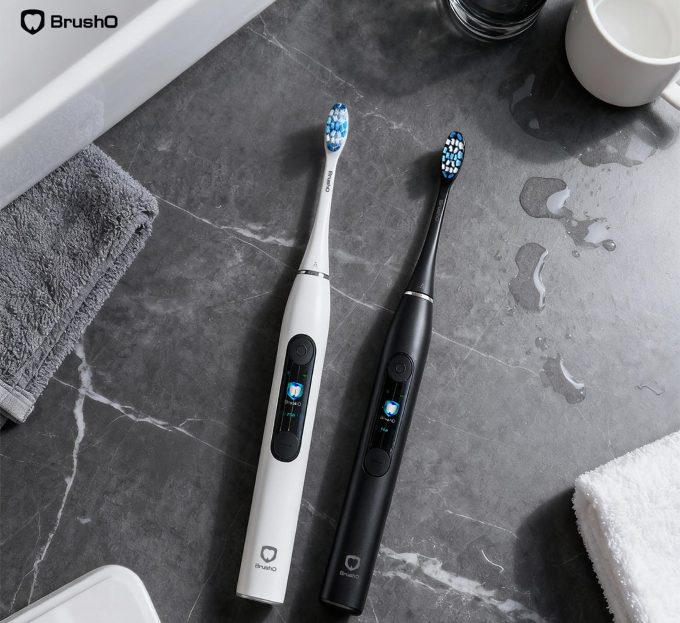
BrushO’s AI-powered smart toothbrush offers unique features that support gum health monitoring:
• Pressure Sensors: Alerts you when brushing too hard, protecting delicate gum tissue.
• Surface Coverage Analysis: Detects neglected areas near the gum line—where plaque thrives.
• Real-Time Feedback and Reports: Provides reminders and brushing scores to help improve gum care consistency.
• Smart App Integration: Visual charts show brushing coverage and help track problem areas over time.
By improving technique and coverage, BrushO reduces the likelihood of plaque buildup and gum inflammation.
If you experience:
• Consistent gum bleeding
• Gum pain or receding gums
• Wobbly teeth or changes in bite
It’s time to consult a dentist. Early professional intervention can prevent irreversible damage.
• Brush at least twice daily using a pressure-sensitive smart toothbrush like BrushO
• Floss or use interdental brushes daily
• Avoid smoking
• Use fluoride toothpaste
• Visit your dentist for checkups every 6 months
Gum disease doesn’t have to be inevitable. With awareness, the right tools, and timely action, you can detect the early signs before they develop into something serious. BrushO empowers users with real-time feedback and actionable data to take control of their gum health—making every brush a preventive step toward a healthier smile.
Nov 18
Nov 18
Jul 30
Jul 30
Jul 29
Jul 22
Jul 19
Jul 17

<p class="lead">Peri-implant mucositis is the most common biological complication of dental implant therapy, affecting a substantial proportion of patients within the first decade of function. Although it is reversible when caught early, untreated mucositis can progress to peri-implantitis and ev...

<p class="lead">Oral leukoplakia is the most common oral potentially malignant disorder, presenting as a white plaque that cannot be scraped off and cannot be attributed to any other definable disease. Because a proportion of these lesions undergo malignant transformation to squamous cell carcino...

<p class="lead">Odontogenic cysts are among the most common lesions of the jaws, arising from epithelial remnants of tooth development. Although most are benign and asymptomatic, they can expand silently, destroy bone, displace teeth, and occasionally undergo neoplastic transformation. Understand...

<p class="lead">Full-mouth occlusal rehabilitation is one of the most demanding procedures in restorative dentistry, requiring the reconstruction of worn, broken, or missing teeth while restoring a stable and functional bite. Success depends less on the materials chosen than on a disciplined diag...

<p class="lead">Dental implants have transformed restorative dentistry, with survival rates exceeding 95 percent in many long-term studies. Yet implant failure remains a clinical reality, and when it occurs, it demands a systematic approach to diagnosis and management. Understanding the causes of...

An overview of internal and external tooth resorption, covering the underlying mechanisms, clinical and radiographic diagnosis, and treatment options for preserving affected teeth.

A guide to post and core restorations for endodontically treated teeth, covering post selection, preparation principles, and techniques to minimize root fracture risk.

An overview of oral candidiasis, including its clinical forms, predisposing factors, diagnostic methods, and antifungal management strategies.

A guide to interceptive orthodontics, explaining when early treatment is beneficial, common problems addressed in the mixed dentition, and the timing of intervention.

An overview of crown lengthening surgery, covering indications, surgical techniques, biologic width considerations, and esthetic outcomes.

La brosse à dents électrique BrushO avec IA offre un guidage en temps réel, un retour sur la pression, un suivi de la couverture et des rapports de progression dans l’app pour une routine quotidienne plus propre.
La brosse à dents électrique BrushO avec IA offre un guidage en temps réel, un retour sur la pression, un suivi de la couverture et des rapports de progression dans l’app pour une routine quotidienne plus propre.


Address: RM 1427, 14/F RADIO CITY 505, HENNESSY RD CAUSEWAY BAY, HONG KONG
Code: 000000
Phone: +852-53758652
Email: customerservice@brusho.com