
Jul 30
Jul 30
Jul 29
Jul 22
Jul 19
Jul 17
If you struggle with stubborn acne, jawline breakouts, or inflamed skin, the cause may not be your skincare routine — it may be your mouth. Modern research shows a powerful connection between oral bacteria, systemic inflammation, and skin health. Gum disease, plaque buildup, and oral infections release inflammatory molecules and bacteria into the bloodstream, which can trigger hormonal imbalances, immune reactions, and clogged pores. In this article, you’ll learn how oral health quietly influences skin breakouts, why brushing technique matters more than you think, and how AI-powered brushing with BrushO helps reduce inflammatory triggers that damage both your teeth and your skin.
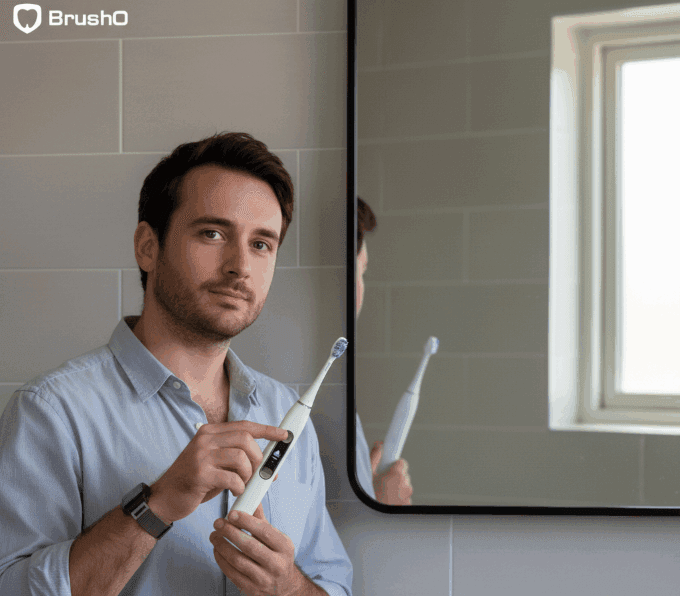
Your mouth is one of the largest bacterial ecosystems in your body. When oral bacteria are controlled, your immune system stays balanced. When they are not, inflammation spreads far beyond the mouth.
Oral bacteria can:
• Enter the bloodstream through inflamed gums
• Trigger immune responses
• Increase systemic inflammation
• Disrupt hormones linked to acne
• Promote skin oil overproduction
This is why dermatologists increasingly view oral health as part of acne management.
Gum disease (gingivitis and periodontitis) creates chronic inflammation. Inflammatory molecules such as cytokines and endotoxins travel through the blood and reach the skin.
This can cause:
• Red, painful breakouts
• Jawline and chin acne
• Hormonal acne flares
• Slow-healing blemishes
• Increased oil production
This is especially common in people who:
• Bleeds when brushing
• Have chronic bad breath
• Have gum sensitivity
• Have plaque buildup near the gumline
Certain oral bacteria produce toxins that:
• Stress the immune system
• Increase insulin resistance
• Raise cortisol levels
• Promote inflammation in hair follicles
This creates the perfect environment for acne-causing bacteria (like Cutibacterium acnes) to thrive.
That’s why people with:
• Gum disease
• Tooth infections
• Chronic plaque
often experience persistent breakouts even with expensive skincare.
Most people miss critical areas when brushing — especially the gumline and back teeth. These zones harbor the most bacteria.
When plaque stays:
• Toxins leak into the bloodstream
• Inflammation rises
• Skin flare-ups increase
Simply brushing twice a day is not enough — coverage and pressure matter.
BrushO is designed to eliminate the hidden bacterial zones that drive both oral disease and skin inflammation.
BrushO protects skin health by:
• 6-Zone × 16-Surface tracking so no bacteria are left behind
• Pressure sensors to prevent gum injury that allows bacteria into the bloodstream
• Real-time guidance to clean the gumline thoroughly
• Daily reports that reveal chronic missed areas
• Habit reinforcement so bacteria never get the upper hand
By lowering oral inflammation, BrushO helps calm the immune triggers that cause acne.
You may have an oral-skin imbalance if you experience:
• Acne along the jaw or cheeks
• Bad breath despite brushing
• Bleeding gums
• Puffy or sensitive gums
• Frequent canker sores
These are signs of chronic oral inflammation affecting your whole body.
1. Use BrushO nightly to remove gumline bacteria
2. Floss to eliminate trapped toxins
3. Use alcohol-free fluoride rinse
4. Stay hydrated to support saliva
5. Avoid late-night sugar
Your skin often improves within weeks once oral inflammation drops.
Clear skin does not start in a bottle — it starts in your mouth. Oral bacteria and gum inflammation quietly drive systemic inflammation that shows up as acne, redness, and breakouts. When you control your oral microbiome, your skin can finally heal. With BrushO’s AI-powered brushing, you protect both your smile and your complexion — every night.
Feb 4
Feb 4
Jul 30
Jul 30
Jul 29
Jul 22
Jul 19
Jul 17

Hyperdontia is the presence of one or more teeth in excess of the normal dental formula, and the resulting teeth are described as supernumerary. The condition is common enough to appear in routine practice but variable enough in presentation that the decision to intervene is rarely straightforwar...

Few patients complete orthodontic treatment without asking whether their teeth will move back. The honest answer is that they will, to some degree, in the majority of cases. Relapse is not a failure of treatment but a predictable biological response, and understanding why it happens is the basis ...

The mandible is the largest and most frequently fractured bone of the facial skeleton, and its management sits at the interface between trauma surgery and restorative dentistry. Treatment has shifted over four decades from prolonged maxillomandibular fixation towards rigid internal fixation with ...

Chronic liver disease affects hundreds of millions of people worldwide, and its prevalence continues to rise with the epidemic of metabolic liver disease. The liver is central to haemostasis, drug metabolism and immune competence, and its failure therefore alters the risk profile of almost every ...

Excessive gingival display, commonly described as a gummy smile, is one of the most frequent aesthetic concerns presented to dental practitioners. The condition is not a single entity but a clinical presentation that can arise from skeletal, gingival, muscular or dental factors, and the treatment...

Drug-induced gingival overgrowth is a well-recognised adverse effect of several widely prescribed medications, and it remains one of the most common drug-related findings in periodontal practice. The condition produces firm, fibrous enlargement of the gingiva that can interfere with speech, masti...

Denture stomatitis is an inflammatory condition of the denture-bearing mucosa that affects a large proportion of removable prosthesis wearers, yet it is frequently dismissed as a cosmetic annoyance. The condition is driven by a Candida biofilm on the fitting surface of the prosthesis, and it is m...

Chronic kidney disease affects an estimated 850 million people worldwide, and the number of patients surviving on dialysis or with a renal transplant continues to rise. These patients carry an oral disease burden that is substantially higher than that of the general population, and their medical ...

Angular cheilitis is an inflammatory lesion of the labial commissures that presents with erythema, fissuring and crusting at the corners of the mouth. It is one of the most common conditions encountered in general dental practice, yet it is frequently treated as a simple fungal infection and allo...

Adverse reactions to dental materials are uncommon but they are not rare, and they are frequently misdiagnosed because the oral mucosa responds to allergens in a limited number of ways. A burning sensation, a persistent ulcer or an unexplained area of erythema may all represent a hypersensitivity...

El cepillo eléctrico BrushO con IA ofrece guía de cepillado en tiempo real, feedback de presión, seguimiento de cobertura e informes de progreso en la app para una rutina diaria más limpia.
El cepillo eléctrico BrushO con IA ofrece guía de cepillado en tiempo real, feedback de presión, seguimiento de cobertura e informes de progreso en la app para una rutina diaria más limpia.


Address: RM 1427, 14/F RADIO CITY 505, HENNESSY RD CAUSEWAY BAY, HONG KONG
Code: 000000
Phone: +852-53758652
Email: customerservice@brusho.com