
Jul 30
Jul 30
Jul 29
Jul 22
Jul 19
Jul 17
Oral health outcomes are shaped not only by brushing frequency but by behavioral psychology — specifically brushing confidence, or an individual’s belief in their ability to clean effectively. Research in preventive dentistry shows that low confidence often correlates with rushed routines, inconsistent coverage, and poor plaque control, while excessive confidence can lead to aggressive brushing and enamel damage. This psychological dimension of oral hygiene directly impacts long-term dental stability, gingival health, and habit persistence. Understanding how brushing confidence affects technique provides a deeper pathway toward improving oral outcomes through feedback-guided, data-informed brushing systems.
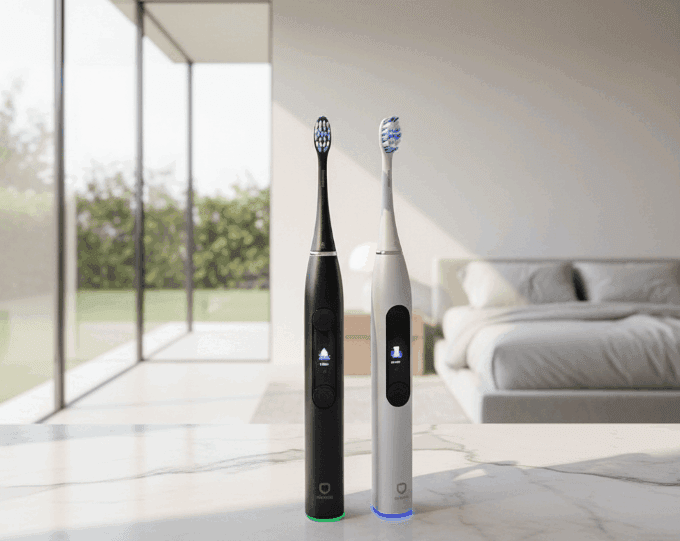
Brushing confidence refers to perceived self-efficacy in performing effective oral hygiene behaviors. It influences:
• Brushing duration
• Surface coverage
• Pressure control
• Consistency of routine
• Willingness to adjust technique
In health psychology, self-efficacy is a proven predictor of preventive behavior adherence. Within dentistry, it shapes how thoroughly individuals engage with daily plaque removal tasks. Confidence itself is not inherently beneficial — its impact depends on accuracy.
Individuals uncertain about their technique often exhibit compensatory patterns:
• Shortened brushing sessions
• Avoidance of hard-to-reach zones
• Inconsistent angles along gumlines
• Reduced pressure stability
These behaviors can produce measurable outcomes:
• Plaque retention
• Early gingival inflammation
• Elevated cavity risk
• Breath quality decline
Low confidence frequently leads to passive brushing, where mechanical contact occurs but effective biofilm disruption does not.
At the opposite extreme, overconfidence may produce:
• Excessive brushing force
• Aggressive horizontal strokes
• Over-brushing frequency
• Enamel abrasion
• Gum recession risk
Dental literature identifies mechanical trauma from brushing as a contributing factor to:
• Cervical enamel wear
• Gingival margin damage
• Tooth sensitivity
This highlights a critical paradox — confidence without feedback can harm oral structures as easily as it protects them.
Confidence evolves through feedback cycles:
1. Behavior
2. Outcome perception
3. Confidence adjustment
4. Habit reinforcement
Traditional brushing lacks objective feedback, meaning confidence is formed through subjective assumptions rather than measurable performance. This disconnect explains why many individuals maintain ineffective routines for years without awareness of technique gaps.
AI-guided brushing technologies introduce performance transparency, allowing confidence to align with measurable outcomes.
Systems such as BrushO enhance calibrated confidence by:
• Tracking 6-zone coverage distribution
• Monitoring pressure application
• Evaluating brushing duration balance
• Providing session performance scoring
• Visualizing behavioral trends
This converts brushing from assumption-based behavior into data-supported decision making.
Accurate feedback fosters:
• Correct technique assurance
• Reduced overcompensation
• Habit persistence
• Improved long-term oral outcomes
Confidence becomes informed rather than intuitive.
When brushing confidence matches actual performance, measurable improvements occur:
• Reduced plaque biofilm accumulation
• Lower gingival bleeding frequency
• Improved enamel preservation
• Enhanced microbiome balance
• Greater routine consistency
Psychologically aligned hygiene behaviors demonstrate stronger long-term adherence than externally forced routines. Confidence calibration therefore functions as a behavioral health tool.
• Use coverage visualization tools
• Monitor pressure feedback signals
• Review brushing analytics trends
• Maintain routine timing consistency
• Seek professional technique guidance
• Avoid equating speed with effectiveness
Confidence should emerge from observation, not assumption.
Brushing confidence is an underrecognized determinant of oral health outcomes. Both underconfidence and overconfidence distort technique, leading either to insufficient plaque control or mechanical tissue damage. The most effective oral care behaviors arise when confidence reflects measurable brushing performance. Integrating real-time feedback and behavioral tracking into daily hygiene routines allows individuals to calibrate technique awareness, strengthen habit stability, and protect long-term dental integrity. Oral health is therefore shaped not only by tools and routines, but by the psychological accuracy with which individuals engage them.
Feb 11
Feb 6
Jul 30
Jul 30
Jul 29
Jul 22
Jul 19
Jul 17

Hyperdontia is the presence of one or more teeth in excess of the normal dental formula, and the resulting teeth are described as supernumerary. The condition is common enough to appear in routine practice but variable enough in presentation that the decision to intervene is rarely straightforwar...

Few patients complete orthodontic treatment without asking whether their teeth will move back. The honest answer is that they will, to some degree, in the majority of cases. Relapse is not a failure of treatment but a predictable biological response, and understanding why it happens is the basis ...

The mandible is the largest and most frequently fractured bone of the facial skeleton, and its management sits at the interface between trauma surgery and restorative dentistry. Treatment has shifted over four decades from prolonged maxillomandibular fixation towards rigid internal fixation with ...

Chronic liver disease affects hundreds of millions of people worldwide, and its prevalence continues to rise with the epidemic of metabolic liver disease. The liver is central to haemostasis, drug metabolism and immune competence, and its failure therefore alters the risk profile of almost every ...

Excessive gingival display, commonly described as a gummy smile, is one of the most frequent aesthetic concerns presented to dental practitioners. The condition is not a single entity but a clinical presentation that can arise from skeletal, gingival, muscular or dental factors, and the treatment...

Drug-induced gingival overgrowth is a well-recognised adverse effect of several widely prescribed medications, and it remains one of the most common drug-related findings in periodontal practice. The condition produces firm, fibrous enlargement of the gingiva that can interfere with speech, masti...

Denture stomatitis is an inflammatory condition of the denture-bearing mucosa that affects a large proportion of removable prosthesis wearers, yet it is frequently dismissed as a cosmetic annoyance. The condition is driven by a Candida biofilm on the fitting surface of the prosthesis, and it is m...

Chronic kidney disease affects an estimated 850 million people worldwide, and the number of patients surviving on dialysis or with a renal transplant continues to rise. These patients carry an oral disease burden that is substantially higher than that of the general population, and their medical ...

Angular cheilitis is an inflammatory lesion of the labial commissures that presents with erythema, fissuring and crusting at the corners of the mouth. It is one of the most common conditions encountered in general dental practice, yet it is frequently treated as a simple fungal infection and allo...

Adverse reactions to dental materials are uncommon but they are not rare, and they are frequently misdiagnosed because the oral mucosa responds to allergens in a limited number of ways. A burning sensation, a persistent ulcer or an unexplained area of erythema may all represent a hypersensitivity...

BrushO AI Electric Toothbrush offers real-time brushing guidance, pressure feedback, coverage tracking, and app-based progress reports for a cleaner daily routine.
BrushO AI Electric Toothbrush offers real-time brushing guidance, pressure feedback, coverage tracking, and app-based progress reports for a cleaner daily routine.


Address: RM 1427, 14/F RADIO CITY 505, HENNESSY RD CAUSEWAY BAY, HONG KONG
Code: 000000
Phone: +852-53758652
Email: customerservice@brusho.com