
Jul 30
Jul 30
Jul 29
Jul 22
Jul 19
Jul 17
Lip posture — whether your lips rest closed, partially open, or habitually apart — is rarely discussed in oral health education, yet it plays a measurable role in hygiene effectiveness, bacterial balance, and enamel protection. Improper lip positioning can influence saliva evaporation, microbial activity, plaque adhesion, and brushing coverage. Over time, these factors may contribute to cavities, gum inflammation, and structural dental changes. This article explores the physiological connection between lip posture and oral hygiene outcomes, the risks of chronic mouth-opening habits, and how modern smart oral care tools support compensatory protection.
Lip posture refers to the resting position of the lips when not speaking or eating.
Healthy resting posture typically includes:
• Lips gently closed
• Nasal breathing
• Minimal muscular strain
• Balanced oral moisture retention
This posture supports stable oral conditions and protective saliva distribution.
Less optimal patterns include:
• Habitual lip separation
• Mouth breathing
• Tight muscular compression
• Dry oral environment
These patterns alter oral microclimate and hygiene dynamics.
Closed lips help preserve moisture and saliva buffering capacity.
Saliva performs several protective functions:
• Neutralizes acids
• Washes away debris
• Supports remineralization
• Regulates microbiome balance
Open lip posture increases evaporation, which may result in:
• Dry mouth conditions
• Accelerated plaque accumulation
• Higher acid exposure
• Greater caries susceptibility
Even subtle chronic dryness shifts bacterial composition toward more pathogenic species.
Air exposure and reduced saliva flow influence where plaque accumulates.
Observed trends include:
• Increased buildup on anterior teeth
• Uneven biofilm formation
• Greater gingival irritation
• Higher staining susceptibility
These patterns complicate manual cleaning because affected zones often require deliberate attention during brushing routines.
Lip positioning affects mechanical brushing effectiveness.
Challenges associated with poor posture:
• Limited visibility of inner surfaces
• Reduced access to gumline margins
• Inconsistent angle control
• Lower tactile awareness of missed zones
Smart brushing tools provide measurable correction by monitoring coverage independent of visual cues.
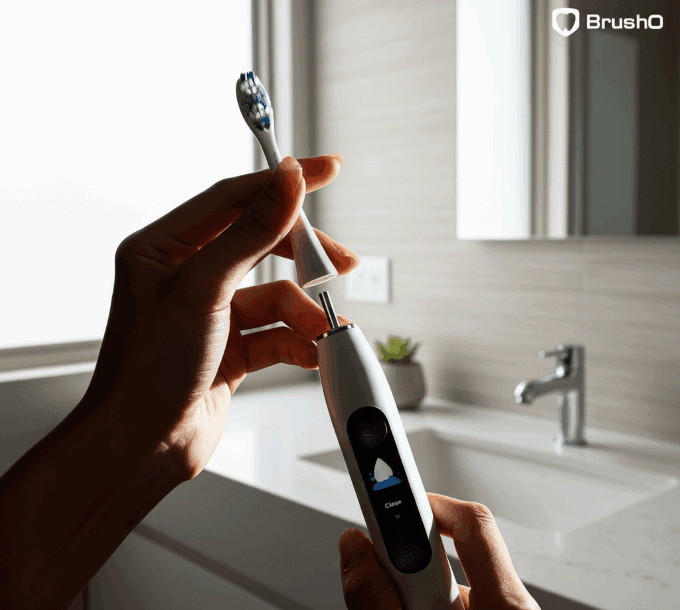
AI-assisted systems such as BrushO:
• Track multi-zone brushing
• Detect skipped surfaces
• Encourage balanced cleaning
• Reinforce full-mouth hygiene consistency
This compensates for biomechanical limitations related to posture habits.
Chronic mouth-opening posture may contribute to:
• Altered dental arch development
• Malocclusion risk
• Gum exposure changes
• Increased orthodontic complexity
While posture alone is not determinative, it interacts with breathing patterns, muscular tone, and growth factors that shape long-term oral health trajectories.
Evidence-informed approaches include:
• Encouraging nasal breathing awareness
• Maintaining hydration
• Addressing allergies or airway issues
• Practicing conscious resting lip closure
• Using structured brushing guidance to offset coverage gaps
Behavioral awareness paired with technological hygiene support offers the strongest protective outcome.
Ignoring lip posture can subtly influence:
• Plaque persistence
• Enamel vulnerability
• Gum inflammation patterns
• Cleaning consistency
• Oral microbiome stability
Because these effects accumulate gradually, proactive management helps preserve long-term dental resilience.
Lip posture represents an overlooked but meaningful factor in oral hygiene quality. By influencing moisture balance, bacterial activity, and brushing accessibility, resting lip position contributes to the ecological conditions that shape dental outcomes. While posture awareness improves baseline conditions, advanced oral care tools further enhance hygiene precision. AI-guided brushing technologies help ensure thorough plaque removal and consistent coverage regardless of anatomical or behavioral variations. Integrating posture awareness with data-driven brushing practices provides a modern, holistic approach to maintaining oral health.
Feb 12
Feb 12
Jul 30
Jul 30
Jul 29
Jul 22
Jul 19
Jul 17

Hyperdontia is the presence of one or more teeth in excess of the normal dental formula, and the resulting teeth are described as supernumerary. The condition is common enough to appear in routine practice but variable enough in presentation that the decision to intervene is rarely straightforwar...

Few patients complete orthodontic treatment without asking whether their teeth will move back. The honest answer is that they will, to some degree, in the majority of cases. Relapse is not a failure of treatment but a predictable biological response, and understanding why it happens is the basis ...

The mandible is the largest and most frequently fractured bone of the facial skeleton, and its management sits at the interface between trauma surgery and restorative dentistry. Treatment has shifted over four decades from prolonged maxillomandibular fixation towards rigid internal fixation with ...

Chronic liver disease affects hundreds of millions of people worldwide, and its prevalence continues to rise with the epidemic of metabolic liver disease. The liver is central to haemostasis, drug metabolism and immune competence, and its failure therefore alters the risk profile of almost every ...

Excessive gingival display, commonly described as a gummy smile, is one of the most frequent aesthetic concerns presented to dental practitioners. The condition is not a single entity but a clinical presentation that can arise from skeletal, gingival, muscular or dental factors, and the treatment...

Drug-induced gingival overgrowth is a well-recognised adverse effect of several widely prescribed medications, and it remains one of the most common drug-related findings in periodontal practice. The condition produces firm, fibrous enlargement of the gingiva that can interfere with speech, masti...

Denture stomatitis is an inflammatory condition of the denture-bearing mucosa that affects a large proportion of removable prosthesis wearers, yet it is frequently dismissed as a cosmetic annoyance. The condition is driven by a Candida biofilm on the fitting surface of the prosthesis, and it is m...

Chronic kidney disease affects an estimated 850 million people worldwide, and the number of patients surviving on dialysis or with a renal transplant continues to rise. These patients carry an oral disease burden that is substantially higher than that of the general population, and their medical ...

Angular cheilitis is an inflammatory lesion of the labial commissures that presents with erythema, fissuring and crusting at the corners of the mouth. It is one of the most common conditions encountered in general dental practice, yet it is frequently treated as a simple fungal infection and allo...

Adverse reactions to dental materials are uncommon but they are not rare, and they are frequently misdiagnosed because the oral mucosa responds to allergens in a limited number of ways. A burning sensation, a persistent ulcer or an unexplained area of erythema may all represent a hypersensitivity...

BrushO AI Electric Toothbrush offers real-time brushing guidance, pressure feedback, coverage tracking, and app-based progress reports for a cleaner daily routine.
BrushO AI Electric Toothbrush offers real-time brushing guidance, pressure feedback, coverage tracking, and app-based progress reports for a cleaner daily routine.


Address: RM 1427, 14/F RADIO CITY 505, HENNESSY RD CAUSEWAY BAY, HONG KONG
Code: 000000
Phone: +852-53758652
Email: customerservice@brusho.com