
Jul 30
Jul 30
Jul 29
Jul 22
Jul 19
Jul 17
Saliva plays a central role in protecting teeth from decay, yet its production drops dramatically during sleep. This natural nighttime reduction alters the oral microbiome, slows acid neutralization, and increases plaque activity — creating conditions that elevate cavity risk. Understanding how saliva functions as a biological defense system helps explain why evening oral care habits are disproportionately important for dental health. This article examines the science behind nighttime saliva changes, their impact on enamel integrity, and evidence-based strategies for mitigating overnight bacterial activity.
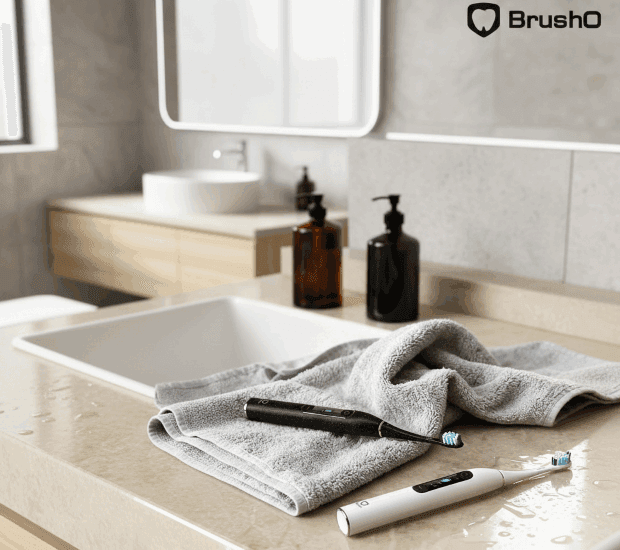
Saliva is far more than moisture — it is a complex biochemical defense system.
• Neutralizing bacterial acids
• Washing away food debris
• Delivering minerals for enamel remineralization
• Regulating microbial balance
• Supporting immune responses in oral tissues
When saliva flow is stable, these mechanisms limit cavity development by maintaining ecological equilibrium in the mouth.
Human salivary glands follow circadian rhythms.
During nighttime rest:
• Saliva production may drop by 80–90%
• Oral clearance mechanisms are slow
• pH buffering weakens
• Mineral delivery decreases
This creates a biologically vulnerable window where teeth are exposed to:
• Sustained acid contact
• Extended bacterial metabolism
• Reduced natural cleansing
Even individuals with excellent daytime hygiene face an elevated risk if nighttime oral preparation is inadequate.
Acid-producing bacteria metabolize carbohydrates into enamel-eroding compounds.
Lower saliva flow means:
• Acids remain longer on tooth surfaces
• Enamel demineralization accelerates
• Protective buffering is delayed
Over time, repeated exposure contributes to microscopic enamel weakening.
Plaque is a structured microbial community.
Overnight conditions encourage:
• Biofilm thickening
• Bacterial adhesion
• Caries-associated species dominance
Without mechanical disruption before sleep, these colonies operate continuously for hours.
Saliva supplies calcium and phosphate, which are essential for repairing enamel.
Nighttime reduction limits:
• Mineral redeposition
• Early lesion reversal
• Structural reinforcement
This shifts the balance toward net mineral loss.
Individuals with mild xerostomia experience greater effects.
Common contributors include:
• Mouth breathing
• Dehydration
• Medication use
• Stress or fatigue
These factors further compound overnight vulnerability.
While both sessions are essential, pre-sleep cleaning carries heightened importance.
Effective nighttime brushing:
• Removes fermentable substrates
• Disrupts plaque biofilms
• Lowers bacterial load
• Reduces acid production window
AI-guided brushing systems such as BrushO enhance effectiveness by:
• Verifying full-zone coverage
• Detecting missed surfaces
• Monitoring pressure
• Reinforcing consistency through feedback
This ensures mechanical plaque disruption occurs before saliva reduction begins.
Adequate water intake supports baseline salivary function.
Carbohydrate exposure before sleep fuels prolonged bacterial metabolism.
Focus on the gumline and molar surfaces where plaque retention is common.
Technology-assisted brushing ensures high-risk zones are not neglected.
Predictable circadian hygiene patterns support microbial stability.
Ignoring nighttime salivary dynamics contributes cumulatively to:
• Enamel demineralization
• Early carious lesion formation
• Gum inflammation
• Microbiome imbalance
Conversely, optimizing evening hygiene reduces lifetime restorative intervention probability and preserves structural tooth integrity.
Nighttime saliva reduction represents one of the most significant biological shifts affecting cavity risk. With diminished buffering, cleansing, and remineralization, teeth become more susceptible to bacterial activity during sleep. Recognizing this vulnerability reframes evening oral care from routine maintenance to preventive intervention. Combining behavioral consistency with precision-guided brushing technology strengthens protection against overnight enamel damage. Understanding saliva’s circadian role empowers individuals to align oral hygiene practices with biological reality — resulting in stronger, healthier teeth over time.
Feb 13
Feb 12
Jul 30
Jul 30
Jul 29
Jul 22
Jul 19
Jul 17

A lateral cephalometric radiograph is only as useful as the analysis applied to it. The same tracing can be read as a skeletal discrepancy by one method and as a dental compensation by another, and the conclusions reached about extraction, surgery or growth modification may differ accordingly. Un...

Premature fusion of the cranial sutures produces a group of conditions in which the skull, the midface and the occlusion develop abnormally, and the dental team is central to long-term care. Apert and Crouzon syndromes are the best known craniosynostosis syndromes with major oral consequences. Bo...

A dense opacity on a panoramic radiograph above the molar roots or within the nasal cavity is a familiar finding that is often dismissed as an incidental artifact. When that opacity proves to be an antrolith or a rhinolith, the discovery explains years of unilateral obstruction, discharge and fac...

A firm, board-like swelling at the angle of the jaw that slowly breaks down into multiple draining sinuses should raise suspicion of cervicofacial actinomycosis, a chronic bacterial infection that is easily mistaken for a tumor. Nocardiosis, caused by related filamentous organisms, can produce a ...

Enlargement of the jaw, widening spaces between the teeth and a slowly changing facial profile may bring a patient to the dental office years before the underlying endocrine disease is diagnosed. Acromegaly and Cushing syndrome both leave recognizable signatures in the craniofacial region, and th...

A slowly growing, painless lump at the angle of the jaw in a middle-aged or older man who smokes is the classic presentation of a Warthin tumor. Formally called papillary cystadenoma lymphomatosum, this benign neoplasm is one of the most common tumors of the parotid gland and the second most comm...

Painful ulcerated gums that bleed easily, a foul metallic taste and severe mouth odor can signal Vincent stomatitis, an acute fusospirochetal necrotizing infection of the gingival and oral tissues. First described during wartime and historically called trench mouth, the disease still occurs today...

A painful swelling under the jaw that appears at mealtimes and subsides slowly afterward is the classic symptom of a salivary stone blocking a duct. Sialolithiasis, the formation of calcified stones in the salivary glands, and sialodochitis, the inflammation of the ducts that follows, are common ...

Paget disease of bone, also called osteitis deformans, is a chronic disorder of bone remodeling that can silently affect the skull and the jaws. In the maxillofacial region it produces progressive bony enlargement, distinctive cotton-wool radiographs and dental complications such as hypercementos...

The sudden appearance of widespread, painful oral erosions with crusted lips can be alarming, and it may represent either erythema multiforme or a drug-induced severe reaction such as Stevens-Johnson syndrome. Both belong to a spectrum of immune-mediated mucocutaneous disorders, and both can begi...

BrushO AI इलेक्ट्रिक टूथब्रश रियल-टाइम ब्रशिंग गाइड, प्रेशर फीडबैक, कवरेज ट्रैकिंग और ऐप-आधारित प्रगति रिपोर्ट देता है, ताकि आपकी दैनिक दिनचर्या अधिक साफ और समझने योग्य बने।
BrushO AI इलेक्ट्रिक टूथब्रश रियल-टाइम ब्रशिंग गाइड, प्रेशर फीडबैक, कवरेज ट्रैकिंग और ऐप-आधारित प्रगति रिपोर्ट देता है, ताकि आपकी दैनिक दिनचर्या अधिक साफ और समझने योग्य बने।


Address: RM 1427, 14/F RADIO CITY 505, HENNESSY RD CAUSEWAY BAY, HONG KONG
Code: 000000
Phone: +852-53758652
Email: customerservice@brusho.com