
Jul 30
Jul 30
Jul 29
Jul 22
Jul 19
Jul 17
Facial aging is often associated with skin elasticity loss and bone density changes, but oral health — particularly gum integrity — plays a crucial yet overlooked role. Gum recession alters tooth support, affects jaw stability, and contributes to structural changes that influence facial contours over time. Emerging dental and anatomical research highlights the connection between periodontal health and aesthetic aging markers such as lip collapse, smile narrowing, and lower facial volume loss. Understanding this relationship empowers individuals to protect both functional oral health and long-term facial appearance through preventive hygiene, monitoring, and modern smart brushing technologies.
Gum loss — commonly referred to as gum recession — occurs when gum tissue pulls away from teeth, exposing more of the tooth or root surface. This process may result from:
• Periodontal disease
• Aggressive brushing
• Plaque accumulation
• Aging-related tissue changes
• Genetic predisposition
Gum tissue serves as structural support, protection against bacteria, and a stabilizing component of facial anatomy. Its loss impacts more than dental comfort.
Healthy gums anchor teeth within the jaw. When tissue recedes:
• Tooth positioning may shift
• Bite alignment can change
• Jawbone stimulation decreases
These effects gradually influence facial symmetry and contour.
Chronic gum disease may lead to bone resorption — the body breaking down jawbone tissue due to inflammation or reduced stimulation.
This contributes to:
• Hollowed lower face appearance
• Reduced chin and lip support
• Premature structural aging
Jawbone loss is one of the most overlooked contributors to aging perception.
Gum recession can cause:
• Narrower smile width
• Lip sagging due to reduced support
• Teeth appearing longer or uneven
• Altered facial expression dynamics
These visual shifts influence perceived age even without skin aging.
Monitoring gum health helps prevent long-term structural impact. Indicators include:
• Increased tooth length visibility
• Sensitivity near the gumline
• Gum bleeding or inflammation
• Shifting bite alignment
• Changes in smile balance
Addressing these signs early protects both function and aesthetics.
Gentle pressure and gumline targeting reduce mechanical damage.
Bacterial accumulation is the primary driver of periodontal breakdown.
Tissue resilience depends on systemic health and micronutrient balance.
Professional monitoring detects early structural changes before irreversible loss occurs.
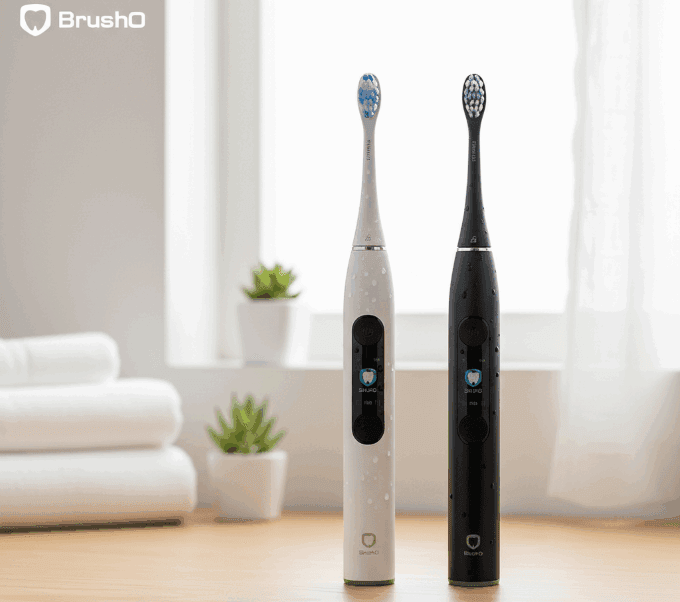
AI-guided brushing tools like BrushO support gum preservation through precision monitoring:
Prevent excessive force that contributes to recession.
Ensures gumline coverage where plaque accumulation often begins.
Gentler settings protect sensitive tissue.
Long-term tracking reveals behaviors that may stress gums.
Smart technology helps convert preventive awareness into daily action.
Maintaining gum integrity supports:
• Facial structural stability
• Smile aesthetics
• Tooth longevity
• Bone preservation
• Confidence in appearance
Oral health should be viewed as part of holistic aging management rather than isolated dental maintenance.
Gum loss is not merely a dental concern — it influences facial architecture, jaw support, and visible aging markers. Protecting periodontal health safeguards both functional wellness and aesthetic longevity. By combining consistent hygiene habits, preventive monitoring, and intelligent brushing guidance through technologies like BrushO, individuals can maintain healthier gums and preserve facial structure over time. True anti-aging begins with foundational health — and that includes the tissues supporting your smile.
Feb 5
Feb 5
Jul 30
Jul 30
Jul 29
Jul 22
Jul 19
Jul 17

Trigeminal neuralgia (TN), also known as tic douloureux, is a chronic orofacial pain disorder characterized by recurrent, unilateral, brief, electric shock-like pain in the distribution of one or more divisions of the trigeminal nerve. It is widely regarded as one of the most severe pain conditions

Tooth whitening has become one of the most sought-after elective dental procedures worldwide. With increasing emphasis on facial aesthetics, a bright, white smile is now widely perceived as a marker of health, youth, and social confidence. This article provides a comprehensive review of contemporary

The edentulous posterior maxilla presents unique challenges for implant rehabilitation due to the pneumatization of the maxillary sinus and the progressive resorption of the alveolar ridge following tooth loss. Sinus floor elevation, or sinus lift surgery, is a predictable and well-documented surgic

Photodynamic therapy (PDT) is a minimally invasive therapeutic modality that combines a photosensitizing agent, light of a specific wavelength, and molecular oxygen to produce cytotoxic reactive oxygen species. Originally developed for oncological applications, PDT has been increasingly adopted in d

The introduction of temporary anchorage devices (TADs) has fundamentally transformed orthodontic treatment by providing skeletal anchorage that is independent of patient compliance. TADs, also known as mini-implants or miniscrews, enable tooth movements that were previously impossible or required co

Dental caries remains one of the most prevalent chronic diseases worldwide, disproportionately affecting children, elderly populations, and communities with limited access to conventional restorative care. The traditional restorative approach requires expensive equipment, cooperative patients, and m

Platelet-rich fibrin (PRF), a second-generation platelet concentrate, has emerged as one of the most widely adopted autologous biomaterials in contemporary dentistry and oral surgery. Developed by Dr. Joseph Choukroun and colleagues in France in 2001, PRF represents a conceptual evolution from first

The transition from conventional to digital impressions represents one of the most significant technological shifts in contemporary dentistry. Intraoral scanners (IOS) have evolved from experimental prototypes in the 1980s to sophisticated clinical instruments that now rival and, in several key metr

Gingival recession, defined as the apical migration of the gingival margin beyond the cementoenamel junction with exposure of the root surface, is a prevalent condition affecting a substantial proportion of the adult population. Epidemiological studies report that approximately 50% of adults exhibit

Cone beam computed tomography (CBCT) has revolutionized endodontic diagnosis and treatment planning by providing three-dimensional imaging that overcomes the inherent limitations of conventional periapical radiography. While two-dimensional radiographs remain the first-line imaging modality for endo

BrushO AI इलेक्ट्रिक टूथब्रश रियल-टाइम ब्रशिंग गाइड, प्रेशर फीडबैक, कवरेज ट्रैकिंग और ऐप-आधारित प्रगति रिपोर्ट देता है, ताकि आपकी दैनिक दिनचर्या अधिक साफ और समझने योग्य बने।
BrushO AI इलेक्ट्रिक टूथब्रश रियल-टाइम ब्रशिंग गाइड, प्रेशर फीडबैक, कवरेज ट्रैकिंग और ऐप-आधारित प्रगति रिपोर्ट देता है, ताकि आपकी दैनिक दिनचर्या अधिक साफ और समझने योग्य बने।


Address: RM 1427, 14/F RADIO CITY 505, HENNESSY RD CAUSEWAY BAY, HONG KONG
Code: 000000
Phone: +852-53758652
Email: customerservice@brusho.com