
Jul 30
Jul 30
Jul 29
Jul 22
Jul 19
Jul 17
Charcoal toothpaste has become a buzzword in oral care, promising whiter teeth, fresher breath, and natural stain removal. Infused with activated charcoal, these products appeal to those seeking “natural” and instant results. But does charcoal toothpaste actually work — or could it be doing more harm than good? In this article, we delve into the scientific evidence, explain how charcoal interacts with enamel and stains, discuss its pros and cons, and offer expert guidance on effective and safe alternatives. Whether you’re considering using charcoal toothpaste or want to know how it compares to smart brushing tools like BrushO, this guide has you covered.
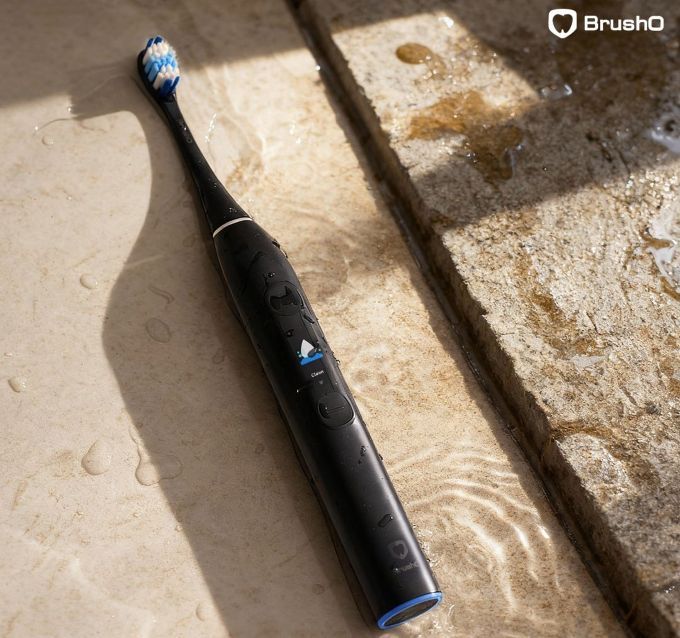
Charcoal toothpaste typically contains activated charcoal, which is a highly porous form of carbon processed at high temperatures. The idea is that its tiny pores adsorb (bind to) surface stains and pigments on teeth, potentially making them look whiter. Activated charcoal has been used in medicine for toxin adsorption, but its role in oral hygiene is controversial and less scientifically established.
Activated charcoal can help remove surface stains caused by:
• Coffee
• Tea
• Red wine
• Smoking
Charcoal particles may adsorb pigments on the outer layer of enamel, offering a mild whitening effect. Users often report immediate visual improvements, especially on surface stains.
No. Charcoal toothpaste doesn’t change the intrinsic color of your teeth — the shade determined by dentin beneath the enamel. It mainly affects extrinsic stains on the surface.
Not necessarily. Any whitening effect from charcoal toothpaste is usually mild and temporary. For deeper whitening, products like professional-grade whitening strips, dentist-administered treatments, or smart brushing routines that reduce plaque buildup over time are more effective.
Many charcoal formulas are more abrasive than regular toothpaste. This means they can:
• Wear down enamel
• Increase tooth sensitivity
• Expose dentin (yellowish layer), paradoxically making teeth appear darker
Not all charcoal toothpastes are equally abrasive, but some score high on the Relative Dentin Abrasivity (RDA) scale.
Some charcoal toothpastes lack fluoride, a key ingredient that helps:
• Strengthen enamel
• Prevent cavities
• Promote remineralization
Without fluoride, long-term use may reduce decay protection.
Charcoal powder can be messy and may temporarily stain:
• Toothbrush bristles
• Bathroom fixtures
• Dental restorations (crowns, veneers)
Many dentists are cautious about recommending charcoal toothpaste due to concerns about abrasivity and enamel safety. The American Dental Association (ADA) has not universally endorsed charcoal products because:
• Scientific evidence is limited
• Whiter appearance may come at the cost of enamel wear
• Claims are often based on anecdote rather than controlled studies
If your goal is whitening with oral health in mind, consider:
Using a toothpaste with fluoride helps prevent decay while gently cleaning stains. Combined with proper technique, this is more effective than abrasive products.
Smart toothbrushes like BrushO elevate standard brushing with:
• Real‑time feedback on pressure, duration, and coverage
• FSB (Fully Smart Brushing) technology to reduce plaque and tartar
• Custom modes to support gum care, sensitive teeth, and deeper cleaning
These features help remove plaque buildup, a major contributor to staining and discoloration.
Dentist‑supervised whitening is scientifically proven to be safer and more effective for intrinsic and deep stains.
If you still want to try charcoal toothpaste:
✔️ Use only occasionally — not as a daily substitute
✔️ Choose products with fluoride where possible
✔️ Be gentle — avoid scrubbing hard
✔️ Monitor sensitivity — stop if teeth become sore
✔️ Pair with a fluoride mouthwash or smart brushing routine
Charcoal toothpaste may have a role in removing surface stains, but its effectiveness is limited, and it can pose risks due to abrasivity and lack of fluoride. For long‑term oral health and effective stain control, prioritize proper brushing technique, fluoride toothpaste, and tools like the BrushO smart toothbrush. These combine gentle cleaning, real‑time guidance, and habit tracking to help you achieve a brighter smile without compromising enamel or gum health.
Dec 30
Dec 30
Jul 30
Jul 30
Jul 29
Jul 22
Jul 19
Jul 17

Fluoride in drinking water is the most cost-effective caries preventive measure in public health, and it is also the source of most avoidable fluoride exposure in young children. The balance between benefit and risk depends on concentration, on total intake from all sources and on the age of the ...

A mouthguard is the only piece of protective equipment that a dentist can prescribe, and the difference between the cheapest and the best version is often less than the cost of a single repair. This guide explains what each type of mouthguard actually protects, how to judge fit, and what to check...

Distinguishing reversible from irreversible pulpitis is the single most consequential decision in endodontic diagnosis, because one leads to a restoration and the other to root canal treatment or extraction. The distinction rests on symptoms and pulp testing rather than on radiographs alone, and ...

A pregnancy epulis is a benign overgrowth of gum tissue that appears during pregnancy, most often in the second or third trimester. It can alarm patients because it grows quickly and bleeds easily, yet in most cases it needs no surgery and settles after delivery. Understanding what drives the gro...

When several teeth are missing, the choice usually narrows to a removable partial denture or a fixed implant-supported restoration, and cost is the factor patients raise first. Upfront price is only part of the comparison, because the two options differ in maintenance, comfort, effects on neighbo...

Most root canal failures are not caused by inadequate cleaning of canals that were found, but by canals that were never located. Molar anatomy varies widely, and the variation is not random: specific teeth in specific populations have predictable additional canals. Knowing where they hide is the ...

Gum massage is one of the oldest recommendations in oral care and one of the least understood. It has been described as a treatment for bleeding gums, a route to firmer tissue and, more recently, a way to reduce brushing force. This article separates the mechanisms that are supported by physiolog...

Interdental cleaning is the part of oral hygiene most people abandon first, and the choice between a floss pick and a length of string floss is often made on convenience. Convenience matters, because a tool that is used daily outperforms a superior tool that stays in the drawer, but the two devic...

Dementia changes the way a denture is worn, cleaned and tolerated, and the people who notice the change first are usually family carers rather than clinicians. Poor denture hygiene in this group is associated with mucosal infection, reduced food intake and, in frail patients, respiratory complica...

Chewing tobacco keeps nicotine and plant irritants in prolonged contact with a small area of mucosa, and the damage that results is concentrated exactly where the quid is held. The lesions that develop are often painless, which is why they are discovered during routine examination rather than bec...

BrushO AI इलेक्ट्रिक टूथब्रश रियल-टाइम ब्रशिंग गाइड, प्रेशर फीडबैक, कवरेज ट्रैकिंग और ऐप-आधारित प्रगति रिपोर्ट देता है, ताकि आपकी दैनिक दिनचर्या अधिक साफ और समझने योग्य बने।
BrushO AI इलेक्ट्रिक टूथब्रश रियल-टाइम ब्रशिंग गाइड, प्रेशर फीडबैक, कवरेज ट्रैकिंग और ऐप-आधारित प्रगति रिपोर्ट देता है, ताकि आपकी दैनिक दिनचर्या अधिक साफ और समझने योग्य बने।


Address: RM 1427, 14/F RADIO CITY 505, HENNESSY RD CAUSEWAY BAY, HONG KONG
Code: 000000
Phone: +852-53758652
Email: customerservice@brusho.com