
Jul 30
Jul 30
Jul 29
Jul 22
Jul 19
Jul 17
Your mouth hosts billions of microorganisms forming the oral microbiome — a dynamic ecosystem where beneficial and harmful bacteria constantly compete. While some microbes protect enamel, regulate pH, and support immune defense, others drive cavities, gum disease, and systemic inflammation. Understanding this balance is critical for maintaining long-term oral and overall health. This article explores the roles of good versus harmful oral bacteria, how daily habits influence microbial equilibrium, and how AI-guided brushing tools can help preserve beneficial microbial function while reducing pathogenic buildup.
The oral microbiome refers to the diverse population of bacteria living on teeth, gums, tongue, and saliva surfaces. Scientists have identified more than 700 microbial species inhabiting the mouth.
This ecosystem exists in a delicate balance:
• Beneficial bacteria regulate harmful populations
• Harmful bacteria exploit imbalances
• Hygiene habits influence microbial composition
Oral health is not about eliminating bacteria — it is about maintaining equilibrium.
Not all bacteria are harmful. Certain microbes perform essential protective functions.
Functions of Good Oral Bacteria
• Neutralize harmful acids
• Support enamel remineralization
• Aid digestion through early food breakdown
• Help regulate immune response
• Compete against pathogenic microbes
Healthy bacterial presence contributes to stability rather than disease.
What Supports Beneficial Bacteria
• Consistent gentle brushing
• Balanced nutrition
• Hydration and saliva production
• Avoiding excessive antibacterial overuse
Maintaining microbial diversity is key.
When an imbalance occurs, pathogenic bacteria dominate and trigger disease processes.
Common Effects
• Plaque formation
• Enamel demineralization
• Gum inflammation
• Persistent bad breath
• Periodontal tissue destruction
These bacteria thrive when hygiene is inconsistent or incomplete.
Several lifestyle factors shift bacterial composition:
• High sugar diets
• Poor brushing coverage
• Excessive pressure is damaging gums
• Dry mouth or dehydration
• Irregular oral hygiene routines
Over time, an imbalance leads to chronic oral health deterioration.
Modern oral care technology helps manage bacterial load without disrupting beneficial function.
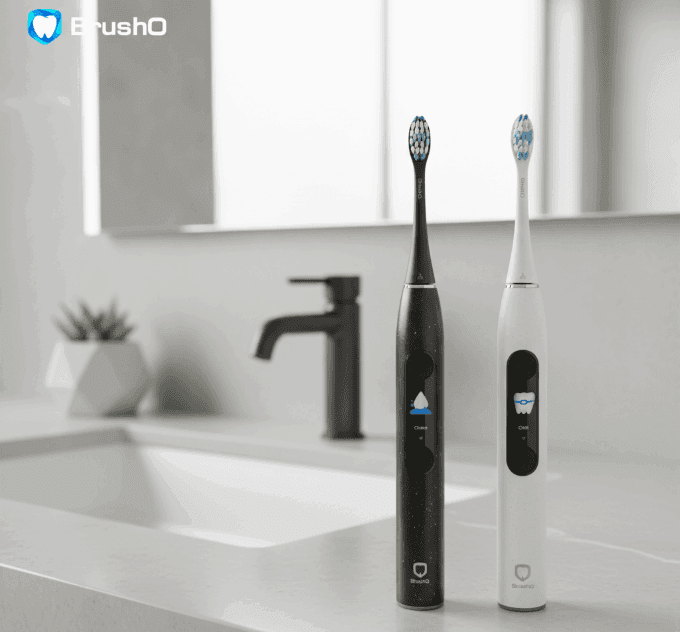
BrushO Supports Microbiome Stability Through
6-zone × 16-surface tracking ensures plaque removal before harmful colonies expand.
Prevents aggressive brushing that damages protective gum barriers.
Habit reports reinforce daily microbial control.
Tailored cleaning intensity supports gum health and microbial equilibrium.
By improving brushing quality rather than simply increasing intensity, AI-guided care promotes healthy microbiome balance.
Evidence-supported practices include:
• Brushing twice daily with correct technique
• Cleaning along the gumline
• Flossing regularly
• Maintaining hydration
• Limiting sugar frequency
• Using smart feedback tools
Consistency shapes microbial composition over time.
The distinction between good and bad mouth bacteria underscores a fundamental truth: oral health depends on balance rather than elimination. Beneficial microbes protect the mouth, while harmful populations exploit neglect and imbalance. Through targeted plaque control, technique guidance, and habit tracking, tools like BrushO enable users to manage bacterial ecosystems intelligently. Supporting beneficial bacteria while limiting pathogenic growth ensures healthier teeth, stronger gums, and improved systemic resilience. Oral care is not just cleaning — it is ecological management.
Jul 30
Jul 30
Jul 29
Jul 22
Jul 19
Jul 17

The xerostomia is the symptom that the patient describes as the dry mouth, and the Sjogren syndrome is the systemic autoimmune condition that the clinician identifies as one of the causes that the symptom reveals. The dry mouth that the patient reports may follow the medication, the radiation, th...

The sinus lift is the augmentation procedure that the clinician performs to create the bone height that the posterior maxilla requires for the implant, and the choice between the lateral window and the transcrestal approach determines the surgical trauma, the healing, and the implant that the sit...

Post-extraction bleeding is one of the most common and most distressing experiences after a tooth extraction. For most patients, a small amount of oozing from the extraction site for 24 to 48 hours after the procedure is completely normal. However, when bleeding becomes excessive, prolonged, or d...

The skeletal class III malocclusion is the condition that the clinician treats with the orthognathic surgery or the camouflage orthodontic treatment, and the decision between the two paths determines the function, the aesthetics, and the stability that the patient receives. The orthognathic surge...

Interproximal enamel reduction — commonly referred to as IPR, slenderizing, stripping, or contouring — is the controlled removal of small amounts of enamel from the proximal surfaces of teeth. Despite sounding more invasive than it is, IPR is one of the most widely used and clinically safe proced...

The gingival graft is the surgical procedure that the periodontist performs to restore the keratinized tissue and to cover the exposed root, and the choice between the free gingival graft and the connective tissue graft determines the outcome that the patient receives. The free gingival graft har...

Denture adhesives — commonly known as fixatives or denture creams — are among the most widely used adjuncts in prosthodontic care. Millions of complete and partial denture wearers use some form of adhesive daily, often without a clear understanding of what these products do, when they should be u...

When a young patient presents with an immature tooth that has lost its vitality — typically due to trauma or deep caries — the endodontist faces one of the most consequential decisions in paediatric endodontics. The permanent root has not finished forming, the apex remains open, and the tooth is ...

The ankyloglossia is the condition that the lingual frenulum restricts the movement of the tongue, and the release of the frenulum in the infant is the procedure that the clinician performs to restore the function that the feeding and the speech require. The assessment that the clinician performs...

Dental amalgam fillings have been in clinical use since the mid-19th century, making them one of the most historically established restorative materials. In 2026, the conversation around amalgam replacement has shifted from a simple material preference debate to a nuanced clinical assessment of w...

La brosse à dents électrique BrushO avec IA offre un guidage en temps réel, un retour sur la pression, un suivi de la couverture et des rapports de progression dans l’app pour une routine quotidienne plus propre.
La brosse à dents électrique BrushO avec IA offre un guidage en temps réel, un retour sur la pression, un suivi de la couverture et des rapports de progression dans l’app pour une routine quotidienne plus propre.


Address: RM 1427, 14/F RADIO CITY 505, HENNESSY RD CAUSEWAY BAY, HONG KONG
Code: 000000
Phone: +852-53758652
Email: customerservice@brusho.com