
Jul 30
Jul 30
Jul 29
Jul 22
Jul 19
Jul 17
Facial aging is often associated with skin elasticity loss and bone density changes, but oral health — particularly gum integrity — plays a crucial yet overlooked role. Gum recession alters tooth support, affects jaw stability, and contributes to structural changes that influence facial contours over time. Emerging dental and anatomical research highlights the connection between periodontal health and aesthetic aging markers such as lip collapse, smile narrowing, and lower facial volume loss. Understanding this relationship empowers individuals to protect both functional oral health and long-term facial appearance through preventive hygiene, monitoring, and modern smart brushing technologies.
Gum loss — commonly referred to as gum recession — occurs when gum tissue pulls away from teeth, exposing more of the tooth or root surface. This process may result from:
• Periodontal disease
• Aggressive brushing
• Plaque accumulation
• Aging-related tissue changes
• Genetic predisposition
Gum tissue serves as structural support, protection against bacteria, and a stabilizing component of facial anatomy. Its loss impacts more than dental comfort.
Healthy gums anchor teeth within the jaw. When tissue recedes:
• Tooth positioning may shift
• Bite alignment can change
• Jawbone stimulation decreases
These effects gradually influence facial symmetry and contour.
Chronic gum disease may lead to bone resorption — the body breaking down jawbone tissue due to inflammation or reduced stimulation.
This contributes to:
• Hollowed lower face appearance
• Reduced chin and lip support
• Premature structural aging
Jawbone loss is one of the most overlooked contributors to aging perception.
Gum recession can cause:
• Narrower smile width
• Lip sagging due to reduced support
• Teeth appearing longer or uneven
• Altered facial expression dynamics
These visual shifts influence perceived age even without skin aging.
Monitoring gum health helps prevent long-term structural impact. Indicators include:
• Increased tooth length visibility
• Sensitivity near the gumline
• Gum bleeding or inflammation
• Shifting bite alignment
• Changes in smile balance
Addressing these signs early protects both function and aesthetics.
Gentle pressure and gumline targeting reduce mechanical damage.
Bacterial accumulation is the primary driver of periodontal breakdown.
Tissue resilience depends on systemic health and micronutrient balance.
Professional monitoring detects early structural changes before irreversible loss occurs.
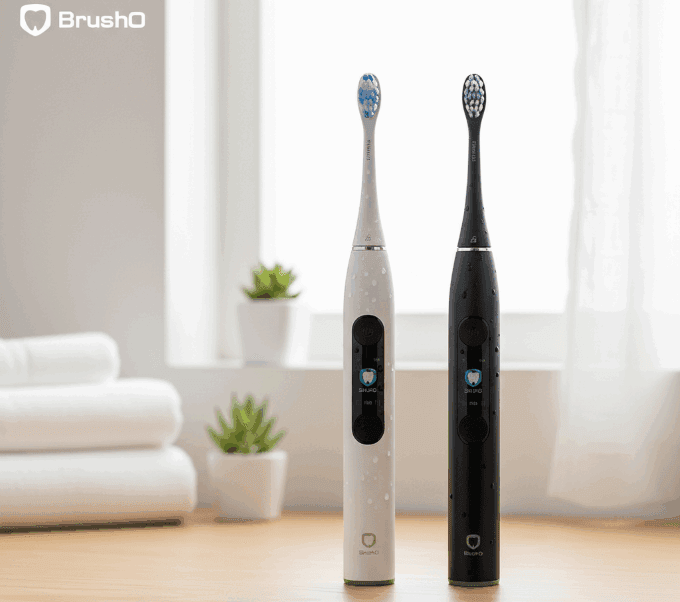
AI-guided brushing tools like BrushO support gum preservation through precision monitoring:
Prevent excessive force that contributes to recession.
Ensures gumline coverage where plaque accumulation often begins.
Gentler settings protect sensitive tissue.
Long-term tracking reveals behaviors that may stress gums.
Smart technology helps convert preventive awareness into daily action.
Maintaining gum integrity supports:
• Facial structural stability
• Smile aesthetics
• Tooth longevity
• Bone preservation
• Confidence in appearance
Oral health should be viewed as part of holistic aging management rather than isolated dental maintenance.
Gum loss is not merely a dental concern — it influences facial architecture, jaw support, and visible aging markers. Protecting periodontal health safeguards both functional wellness and aesthetic longevity. By combining consistent hygiene habits, preventive monitoring, and intelligent brushing guidance through technologies like BrushO, individuals can maintain healthier gums and preserve facial structure over time. True anti-aging begins with foundational health — and that includes the tissues supporting your smile.
Feb 5
Feb 5
Jul 30
Jul 30
Jul 29
Jul 22
Jul 19
Jul 17

Hyperdontia is the presence of one or more teeth in excess of the normal dental formula, and the resulting teeth are described as supernumerary. The condition is common enough to appear in routine practice but variable enough in presentation that the decision to intervene is rarely straightforwar...

Few patients complete orthodontic treatment without asking whether their teeth will move back. The honest answer is that they will, to some degree, in the majority of cases. Relapse is not a failure of treatment but a predictable biological response, and understanding why it happens is the basis ...

The mandible is the largest and most frequently fractured bone of the facial skeleton, and its management sits at the interface between trauma surgery and restorative dentistry. Treatment has shifted over four decades from prolonged maxillomandibular fixation towards rigid internal fixation with ...

Chronic liver disease affects hundreds of millions of people worldwide, and its prevalence continues to rise with the epidemic of metabolic liver disease. The liver is central to haemostasis, drug metabolism and immune competence, and its failure therefore alters the risk profile of almost every ...

Excessive gingival display, commonly described as a gummy smile, is one of the most frequent aesthetic concerns presented to dental practitioners. The condition is not a single entity but a clinical presentation that can arise from skeletal, gingival, muscular or dental factors, and the treatment...

Drug-induced gingival overgrowth is a well-recognised adverse effect of several widely prescribed medications, and it remains one of the most common drug-related findings in periodontal practice. The condition produces firm, fibrous enlargement of the gingiva that can interfere with speech, masti...

Denture stomatitis is an inflammatory condition of the denture-bearing mucosa that affects a large proportion of removable prosthesis wearers, yet it is frequently dismissed as a cosmetic annoyance. The condition is driven by a Candida biofilm on the fitting surface of the prosthesis, and it is m...

Chronic kidney disease affects an estimated 850 million people worldwide, and the number of patients surviving on dialysis or with a renal transplant continues to rise. These patients carry an oral disease burden that is substantially higher than that of the general population, and their medical ...

Angular cheilitis is an inflammatory lesion of the labial commissures that presents with erythema, fissuring and crusting at the corners of the mouth. It is one of the most common conditions encountered in general dental practice, yet it is frequently treated as a simple fungal infection and allo...

Adverse reactions to dental materials are uncommon but they are not rare, and they are frequently misdiagnosed because the oral mucosa responds to allergens in a limited number of ways. A burning sensation, a persistent ulcer or an unexplained area of erythema may all represent a hypersensitivity...

Die BrushO KI-Elektrozahnbürste bietet Echtzeit-Anleitung, Druckfeedback, Abdeckungsverfolgung und Fortschrittsberichte in der App für eine sauberere tägliche Routine.
Die BrushO KI-Elektrozahnbürste bietet Echtzeit-Anleitung, Druckfeedback, Abdeckungsverfolgung und Fortschrittsberichte in der App für eine sauberere tägliche Routine.


Address: RM 1427, 14/F RADIO CITY 505, HENNESSY RD CAUSEWAY BAY, HONG KONG
Code: 000000
Phone: +852-53758652
Email: customerservice@brusho.com