
Jul 30
Jul 30
Jul 29
Jul 22
Jul 19
Jul 17
Your toothbrush is supposed to keep your mouth clean—but how clean is the toothbrush itself? This article explores the surprising truth about toothbrush hygiene, including how bacteria accumulate over time, common mistakes people make with storage and replacement, and why smart toothbrushes like BrushO offer a more hygienic solution. Learn how to maintain a clean brush for healthier teeth, gums, and peace of mind.
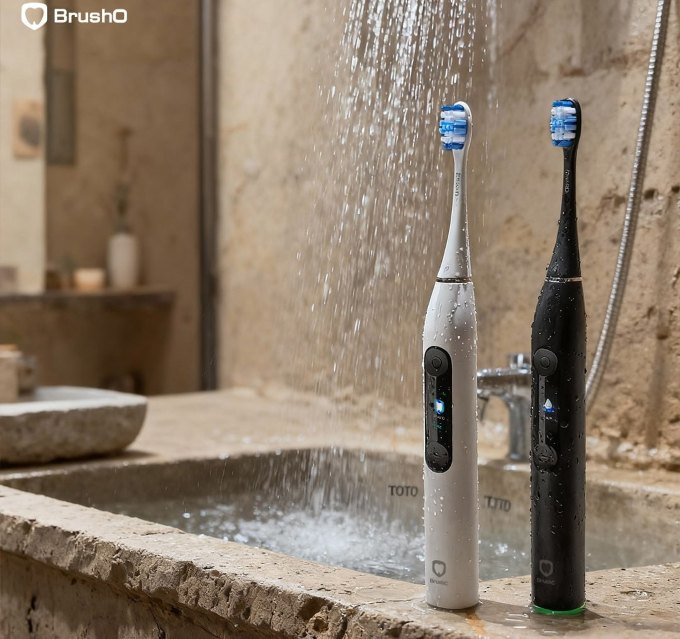
Toothbrushes are exposed to everything from saliva and plaque to airborne bathroom bacteria. Over time, these microscopic intruders accumulate on the bristles, handle, and even in the base of your brush. Common hygiene risks include:
• Bacterial contamination (E. coli, staph, streptococcus)
• Mold growth in moist environments
• Bristle breakdown, which reduces cleaning effectiveness
• Cross-contamination if brushes are stored together
Even if your brush looks clean, it may be harboring unwanted guests.
Here are some toothbrush habits that might be working against your oral health:
Worn bristles clean poorly and trap bacteria.
Moisture encourages bacterial and fungal growth.
This increases the chance of cross-contamination between family members.
While the bristles get attention, the rest of the brush is often neglected.
With BrushO’s app-connected system, users receive timely reminders to replace their brush head every 3 months. Consistent replacement ensures bristles remain clean, effective, and bacteria-free.
BrushO brush heads are designed for rapid drying, reducing moisture retention and the risk of bacterial growth. The brush head material and airflow-optimized shape keep it dry—even in humid bathrooms.
The BrushO app doesn’t just track how you brush—it tracks how long you’ve been using each brush head. That means you’ll never lose track of when it’s time for a change, even on vacation.
Thanks to the Brush & Earn program, users can earn free brush head refills for life by brushing regularly. This encourages consistent replacement—without the cost excuse.
If you’re not yet using a smart toothbrush, here are general hygiene tips:
• Rinse bristles thoroughly after each use
• Let your toothbrush air dry vertically
• Keep it at least 1 meter from the toilet
• Never share toothbrushes
• Replace the brush or head every 90 days or sooner if bristles fray
Hygiene isn’t just about what goes into your mouth—it’s also about what you put in your mouth. BrushO ensures your brush stays as clean as your smile, with features like:
✅ Intelligent usage tracking
✅ Automatic replacement reminders
✅ Fast-drying hygienic head design
✅ Lifetime refills that keep you stocked
✅ Smart cleaning performance every day
BrushO is a smart AI-powered toothbrush that tracks your brushing behavior, guides technique, and helps you maintain oral hygiene with intelligent features like brush head replacement reminders, zone-based scoring, and a reward-based refill system. BrushO is more than a toothbrush—it’s a health companion built for cleaner living.
Dec 5
Nov 28
Jul 30
Jul 30
Jul 29
Jul 22
Jul 19
Jul 17

Maxillary transverse deficiency is a common problem in adolescent and adult patients, and while rapid palatal expansion works well in the growing child, the mature midpalatal and circummaxillary sutures resist conventional expansion. Surgically assisted rapid palatal expansion, commonly abbreviat...

The position of the screw access channel is the hidden geometry that decides whether a screw-retained implant crown looks natural or fails esthetically. In the anterior zone the access hole must be brought to the lingual or palatal surface; in the posterior zone it can rest on the occlusal table....

The grafting of a deficient ridge was long seen as a mandatory step before implant placement, and classic teaching recommends a bone graft whenever the residual volume is small. In the same period, a simpler philosophy has matured: in a large share of cases, a favorable site can host an implant w...

The premature loss of a primary tooth is a common event in the growing child, and the premature loss of the primary first molar before its successor is ready is a particular problem. The loss of the primary first molar often passes without obvious symptoms, but the consequences for the permanent ...

The gingival biotype describes the thickness and the contour of the gingiva around a tooth or an implant, and it strongly influences the prognosis of every restorative and periodontal procedure. A thin, scalloped biotype is fragile: recession follows minimal trauma, the soft tissue shows through ...

The eruption of the primary teeth is one of the earliest milestones of craniofacial development, and it matters to the pediatric dentist for more than its visual charm. The pattern in which the deciduous teeth appear establishes the arch form, guides the chewing development, and lays the groundwo...

The removal of mandibular third molars is among the most common operations in oral and maxillofacial surgery, and it carries a small but serious risk of damage to the lingual nerve. Injury to this nerve is disabling out of proportion to its frequency, because it produces numbness, altered taste, ...

The mandibular second molar is considered less often than the third molar in discussions of impaction, yet when it fails to erupt the consequences can be substantial. A retained second molar undermines mastication, invites caries and periodontal disease in the adjacent teeth, and can trigger root...

The final crown on a dental implant can be attached to the abutment in two fundamentally different ways: by a screw that passes through the crown into the implant, or by dental cement that bonds the crown onto an abutment. The choice between screw-retention and cement-retention is one of the earl...

Apical periodontitis is not primarily a disease of the periapical bone but an inflammatory response to an infection that originates inside the root canal. The periapical lesion is a host reaction to bacteria delivered through the apical foramen, so treatment must eliminate the microbial source. T...

BrushO AI ইলেকট্রিক টুথব্রাশ রিয়েল-টাইম ব্রাশিং গাইড, চাপের ফিডব্যাক, কভারেজ ট্র্যাকিং এবং অ্যাপ-ভিত্তিক অগ্রগতি রিপোর্ট দেয়, যাতে দৈনন্দিন রুটিন আরও পরিষ্কার ও সহজ হয়।
BrushO AI ইলেকট্রিক টুথব্রাশ রিয়েল-টাইম ব্রাশিং গাইড, চাপের ফিডব্যাক, কভারেজ ট্র্যাকিং এবং অ্যাপ-ভিত্তিক অগ্রগতি রিপোর্ট দেয়, যাতে দৈনন্দিন রুটিন আরও পরিষ্কার ও সহজ হয়।


Address: RM 1427, 14/F RADIO CITY 505, HENNESSY RD CAUSEWAY BAY, HONG KONG
Code: 000000
Phone: +852-53758652
Email: customerservice@brusho.com