
Jul 30
Jul 30
Jul 29
Jul 22
Jul 19
Jul 17
Smart toothbrushes are no longer futuristic gadgets—they’re the present and future of oral hygiene. But what exactly makes a toothbrush “smart”? In this article, we explore the inner workings of AI-powered toothbrushes like BrushO. From high-precision sensors and pressure monitoring to real-time feedback systems and customizable brushing modes, BrushO packs powerful health tech into a compact device. Whether you’re curious about the role of smart sensors or want to understand how brushing data improves dental habits, this guide gives you a clear view of what’s inside a smart toothbrush—and why it matters for your health.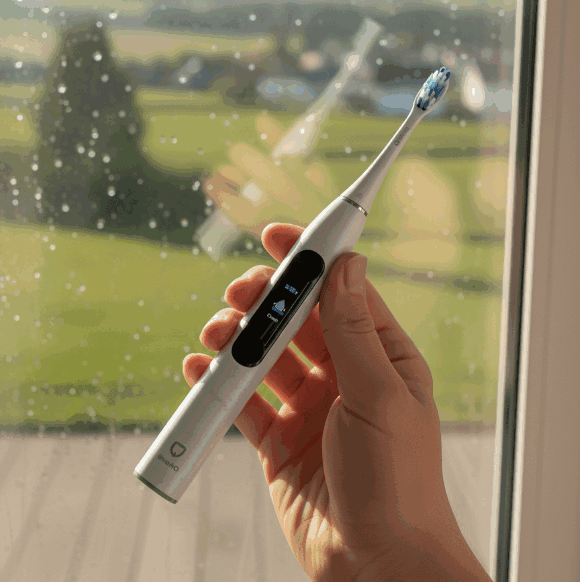
Gone are the days when toothbrushes were just plastic handles with bristles. Today’s smart toothbrushes—like BrushO—are engineered health tools designed to improve your brushing habits and enhance oral wellness. But have you ever wondered how smart toothbrushes work or what’s hidden inside the sleek design?
Let’s pop the hood and explore the high-tech components that power this daily essential.
At the heart of every smart toothbrush is a network of built-in sensors. These tracks:
• Brushing motion (rotation, oscillation)
• Coverage (which zones in your mouth are being brushed)
• Angle of brushing
• Pressure level (to prevent gum damage)
In BrushO, these sensors work together to build a real-time 3D map of your brushing routine, called your Brushprint™. This allows the device to guide you in real time—buzzing or flashing when you brush too hard or miss a spot.
What makes BrushO stand out is its FSB (Fully Smart Brushing) technology, an AI-powered system that:
• Learns your brushing patterns over time
• Adapts to your habits and adjusts guidance accordingly
• Recommends areas to improve based on data
• Provides personalized brushing reports in the BrushO app
With every session, your BrushO brush gets smarter. The system creates data-driven insights that are easy to understand, making it easier to correct technique and maintain consistent oral hygiene.
Smart toothbrushes are built not just to clean your teeth—but to train you.
BrushO gives real-time haptic feedback (vibrations), LED ring signals, and in-app prompts when you:
• Brush too hard
• Skip a zone
• Don’t reach the 2-minute mark
• Move too quickly across surfaces
This immediate correction loop is proven to help users develop healthier brushing habits in as little as a week.
The BrushO companion app takes the brush’s performance to another level:
• Displays brushing reports by day/week/month
• Highlights improvement trends
• Sends reminders to brush or replace heads
• Offers custom modes (sensitivity, whitening, deep clean)
This app-based integration makes your brushing data meaningful—and shareable with dental professionals if needed.
All this advanced tech doesn’t come at the cost of convenience. BrushO is:
• IPX7 waterproof (safe for shower use)
• Powered by a long-lasting battery (up to 45 days per charge)
• Designed with a sleek, non-slip grip for ergonomic comfort
• Built with durable brush heads that last longer and reduce waste
These features ensure the smart tech is practical for everyday use.
Understanding what’s inside a smart toothbrush like BrushO helps us appreciate the innovation behind our daily habits. With features like FSB technology, real-time feedback, and brushing data analytics, BrushO transforms toothbrushing into a smart, personalized, and health-driven experience.
It’s not just about cleaning teeth—it’s about building lasting habits and improving your long-term oral health with the power of technology.
BrushO is a next-generation oral health tech brand combining AI, real-time brushing feedback, and habit-reward systems to improve how people care for their teeth. With global recognition and over 100 brushing modes, BrushO empowers users to take control of their dental health—one smart session at a time.
Nov 12
Nov 12
Jul 30
Jul 30
Jul 29
Jul 22
Jul 19
Jul 17

Hyperdontia is the presence of one or more teeth in excess of the normal dental formula, and the resulting teeth are described as supernumerary. The condition is common enough to appear in routine practice but variable enough in presentation that the decision to intervene is rarely straightforwar...

Few patients complete orthodontic treatment without asking whether their teeth will move back. The honest answer is that they will, to some degree, in the majority of cases. Relapse is not a failure of treatment but a predictable biological response, and understanding why it happens is the basis ...

The mandible is the largest and most frequently fractured bone of the facial skeleton, and its management sits at the interface between trauma surgery and restorative dentistry. Treatment has shifted over four decades from prolonged maxillomandibular fixation towards rigid internal fixation with ...

Chronic liver disease affects hundreds of millions of people worldwide, and its prevalence continues to rise with the epidemic of metabolic liver disease. The liver is central to haemostasis, drug metabolism and immune competence, and its failure therefore alters the risk profile of almost every ...

Excessive gingival display, commonly described as a gummy smile, is one of the most frequent aesthetic concerns presented to dental practitioners. The condition is not a single entity but a clinical presentation that can arise from skeletal, gingival, muscular or dental factors, and the treatment...

Drug-induced gingival overgrowth is a well-recognised adverse effect of several widely prescribed medications, and it remains one of the most common drug-related findings in periodontal practice. The condition produces firm, fibrous enlargement of the gingiva that can interfere with speech, masti...

Denture stomatitis is an inflammatory condition of the denture-bearing mucosa that affects a large proportion of removable prosthesis wearers, yet it is frequently dismissed as a cosmetic annoyance. The condition is driven by a Candida biofilm on the fitting surface of the prosthesis, and it is m...

Chronic kidney disease affects an estimated 850 million people worldwide, and the number of patients surviving on dialysis or with a renal transplant continues to rise. These patients carry an oral disease burden that is substantially higher than that of the general population, and their medical ...

Angular cheilitis is an inflammatory lesion of the labial commissures that presents with erythema, fissuring and crusting at the corners of the mouth. It is one of the most common conditions encountered in general dental practice, yet it is frequently treated as a simple fungal infection and allo...

Adverse reactions to dental materials are uncommon but they are not rare, and they are frequently misdiagnosed because the oral mucosa responds to allergens in a limited number of ways. A burning sensation, a persistent ulcer or an unexplained area of erythema may all represent a hypersensitivity...

BrushO AI Electric Toothbrush offers real-time brushing guidance, pressure feedback, coverage tracking, and app-based progress reports for a cleaner daily routine.
BrushO AI Electric Toothbrush offers real-time brushing guidance, pressure feedback, coverage tracking, and app-based progress reports for a cleaner daily routine.


Address: RM 1427, 14/F RADIO CITY 505, HENNESSY RD CAUSEWAY BAY, HONG KONG
Code: 000000
Phone: +852-53758652
Email: customerservice@brusho.com