How AI Toothbrushes Help Improve Brushing Habits
Jan 19

Jan 19
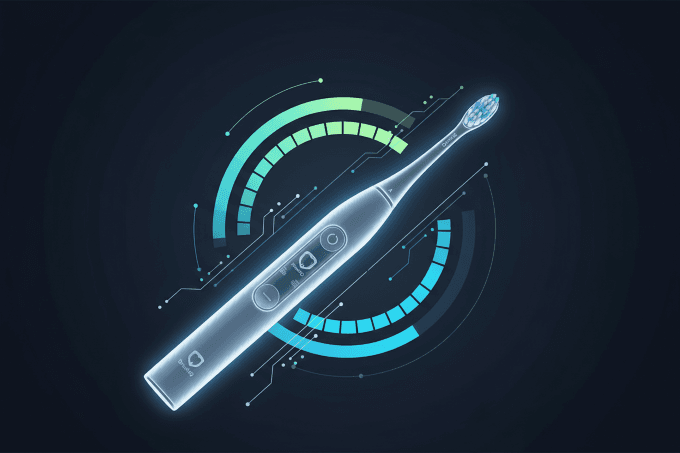
Brushing twice a day is a good start, but healthier teeth and gums depend on how you brush—your technique, pressure, coverage, and consistency over time. The problem is that traditional toothbrushes provide no feedback, making it easy to miss back molars, rush through the two-minute routine, or brush too hard and irritate the gums. AI toothbrushes solve this by turning brushing into a trackable habit. With built-in sensors and AI analysis, they provide real-time guidance on pressure, time, and full-mouth coverage tracking, then summarize performance in an app, allowing users to identify patterns and improve steadily. Good oral health isn’t only about brushing frequency—it’s about brushing correctly and consistently. Many people still experience cavities, gum inflammation, or tooth sensitivity because their brushing habits include small, repeated errors, such as brushing too hard, skipping areas, or stopping too soon. An AI toothbrush enhances your daily routine by providing real-time brushing feedback, tracking your progress during each session, and helping you develop better habits over time. Below is an explanation of how AI-powered brushing support works and why it can enhance the effectiveness of your oral care.

Why Brushing Habits Matter More Than People Think

Most brushing problems aren’t dramatic—they’re subtle and repeated:
  • Uneven cleaning: missed inner surfaces or back molars can leave plaque behind
  • Too much pressure: may irritate gums and increase enamel wear over time.
  • Not enough time: rushed brushing reduces plaque removal
  • Inconsistent routines: irregular brushing makes outcomes unpredictable
Because these mistakes are often difficult to notice without feedback, they can accumulate and contribute to plaque buildup, cavities, gum issues, and tooth sensitivity. That’s exactly where oral health tracking makes a difference.

How AI Toothbrushes Improve Brushing Habits

An AI-powered toothbrush combines sensors (motion, pressure, timing) with AI analysis to evaluate each brushing session. Instead of guessing, users receive clear guidance on what to fix.

1. Real-Time Brushing Feedback That Corrects Mistakes Immediately

The fastest way to improve a habit is to get feedback in the moment. AI toothbrushes guide users while brushing by identifying common issues such as rushing, brushing too hard, or lingering too long in one area. This real-time coaching helps reinforce a better brushing technique without needing a dentist or parent to supervise every session.
What improves: accuracy, awareness, and consistency.

2. Pressure Monitoring to Prevent Overbrushing

Brushing harder doesn’t clean better—it can harm soft tissue. Excessive pressure is associated with gum irritation and may contribute to enamel wear over time. AI toothbrushes use pressure monitoring to detect when force is too high and provide an instant alert, helping users adjust to a safer, more effective routine.
What improves: gum protection, comfort, and long-term dental hygiene.

3. Time and Frequency Tracking That Builds Consistency

Even motivated people often brush for less than the recommended duration. AI toothbrushes automatically track:
  • Brushing duration (supporting the two-minute goal)
  • Brushing frequency (supporting twice-daily consistency)
Seeing these patterns makes it easier to stick to routines. Over time, consistent brushing becomes automatic—exactly what “habit building” should accomplish.
What improves: routine stability and follow-through.

4. Full-Mouth Coverage Tracking to Reduce Missed Areas

One of the most useful features is full-mouth coverage tracking. Many people repeatedly miss the same places (back molars, inner surfaces, gumline). AI toothbrushes map brushing across key regions, and advanced tools (like BrushO) can track 6 zones and 16 tooth surfaces, then highlight what was skipped.
This helps users move from “I think I brushed well” to “I know what I cleaned and what I missed.”
What improves: completeness and plaque control.

5. App-Based Progress Monitoring That Reinforces Behavior

AI toothbrushes don’t stop at the sink. Brushing data syncs to an app that provides:
  • daily and weekly brushing reports
  • brushing scores and habit trends
  • recurring missed-area insights
  • reminders to reinforce consistency
This type of brushing progress monitoring turns oral care into a measurable routine. The result is less uncertainty and a clearer path to improvement.
What improves: motivation, accountability, and long-term adherence.
 

Why AI Toothbrushes Are Better for Habit Change Than “Willpower”

Willpower fades; systems don’t. AI toothbrushes help behavior change because they combine:
  • instant feedback (corrects errors now)
  • clear metrics (shows what “good brushing” looks like)
  • personalized guidance (supports different oral needs)
  • habit tracking (reinforces consistency over time)
Some devices also include reward mechanics (for example, BrushO’s Brush & Earn approach), which can make daily routines more engaging—especially for users who struggle with consistency.
 

Tips to Get the Most Out of an AI Toothbrush

To improve brushing habits faster, pair the technology with a simple routine:
  • Brush at the same time daily (morning + night)
  • Use the app reports weekly to identify repeated weak spots.
  • Focus on coverage first, then refine pressure and technique.
  • Keep dental checkups regular—AI supports brushing, but it doesn’t replace professional care.

A Smarter Path to Better Brushing Habits

An AI toothbrush improves brushing habits by turning daily brushing into a guided, trackable routine. With real-time brushing feedback, pressure control, oral health tracking, and full-mouth coverage tracking, users learn better techniques, build consistency, and reduce the common mistakes that lead to plaque buildup and gum issues. Over time, brushing becomes less guesswork and more measurable progress—supporting healthier smiles in a practical, everyday way.

About BrushO

BrushO is an AI-powered smart toothbrush designed to improve oral care through real-time feedback, pressure monitoring, full-mouth coverage tracking, and personalized brushing guidance. With app-based habit analytics and features like a Brush & Earn rewards system, BrushO helps users turn brushing into a smarter, more consistent wellness habit.

Recent Posts

What Weekly Brushing Data Reveals Before You Notice Any Progress

What Weekly Brushing Data Reveals Before You Notice Any Progress

How long does it take to change a habit? The popular answer is 21 days, but reality is often more subtle than that. Many changes show up in the data long before you actually feel them. AI-powered toothbrushes deliver weekly and monthly reports, and many people just swipe past them as if they were an

Why Tartar Picks on Certain Teeth — And How AI Toothbrushes Fight Back

Why Tartar Picks on Certain Teeth — And How AI Toothbrushes Fight Back

You are sitting in the dentist's chair, listening to the ultrasonic scaler buzz against your teeth, when the dentist says, "You have quite a bit of tartar buildup behind your lower front teeth." You think to yourself: I brush every day. Why does it always collect there? Tartar is not distributed eve

Your Mouth's pH Rollercoaster: The Daily Battle Between Demineralization and Remineralization

Your Mouth's pH Rollercoaster: The Daily Battle Between Demineralization and Remineralization

Have you ever thought about what your teeth go through every time you eat, drink, or even sleep? Inside your mouth, a silent tug-of-war is constantly playing out. On one side is demineralization, the process where acid dissolves minerals from your enamel. On the other side is remineralization, where

How AI Toothbrushes Can Spot Early Gum Recession Before You Do

How AI Toothbrushes Can Spot Early Gum Recession Before You Do

Have you ever looked in the mirror and noticed your gum line seems to have crept a little lower than before? Your teeth look slightly longer, and you can almost see the root peeking out. That is gum recession happening right in front of you. Many people think gum recession is something only older ad

Gingival Crevicular Fluid: Your Mouth's Silent Health Monitor

Gingival Crevicular Fluid: Your Mouth's Silent Health Monitor

You have probably never heard the term "gingival crevicular fluid," but it is working silently in your mouth every single day, like an invisible health sentinel. Gingival crevicular fluid, or GCF for short, is the fluid that seeps out of the tiny groove between your gums and your teeth. Most of the

Fluoride and Your Teeth: Protector or Double-Edged Sword?

Fluoride and Your Teeth: Protector or Double-Edged Sword?

When it comes to taking care of your teeth, fluoride might be one of the most debated topics out there. Dentists call it a cavity-fighting superhero and recommend fluoride toothpaste for the whole family. But you have also probably seen articles online warning about fluorosis and even broader health

Enamel Thickness Across Your Teeth: Not All Surfaces Are Created Equal

Enamel Thickness Across Your Teeth: Not All Surfaces Are Created Equal

Enamel is the hardest substance in the human body, but it is not spread evenly across every tooth. Different teeth, and even different surfaces on the same tooth, can have dramatically different enamel thickness. Some spots are armored like a fortress wall, while others are as thin as a sheet of pap

Brush Before or After Breakfast? What Science Says About Timing

Brush Before or After Breakfast? What Science Says About Timing

"Should I brush my teeth right after eating?" This question sparks debates at dinner tables and in group chats that rival the great culinary divides. Some people swear by brushing immediately after a meal so food particles do not sit in their mouth causing cavities. Others insist that brushing right

Why Baby Teeth Roots Dissolve Themselves: The Science Behind Losing Teeth

Why Baby Teeth Roots Dissolve Themselves: The Science Behind Losing Teeth

Every parent has been there: your child comes to you holding a wobbly baby tooth, eyes wide with a mix of excitement and nerves. You give it a gentle tug, it comes right out, and you notice something odd. The root looks almost completely gone, as if something dissolved it away. For a split second, y

How AI Toothbrushes Learn Your Mouth: The Science of Personalized Cleaning Modes

How AI Toothbrushes Learn Your Mouth: The Science of Personalized Cleaning Modes

In the age of regular toothbrushes, everyone essentially brushed the same way. One type of bristle, one vibration mode, and you just went by feel. But every mouth is different. Some people have wide gaps between teeth, others have crowded arches. Some have sensitive gums, others have naturally thin