The Role of AI in Enhancing Smart Toothbrush Performance
Jan 22

Jan 22
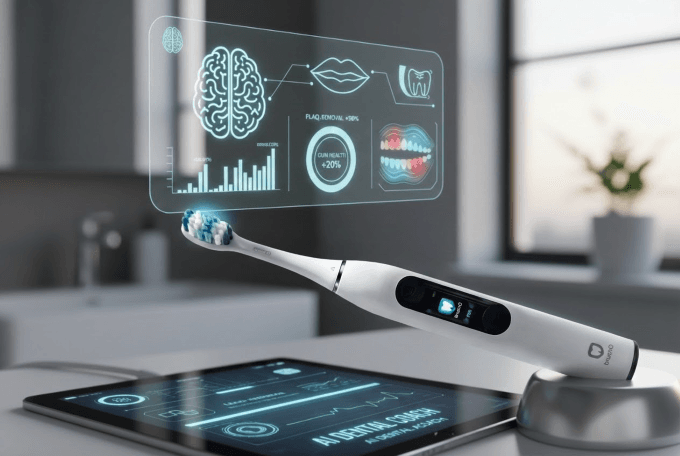
Artificial intelligence (AI) is transforming many industries, and oral care is no exception. The integration of AI into smart toothbrushes is enhancing their performance and ensuring better brushing habits. From real-time feedback to personalized brushing modes, AI-enabled toothbrushes provide more effective cleaning while adapting to individual needs. This blog delves into how AI enhances smart toothbrush performance and the benefits it brings to oral health.


Introduction: The Intersection of AI and Oral Health

Smart toothbrushes have become an essential tool for modern oral care, combining advanced technology with traditional brushing techniques. What truly sets these devices apart from regular electric toothbrushes is the integration of artificial intelligence (AI). AI is not just a buzzword in technology; it is significantly improving how we approach oral hygiene.
AI-enabled smart toothbrushes are designed to do more than just clean teeth. They leverage machine learning algorithms and sensors to offer personalized and efficient brushing experiences. By monitoring your brushing habits, AI helps optimize cleaning performance, prevent gum damage, and ensure your mouth is properly cleaned in all areas.
 

How AI Enhances Smart Toothbrushes: Key Features

1. Personalized Brushing Modes

AI-powered smart toothbrushes come equipped with various brushing modes, which adapt to the specific needs of the user. Whether you have sensitive teeth, gums, or need a deeper clean, the toothbrush can adjust its settings to suit your condition. By continuously analyzing your brushing technique, AI customizes the brushing experience for optimal results. The toothbrush can suggest the most effective brushing pattern and pressure for you, ensuring that your oral care is as efficient as possible.

2. Real-Time Feedback and Guidance

One of the standout features of AI in smart toothbrushes is the ability to provide real-time feedback during brushing. Sensors built into the toothbrush detect pressure, speed, and coverage, offering immediate guidance via a connected app or the toothbrush’s interface. For example, if you are brushing too hard, the toothbrush will alert you to prevent enamel damage. This immediate feedback helps users improve their brushing techniques, which in turn results in better oral health outcomes.

3. Adaptive Intelligence for Long-Term Benefits

Over time, the AI within a smart toothbrush can "learn" your brushing habits. Through this continuous data collection, the device can provide long-term insights into your brushing consistency, coverage, and areas that may require more attention. By analyzing this information, AI can recommend adjustments and improvements to your brushing routine. These improvements can contribute to healthier gums, stronger teeth, and less plaque buildup, ultimately lowering the risk of oral health problems such as cavities and gum disease.

4. Comprehensive Oral Health Tracking

Smart toothbrushes integrated with AI can also track your overall oral health progress. By syncing with mobile apps, users can monitor their brushing habits, detect problem areas, and keep a record of their oral hygiene routines. AI can even notify you when it’s time to replace your toothbrush head or when you need to book a dental appointment based on the data it gathers. This comprehensive health tracking ensures you stay on top of your dental hygiene regimen and empowers users to take more control over their oral health.
 

The Benefits of AI-Enhanced Smart Toothbrushes

The role of AI in smart toothbrushes goes far beyond just convenience. The real impact is on improving your overall dental health. Here’s how:
  • Better Brushing Technique: The feedback loop helps users understand the best brushing practices, minimizing the risk of brushing too aggressively or missing crucial areas.
  • Healthier Gums: Personalized brushing modes tailored to gum health can prevent overbrushing, reducing irritation and the risk of gum recession.
  • Consistency: AI ensures that users maintain the recommended brushing time, intensity, and frequency, which are critical for effective oral care.
  • Prevention: With the continuous data analysis and insights, users can detect problems early, such as irregular brushing habits or areas of concern that may need professional attention.
By making real-time adjustments to your brushing technique and encouraging better habits, AI-powered toothbrushes significantly contribute to maintaining long-term oral health.
 

Conclusion: The Future of Smart Oral Care

As AI continues to evolve, its integration into everyday devices like smart toothbrushes will only get better. These advancements offer users a more personalized, efficient, and effective brushing experience. With AI’s ability to monitor and guide brushing habits, detect potential issues, and optimize cleaning, the future of oral care is brighter than ever. Whether you're using a smart toothbrush for the first time or are already a seasoned user, embracing AI-driven technology can be the key to achieving superior oral health.

最近發文

Saliva as a Diagnostic Fluid in Dentistry

Saliva as a Diagnostic Fluid in Dentistry

Saliva has moved from the byproduct of the examination to the fluid that the modern practice can read, and the diagnostics that the salivary sample supports now reach from the caries risk to the periodontal inflammation and beyond. The fluid is easy to collect, safe to handle, and rich in the pro...

Ridge Split Technique for Narrow Alveolar Ridges

Ridge Split Technique for Narrow Alveolar Ridges

The narrow alveolar ridge is the common obstacle that the implant plan meets in the healed posterior site, and the ridge split technique is the approach that widens the crest without the block graft and the second surgical site. The technique uses the viscoelastic property of the bone, and the co...

Resin-Bonded Bridges: Indications, Design, and Survival

Resin-Bonded Bridges: Indications, Design, and Survival

The resin-bonded bridge is the conservative alternative to the conventional fixed prosthesis, and its place in the modern practice has widened as the adhesive dentistry matured. The prosthesis replaces the missing tooth with the minimal removal of the enamel from the abutment, and the retention i...

Systemic Antibiotics as an Adjunct in Periodontitis

Systemic Antibiotics as an Adjunct in Periodontitis

The systemic antibiotic has a defined and a narrow place in the periodontal therapy, and the clinician who respects its limits uses it well while the clinician who reaches for it routinely erodes both the result and the antibiotic stewardship. The mechanical debridement remains the foundation of ...

Bond Failure in Fixed Orthodontic Treatment

Bond Failure in Fixed Orthodontic Treatment

The bond failure of the bracket is the interruption that the fixed orthodontic treatment can tolerate in the small number but not in the pattern, and the clinician who understands the cause reduces the frequency that the repeated rebonding records. The failure that recurs on the single tooth poin...

Medication-Related Oral Side Effects: Recognition in Practice

Medication-Related Oral Side Effects: Recognition in Practice

The prescription pad is one of the most common sources of the oral complaint that the patient brings to the dental office, and the clinician who does not think of the medication may spend the appointment treating the symptom that the drug created. The list of the agents that affect the mouth grow...

Intraoral Scanners Versus Conventional Impressions

Intraoral Scanners Versus Conventional Impressions

The intraoral scanner has moved from the novelty of the early adopters to the standard equipment of the modern prosthodontic practice, and the comparison with the conventional impression has become a daily question rather than an academic one. The scanner captures the surface of the teeth and the...

Endodontic Retreatment: Indications and Technical Considerations

Endodontic Retreatment: Indications and Technical Considerations

The endodontic retreatment is the second chance that the tooth receives when the initial treatment fails to resolve the infection or the symptoms, and the procedure is both more demanding and more rewarding than the primary treatment. The clinician who retreats the tooth encounters the filling ma...

Endodontic Access Preparation: Principles and Common Mistakes

Endodontic Access Preparation: Principles and Common Mistakes

The access preparation is the gateway of every root canal treatment, and it is the step at which the outcome of the case is most often decided, for good or for ill. A well-designed access straightens the canal system, removes the coronal obstruction, and allows the instruments and the irrigants t...

Dentist-Laboratory Communication in Prosthodontics

Dentist-Laboratory Communication in Prosthodontics

The restoration that the laboratory returns is only as good as the information that the clinician sends, and the communication between the dentist and the technician is the step that determines whether the crown, the veneer, or the bridge meets the expectation of the patient. The shade, the form,...