
Jul 30
Jul 30
Jul 29
Jul 22
Jul 19
Jul 17
Many people treat flossing as an optional step in their oral care routine, but is it really? While brushing removes plaque from tooth surfaces, flossing addresses areas your toothbrush simply can’t reach. In this article, we explore the clinical benefits of flossing, the long-term consequences of skipping it, and how even smart brushing tools like BrushO recognize its complementary role in full-mouth hygiene. Spoiler: Yes, flossing really makes a difference — and here’s why.
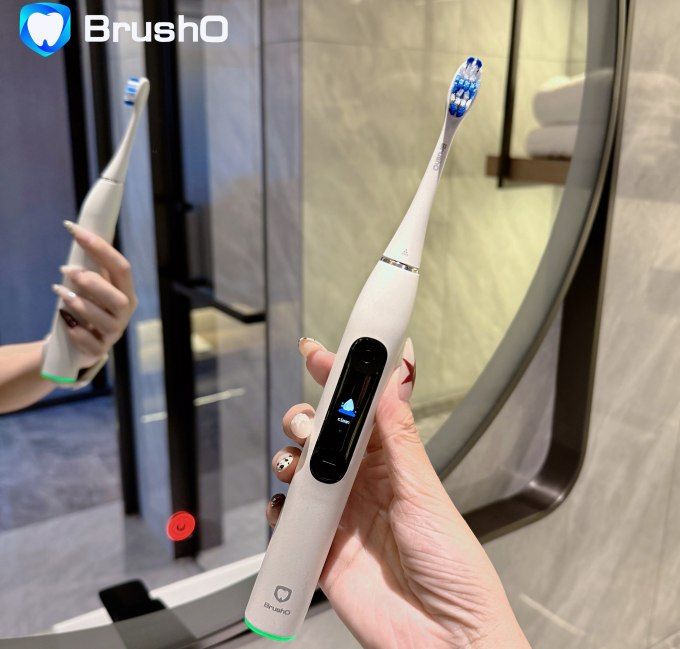
While brushing cleans the outer, inner, and chewing surfaces of your teeth, interdental spaces (the tight spots between teeth) often remain untouched. These areas account for nearly 35% of your total tooth surface — meaning over a third of your mouth is left vulnerable if you don’t floss.
Plaque is a sticky biofilm that accumulates quickly between teeth. If not removed, it:
• Hardens into tartar (calculus)
• Triggers gum inflammation (gingivitis)
• Leads to cavities in hard-to-reach areas
The first sign of neglecting flossing is often bleeding gums — a hallmark of early-stage gingivitis. Left untreated, this can escalate to periodontitis, which leads to:
• Gum recession
• Tooth mobility or even tooth loss
• Bad breath and chronic inflammation
Without flossing, plaque and food particles get stuck between teeth, creating the ideal environment for acid-producing bacteria. This leads to:
• Cavities between molars (often undetected until pain arises)
• Expensive dental interventions such as fillings or crowns
Emerging research shows a strong link between poor flossing habits and systemic inflammation. Periodontal disease has been associated with:
• Heart disease
• Diabetes complications
• Pregnancy risks (e.g., low birth weight, premature delivery)
Many assume that advanced toothbrushes — like BrushO with FSB smart zone tracking and AI-guided pressure detection — can replace flossing. But even the most sophisticated brushes can’t dislodge debris from tight interdental contacts.
Dentists agree: brushing + flossing work together, not as substitutes.
Doing it right is as important as doing it at all. Here’s a quick guide:
1. Use 18–24 inches of floss, winding most around your middle fingers.
2. Hold the floss tightly and gently guide it between teeth with a sawing motion.
3. Curve it into a “C” shape against the tooth and slide beneath the gumline.
4. Repeat for each tooth, using a clean section each time.
Pro Tip: Floss before brushing — it helps fluoride reach between teeth more effectively.
If string floss feels cumbersome, try:
• Floss picks (for convenience, though less effective around the gumline)
• Water flossers (great for sensitive gums and braces)
• Interdental brushes (effective for larger gaps and back teeth)
BrushO’s app also integrates with oral care routines that remind users to floss and track frequency — encouraging full-mouth discipline.
So, does flossing really make a difference? Absolutely.
It’s not just a dentist’s cliché — it’s a science-backed necessity. Flossing once a day:
• Prevents gum disease
• Reduces risk of interproximal cavities
• Supports better systemic health
• Enhances the effectiveness of brushing tools like BrushO
In the long run, flossing saves you from costly dental procedures and supports a healthier smile — one small string at a time.
Dec 29
Dec 29
Jul 30
Jul 30
Jul 29
Jul 22
Jul 19
Jul 17

Fluoride in drinking water is the most cost-effective caries preventive measure in public health, and it is also the source of most avoidable fluoride exposure in young children. The balance between benefit and risk depends on concentration, on total intake from all sources and on the age of the ...

A mouthguard is the only piece of protective equipment that a dentist can prescribe, and the difference between the cheapest and the best version is often less than the cost of a single repair. This guide explains what each type of mouthguard actually protects, how to judge fit, and what to check...

Distinguishing reversible from irreversible pulpitis is the single most consequential decision in endodontic diagnosis, because one leads to a restoration and the other to root canal treatment or extraction. The distinction rests on symptoms and pulp testing rather than on radiographs alone, and ...

A pregnancy epulis is a benign overgrowth of gum tissue that appears during pregnancy, most often in the second or third trimester. It can alarm patients because it grows quickly and bleeds easily, yet in most cases it needs no surgery and settles after delivery. Understanding what drives the gro...

When several teeth are missing, the choice usually narrows to a removable partial denture or a fixed implant-supported restoration, and cost is the factor patients raise first. Upfront price is only part of the comparison, because the two options differ in maintenance, comfort, effects on neighbo...

Most root canal failures are not caused by inadequate cleaning of canals that were found, but by canals that were never located. Molar anatomy varies widely, and the variation is not random: specific teeth in specific populations have predictable additional canals. Knowing where they hide is the ...

Gum massage is one of the oldest recommendations in oral care and one of the least understood. It has been described as a treatment for bleeding gums, a route to firmer tissue and, more recently, a way to reduce brushing force. This article separates the mechanisms that are supported by physiolog...

Interdental cleaning is the part of oral hygiene most people abandon first, and the choice between a floss pick and a length of string floss is often made on convenience. Convenience matters, because a tool that is used daily outperforms a superior tool that stays in the drawer, but the two devic...

Dementia changes the way a denture is worn, cleaned and tolerated, and the people who notice the change first are usually family carers rather than clinicians. Poor denture hygiene in this group is associated with mucosal infection, reduced food intake and, in frail patients, respiratory complica...

Chewing tobacco keeps nicotine and plant irritants in prolonged contact with a small area of mucosa, and the damage that results is concentrated exactly where the quid is held. The lesions that develop are often painless, which is why they are discovered during routine examination rather than bec...

Bàn chải điện BrushO AI cung cấp hướng dẫn chải răng theo thời gian thực, phản hồi lực nhấn, theo dõi vùng chải và báo cáo tiến độ trong ứng dụng cho thói quen hằng ngày sạch hơn.
Bàn chải điện BrushO AI cung cấp hướng dẫn chải răng theo thời gian thực, phản hồi lực nhấn, theo dõi vùng chải và báo cáo tiến độ trong ứng dụng cho thói quen hằng ngày sạch hơn.


Address: RM 1427, 14/F RADIO CITY 505, HENNESSY RD CAUSEWAY BAY, HONG KONG
Code: 000000
Phone: +852-53758652
Email: customerservice@brusho.com