
Jul 30
Jul 30
Jul 29
Jul 22
Jul 19
Jul 17
Whiter teeth have become a symbol of beauty, confidence, and cleanliness. From over-the-counter strips to professional gels and light treatments, whitening products are everywhere. But is daily use too much? While these products may deliver cosmetic benefits, overuse can harm your enamel, irritate your gums, and create long-term sensitivity. Here’s what you need to know before reaching for that next whitening strip.
Many people confuse “whiter” with “healthier.” But:
• Whitening only affects surface stains, not underlying oral health.
• Even teeth with cavities or gum disease can appear white.
• Prioritizing color over complete hygiene can lead to neglected issues.
🧠 The key is to treat whitening as cosmetic maintenance, not as a substitute for oral care.
| Product Type | Risk of Overuse |
| Whitening Strips | Can cause enamel thinning and gum irritation |
| Whitening Toothpaste | Often abrasive; can wear down enamel with daily use |
| LED Whitening Kits | Risk of burning soft tissue if used improperly |
| Charcoal Toothpaste | Highly abrasive; not recommended for daily brushing |
⚠️ Many of these are safe in moderation, but not intended for continuous, aggressive use.
You might be overdoing it if you experience:
• Increased tooth sensitivity, especially with hot/cold drinks
• Gum inflammation or burning sensation
• Teeth that look translucent or gray over time
• Rough or uneven surfaces on your enamel
These are warning signs your enamel is suffering—and enamel doesn’t grow back.
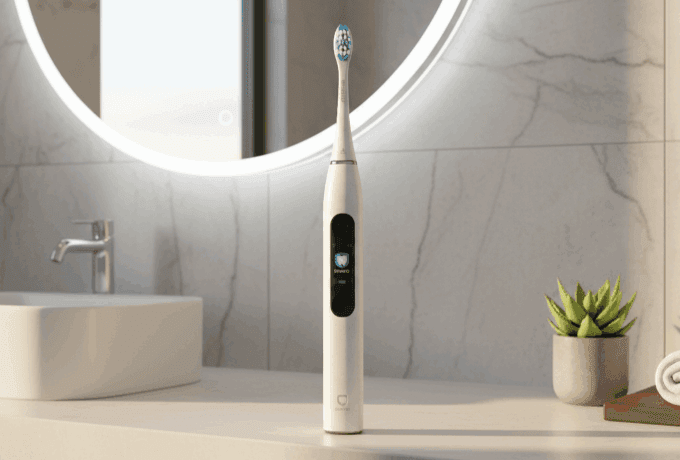
Instead of chasing white teeth alone, focus on consistent and complete cleaning. Smart toothbrushes like BrushO ensure:
• Even brushing coverage across all 6 zones and 16 surfaces
• Pressure feedback to prevent abrasion from over-scrubbing
• Habit tracking for long-term consistency, not just aesthetic fixes
📱 BrushO helps you build habits that protect your enamel, not damage it.
Here’s how to whiten responsibly:
• Limit whitening strip use to once every 3–6 months
• Use whitening toothpaste only once per day, or alternate days
• Avoid acidic foods immediately after whitening sessions
• Talk to your dentist before starting any whitening regimen, especially if you have sensitive teeth
A healthy routine always beats short-term shine.
Lasting brightness comes from:
• Brushing twice daily with proper technique
• Flossing and tongue cleaning to prevent discoloration from bacteria
• Staying hydrated to keep saliva flowing (saliva naturally cleans your teeth)
• Using smart tech like BrushO to avoid damaging mistakes
🦷 Whitening can enhance, but only daily care can preserve.
Yes, whitening products work—but they’re not magic, and they’re not risk-free. Overuse can silently erode your teeth’s protective layers and cause long-term problems. Focus on balance: safe whitening, supported by smart daily brushing and regular dental visits. Your smile will thank you.
BrushO is an AI-powered smart toothbrush that helps users maintain healthy smiles through:
• Real-time brushing zone detection
• Pressure-sensitive guidance
• Custom cleaning modes (e.g., whitening, sensitive, deep clean)
• App-based brushing reports and habit rewards with $BRUSH tokens
✨ With BrushO, you can whiten responsibly—without sacrificing your enamel.
Jul 30
Jul 30
Jul 29
Jul 22
Jul 19
Jul 17

Squamous cell carcinoma is not a single, uniform disease, and two of its oral variants illustrate the extremes of its behavior. Verrucous carcinoma is a slow-growing, exophytic tumor that almost never metastasizes, while spindle cell carcinoma is an aggressive, sarcomatoid malignancy that can be ...

Most people expect a toothache to be the first sign of pulp disease, but some forms of pulpitis are surprisingly silent. A pulp polyp is the visible result of chronic hyperplastic pulpitis, a condition in which the dental pulp grows out of a large carious opening as a fleshy mass. Recognizing thi...

Dry mouth is not merely uncomfortable; it is a medical condition with real consequences for teeth, speech, swallowing and quality of life. When the salivary glands cannot produce enough saliva, medications called sialogogues can restore some of the missing fluid. Pilocarpine and cevimeline are th...

A blister in the mouth can be the first warning of a systemic autoimmune disease, and two disorders deserve particular attention in the dental chair: pemphigus vulgaris and mucous membrane pemphigoid. Both produce chronic oral ulceration, yet their immunologic targets, clinical behavior and long-...

When infection drains from a tooth, the body often creates a visible escape route, and the dentist must interpret these fistulous openings correctly. A parulis is the common gum boil that signals chronic periapical infection, while an oroantral fistula is a communication between the mouth and the...

Among the fibro-osseous lesions of the jaws, the ossifying fibroma holds a unique position because it is a true neoplasm, unlike the reactive cemento-osseous dysplasia discussed in an earlier article. It grows continuously, expands bone and requires surgical removal, and its cemental variant adds...

Not all keratocystic lesions of the jaw behave alike, and one of the most important distinctions in oral pathology separates the orthokeratinized odontogenic cyst from its better-known relative, the odontogenic keratocyst. Although the two lesions look similar under the microscope at first glance...

Periodontal disease is usually a slowly progressive infection, but a rare form called necrotizing ulcerative periodontitis destroys tissue with alarming speed. Unlike ordinary periodontitis, this condition produces necrotic, cratered papillae, deep pocketing and rapid bone loss, and it appears al...

Every parent has met the child who refuses to eat because of painful mouth sores, and most of these children have one of two viral illnesses: herpangina or hand, foot and mouth disease. Both are caused by enteroviruses, both produce fever and oral ulcers, and both are overwhelmingly common in you...

Cementoosseous dysplasia is one of the most common fibro-osseous lesions found on dental radiographs, yet it is also one of the most frequently misdiagnosed. The lesion replaces normal bone with cellular fibrous tissue and cementum-like material, and it appears in several forms that range from a ...

Bàn chải điện BrushO AI cung cấp hướng dẫn chải răng theo thời gian thực, phản hồi lực nhấn, theo dõi vùng chải và báo cáo tiến độ trong ứng dụng cho thói quen hằng ngày sạch hơn.
Bàn chải điện BrushO AI cung cấp hướng dẫn chải răng theo thời gian thực, phản hồi lực nhấn, theo dõi vùng chải và báo cáo tiến độ trong ứng dụng cho thói quen hằng ngày sạch hơn.


Address: RM 1427, 14/F RADIO CITY 505, HENNESSY RD CAUSEWAY BAY, HONG KONG
Code: 000000
Phone: +852-53758652
Email: customerservice@brusho.com