
Jul 30
Jul 30
Jul 29
Jul 22
Jul 19
Jul 17
Confidence starts with a smile—but what happens when oral health problems make you hesitate to show it? From bad breath and discolored teeth to gum issues and missing teeth, oral problems can affect how you see yourself and how others perceive you. Fortunately, building healthy oral habits doesn’t just improve your teeth—it boosts your self-image and confidence. In this article, we’ll explore how oral health and self-esteem are deeply connected, and how smart brushing tools like BrushO help rebuild that connection with AI-driven care, motivation, and long-term results.
A bright, healthy smile is one of the first things people notice. Studies show that individuals with cleaner, well-maintained teeth are often perceived as more trustworthy, successful, and attractive. On the flip side, those struggling with oral issues may:
• Avoid smiling or laughing in public
• Feel self-conscious in social or professional settings
• Experience anxiety about bad breath or tooth appearance
• Develop lower self-esteem over time
This emotional impact is especially strong in teenagers and young adults, whose identities are still forming—and in older adults who may have experienced tooth loss or gum problems.
Several oral conditions directly impact how people feel about themselves:
• Tooth Discoloration: Yellow or stained teeth can make people hesitant to smile.
• Bad Breath: Halitosis causes social anxiety and avoidance.
• Crooked Teeth or Gaps: Misaligned teeth often lead to shyness or embarrassment.
• Gum Inflammation or Recession: Visible gum issues can signal neglect, even when unintentional.
• Missing Teeth: Gaps from tooth loss dramatically affect facial expression and confidence.
These issues, if left untreated, may create a negative cycle: poor oral health leads to embarrassment, which discourages people from seeking help, leading to further decline.
Brushing isn’t just a hygiene routine—it’s a form of self-care. Establishing and maintaining proper brushing habits can reverse oral problems and improve confidence:
• Whiter Teeth: Consistent brushing helps reduce staining and brightens smiles.
• Fresh Breath: Removing plaque and bacteria improves breath and reduces social worry.
• Healthier Gums: Regular care prevents gum bleeding and swelling, helping your smile appear healthier and more vibrant.
• Empowerment: Taking control of your health builds a sense of pride and autonomy.
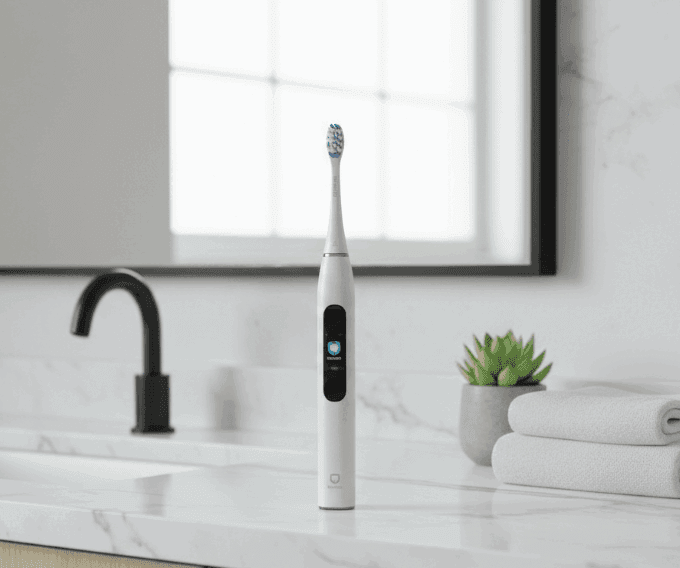
BrushO, an AI-powered smart toothbrush, helps users take their oral care—and confidence—to the next level:
BrushO’s smart sensors track pressure, coverage, and duration to guide users toward a more complete clean. No more missed spots or uneven brushing.
With features like brushing scores, streaks, and $BRUSH token rewards, users feel more motivated and accomplished—transforming brushing from a chore into a daily win.
The BrushO app provides brushing history and improvement metrics. Seeing visible progress can boost user satisfaction and personal pride.
From whitening to sensitive mode, BrushO adapts to different oral needs—helping users achieve the smile they’re proud to show off.
You don’t have to wait for a dental emergency to start caring for your smile. By investing in smart oral care tools and building healthier brushing habits, you’re not only protecting your teeth—but you’re also nurturing your self-confidence. Your smile is a reflection of how you feel inside. Make it one you’re proud to share, every day.
BrushO is an AI-powered smart toothbrush system designed to elevate everyday brushing into a personalized wellness ritual. With real-time feedback, habit tracking, and $BRUSH token rewards, BrushO empowers users to improve their oral health—and their self-confidence—with every brush.
Jan 13
Jan 13
Jul 30
Jul 30
Jul 29
Jul 22
Jul 19
Jul 17

Coffee and red wine are two of the most common causes of teeth staining, and the stains they leave behind are often considered a cosmetic nuisance rather than a dental health issue. However, these extrinsic stains can make teeth look dull, yellow or brown, and they can affect a person's confidenc...

Mouth sores and ulcers are common oral health issues that can cause significant discomfort and pain. These lesions can affect eating, speaking, and overall quality of life, and understanding their healing times and treatment options can help patients manage them effectively. From common canker so...

X-ray imaging has been the gold standard for detecting cavities for decades, but laser-based technologies now offer a different approach to finding tooth decay. Laser cavity detection uses fluorescence and laser light to identify changes in tooth structure before they appear on an x-ray, and unde...

Facial furrows are not just a cosmetic concern, they are visible markers of the way skin ages and how it responds to dehydration. Dry skin is one of the most common contributors to early and deepening facial lines, and understanding the underlying causes helps explain why certain areas of the fac...

Grinding or clenching the teeth at night, known as bruxism, is more than a dental issue. The muscles that close the jaw are among the strongest in the body, and their chronic overactivation can trigger headaches, ear pain, facial discomfort and disrupted sleep. The connection between bruxism and ...

Decortication, the deliberate removal of a cortical plate to expose or to decompress the tissue beneath it, appears in oral surgery under several names and in several contexts, from transalveolar extraction of a deeply impacted third molar to alveoloplasty of an irregular ridge and to decompressi...

Lichenoid lesions of the oral mucosa present a diagnostic problem before they present a therapeutic one, because the same white reticulated pattern can represent idiopathic oral lichen planus, a contact reaction to a restoration, a drug eruption, or an entirely benign variation such as leukoedema...

Bone in the adult jaw is never quiescent. Roughly 10 percent of the human skeleton is replaced every year, and the alveolar process turns over faster than most skeletal sites because it is loaded intermittently by mastication and by the forces transmitted through the periodontal ligament. The ost...

Root canal treatment succeeds or fails at the interface between the filling material and the dentin wall, and no material has changed that interface more in the past two decades than the calcium silicate bioceramic sealer. These materials descend from Portland cement, set in the presence of moist...

Ameloblastoma is the most common clinically significant odontogenic tumor, and its behaviour is defined less by its ability to spread than by its tendency to return after apparently complete removal. Conservative surgery preserves function and facial contour, and decortication is the procedure mo...

แปรงสีฟันไฟฟ้า BrushO AI ให้คำแนะนำการแปรงแบบเรียลไทม์ ฟีดแบ็กแรงกด การติดตามพื้นที่แปรง และรายงานความคืบหน้าในแอป เพื่อกิจวัตรประจำวันที่สะอาดขึ้น
แปรงสีฟันไฟฟ้า BrushO AI ให้คำแนะนำการแปรงแบบเรียลไทม์ ฟีดแบ็กแรงกด การติดตามพื้นที่แปรง และรายงานความคืบหน้าในแอป เพื่อกิจวัตรประจำวันที่สะอาดขึ้น


Address: RM 1427, 14/F RADIO CITY 505, HENNESSY RD CAUSEWAY BAY, HONG KONG
Code: 000000
Phone: +852-53758652
Email: customerservice@brusho.com