
Jul 30
Jul 30
Jul 29
Jul 22
Jul 19
Jul 17
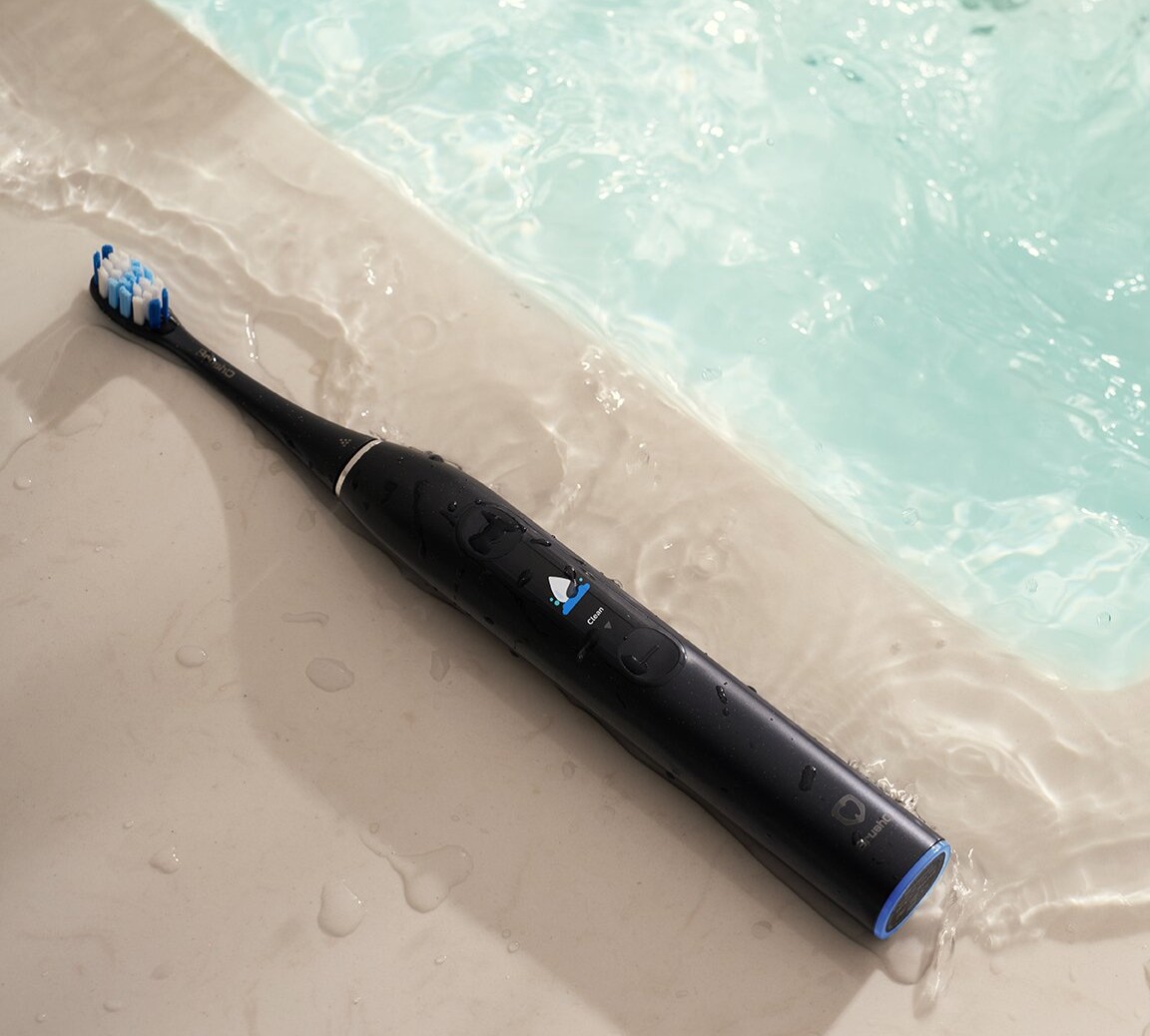
Brushing your teeth has always been part of your daily routine—but what if your toothbrush could guide, correct, and even reward you?
Smart electric toothbrushes are no longer futuristic gadgets. With AI-powered sensors, personalized brushing feedback, and data-driven insights, brands like BrushO are redefining oral hygiene. In this article, we’ll uncover the top features of today’s smartest electric toothbrushes—and why you won’t want to go back to manual brushing again.
"Is your brushing technique actually effective?"
Smart toothbrushes like BrushO use built-in AI sensors to detect brushing pressure, speed, and coverage in real time. You’ll get immediate feedback if you’re brushing too hard or missing key areas—like having a virtual dentist in your bathroom.
✅ Benefit: Avoid enamel damage and gum bleeding caused by overbrushing.
"How do I know if I brushed well today?"
Each session ends with a brushing score, analyzing duration, angle, zone coverage, and pressure. Some models even gamify your brushing experience with progress badges and streak tracking.
BrushO, for example, lets users track improvements over time using its mobile app. Your toothbrush becomes your personal dental coach.
✅ Benefit: Turn brushing from a mindless task into a measurable habit.
"Can I track my child's brushing habits too?"
With cloud-syncing features, parents can monitor kids’ brushing habits via app. You can view their brushing logs, identify missed zones, and set reminder alerts—all remotely.
This feature is especially powerful for multi-user households using one smart base with different brush heads.
✅ Benefit: Empower better habits for the entire family.
"How long does the battery actually last?"
Forget guessing when it’s time to recharge. The best smart toothbrushes show real-time battery health, charging cycles, and reminders—often through both LED indicators and apps.
BrushO's intelligent power-saving algorithm allows up to 60 days of usage on a full charge.
✅ Benefit: No dead toothbrush moments before a big day.
"Can I actually earn rewards by brushing my teeth?"
Yes, with BrushO, users can earn blockchain-based tokens for consistent brushing. These tokens can be used for discounts, accessories, or even converted into other crypto assets.
It's oral care meets DeFi—a true health-to-earn revolution.
✅ Benefit: Motivate daily brushing in a fun, meaningful way.
"How do I improve my brushing technique?"
Some smart toothbrushes offer augmented reality tutorials, showing exactly how to move your brush in 3D guided motion. Paired with AI zone mapping, you’re literally brushing in the right direction.
✅ Benefit: Master dentist-approved techniques in a fully guided way.
Today’s smart electric toothbrushes don’t just clean—they teach, track, reward, and evolve with you.
With powerful features like AI brushing feedback, personalized coaching, rewards, and app syncing, BrushO is leading the next generation of oral care.
Ready to experience the future of brushing?
Aug 8
Aug 7
Jul 30
Jul 30
Jul 29
Jul 22
Jul 19
Jul 17

Fluoride in drinking water is the most cost-effective caries preventive measure in public health, and it is also the source of most avoidable fluoride exposure in young children. The balance between benefit and risk depends on concentration, on total intake from all sources and on the age of the ...

A mouthguard is the only piece of protective equipment that a dentist can prescribe, and the difference between the cheapest and the best version is often less than the cost of a single repair. This guide explains what each type of mouthguard actually protects, how to judge fit, and what to check...

Distinguishing reversible from irreversible pulpitis is the single most consequential decision in endodontic diagnosis, because one leads to a restoration and the other to root canal treatment or extraction. The distinction rests on symptoms and pulp testing rather than on radiographs alone, and ...

A pregnancy epulis is a benign overgrowth of gum tissue that appears during pregnancy, most often in the second or third trimester. It can alarm patients because it grows quickly and bleeds easily, yet in most cases it needs no surgery and settles after delivery. Understanding what drives the gro...

When several teeth are missing, the choice usually narrows to a removable partial denture or a fixed implant-supported restoration, and cost is the factor patients raise first. Upfront price is only part of the comparison, because the two options differ in maintenance, comfort, effects on neighbo...

Most root canal failures are not caused by inadequate cleaning of canals that were found, but by canals that were never located. Molar anatomy varies widely, and the variation is not random: specific teeth in specific populations have predictable additional canals. Knowing where they hide is the ...

Gum massage is one of the oldest recommendations in oral care and one of the least understood. It has been described as a treatment for bleeding gums, a route to firmer tissue and, more recently, a way to reduce brushing force. This article separates the mechanisms that are supported by physiolog...

Interdental cleaning is the part of oral hygiene most people abandon first, and the choice between a floss pick and a length of string floss is often made on convenience. Convenience matters, because a tool that is used daily outperforms a superior tool that stays in the drawer, but the two devic...

Dementia changes the way a denture is worn, cleaned and tolerated, and the people who notice the change first are usually family carers rather than clinicians. Poor denture hygiene in this group is associated with mucosal infection, reduced food intake and, in frail patients, respiratory complica...

Chewing tobacco keeps nicotine and plant irritants in prolonged contact with a small area of mucosa, and the damage that results is concentrated exactly where the quid is held. The lesions that develop are often painless, which is why they are discovered during routine examination rather than bec...

Электрическая зубная щетка BrushO с ИИ дает подсказки в реальном времени, обратную связь по давлению, отслеживание покрытия и отчеты о прогрессе в приложении для более чистой ежедневной рутины.
Электрическая зубная щетка BrushO с ИИ дает подсказки в реальном времени, обратную связь по давлению, отслеживание покрытия и отчеты о прогрессе в приложении для более чистой ежедневной рутины.


Address: RM 1427, 14/F RADIO CITY 505, HENNESSY RD CAUSEWAY BAY, HONG KONG
Code: 000000
Phone: +852-53758652
Email: customerservice@brusho.com