
Jul 30
Jul 30
Jul 29
Jul 22
Jul 19
Jul 17
Your mouth may be the gateway to your body, but what starts there doesn’t always stay there. Scientific studies now confirm that oral bacteria can travel through the bloodstream, triggering inflammation that affects organs far beyond the teeth and gums. From increased risk of cardiovascular disease to potential links with Alzheimer’s and cognitive decline, neglecting oral hygiene may carry much more severe consequences than just a cavity or two. Fortunately, with modern tools like AI-powered toothbrushes and real-time brushing reports, maintaining a healthy mouth—and by extension, a healthier body—is more achievable than ever.
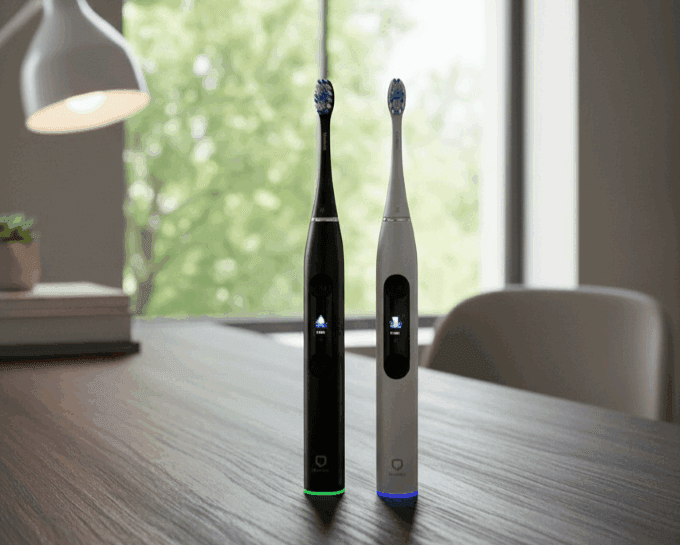
The mouth hosts over 700 species of bacteria. While many are harmless, some become dangerous when oral hygiene is poor. Inflammation from gingivitis or periodontitis creates microscopic openings in the gums, allowing bacteria to enter the bloodstream. Once inside, these bacteria can travel to other organs, triggering immune responses and contributing to systemic inflammation.
🧠 BrushO Insight: Smart brushing with BrushO ensures consistent cleaning across all six zones and 16 surfaces of the mouth, reducing plaque buildup that leads to gum inflammation.
Researchers have found direct links between periodontal disease and atherosclerosis—the hardening and narrowing of arteries. Here’s how:
• Inflammation caused by oral bacteria may contribute to plaque buildup in the arteries.
• Certain strains like Porphyromonas gingivalis have been found in arterial plaque samples.
• People with severe gum disease have a 2 to 3 times higher risk of heart attack or stroke.
Maintaining excellent oral hygiene isn’t just about avoiding cavities—it’s about protecting your cardiovascular health.
Emerging research indicates that oral health may play a critical role in brain health:
• Oral bacteria have been found in the brains of Alzheimer’s patients.
• Chronic inflammation caused by untreated gum disease may accelerate neurodegenerative processes.
• Studies suggest a 30% higher risk of cognitive decline in individuals with poor oral hygiene.
💡 BrushO Benefit: Real-time brushing feedback and pressure sensors help prevent both under- and over-brushing, which are often linked to inflammation that can exacerbate systemic health issues.
• Bleeding gums during brushing or flossing
• Persistent bad breath (a sign of bacterial imbalance)
• Swollen or receding gums
• Plaque and tartar buildup near the gumline
If any of these symptoms are present, it’s crucial to address them early—not just for your teeth, but for your heart and brain as well.
Preventing bacteria from entering the bloodstream starts with daily oral care:
Use an AI-powered toothbrush like BrushO to ensure:
• Even pressure on all zones
• No missed spots
• Smart timing based on brushing behavior
Flossing removes plaque between teeth where even advanced brushes can’t reach.
Consider mouthwashes with chlorhexidine or essential oils that reduce bacterial load.
Saliva is a natural defense against bacterial growth. Drink plenty of water to support it.
Routine professional cleanings remove tartar and allow early detection of gum inflammation.
Traditional brushing methods often rely on guesswork—leading to overbrushing some areas while neglecting others. Smart toothbrushes like BrushO change the game:
• Track habits and highlight risks
• Send personalized brushing reports
• Offer reward systems to reinforce consistency
• Help identify inflammation-prone zones with real-time guidance
By taking advantage of data-driven brushing, users can actively reduce their systemic inflammation risk, not just clean their teeth.
Oral health is whole-body health. Bacteria from your mouth don’t stay confined—they can influence your heart and your brain, increasing your risk of serious, long-term disease. That’s why investing in smart brushing tools like BrushO is more than a cosmetic choice—it’s a health decision. A healthier smile today could mean a healthier heart and mind tomorrow.
Jul 30
Jul 30
Jul 29
Jul 22
Jul 19
Jul 17

Teledentistry—the use of information and communication technologies to deliver dental care, consultation, education, and public health services across geographic distances—has undergone an unprecedented transformation in recent years. While the concept dates to the 1990s, the COVID-19 pandemic catal

The field of endodontics has undergone a paradigm shift over the past two decades. Traditional root canal therapy, while effective at eliminating infection and preserving teeth, ultimately results in a non-vital tooth that is more brittle and susceptible to fracture. Regenerative endodontics offers

The human oral cavity harbors one of the most diverse and dynamic microbial communities in the body, second only to the gut in complexity. Advances in culture-independent molecular techniques—particularly 16S rRNA gene sequencing and shotgun metagenomics—have transformed our understanding of the ora

Medication-related osteonecrosis of the jaw (MRONJ) is a serious adverse event characterized by exposed necrotic bone in the maxillofacial region that persists for more than eight weeks in patients with current or previous antiresorptive or antiangiogenic therapy and no history of head and neck radi

The dental patient population is aging, and the prevalence of chronic medical conditions continues to rise. The World Health Organization projects that by 2050, the proportion of the global population over 60 years will double from 12% to 22%, with a corresponding increase in the burden of multimorb

Saliva has emerged as a powerful diagnostic fluid that reflects the physiological and pathological state of the body. As an ultrafiltrate of blood, saliva contains a complex mixture of proteins, nucleic acids, metabolites, and microorganisms that originate from multiple sources: salivary glands, gin

Peri-implantitis has emerged as one of the most significant complications in implant dentistry, affecting an estimated 20% of patients and 10% of implants at the patient and implant levels respectively. As the global population of dental implants grows, the burden of peri-implant disease is expandin

Molar Incisor Hypomineralization (MIH) is a qualitative developmental enamel defect affecting one to four first permanent molars, frequently with concurrent involvement of permanent incisors. First described systematically by Weerheijm and colleagues in 2001, MIH has since been recognized as a globa

Digital Smile Design (DSD) has revolutionized aesthetic dentistry by providing a systematic, communication-centered approach to treatment planning. Developed by Dr. Christian Coachman in 2007, DSD integrates facial and dental analysis, intraoral and extraoral digital data, and interdisciplinary coll

Additive manufacturing, commonly known as 3D printing, has transformed dentistry over the past decade from a niche prototyping tool into an integral component of digital workflows. The technology enables the fabrication of surgical guides, dental models, temporary and permanent restorations, denture

Электрическая зубная щетка BrushO с ИИ дает подсказки в реальном времени, обратную связь по давлению, отслеживание покрытия и отчеты о прогрессе в приложении для более чистой ежедневной рутины.
Электрическая зубная щетка BrushO с ИИ дает подсказки в реальном времени, обратную связь по давлению, отслеживание покрытия и отчеты о прогрессе в приложении для более чистой ежедневной рутины.


Address: RM 1427, 14/F RADIO CITY 505, HENNESSY RD CAUSEWAY BAY, HONG KONG
Code: 000000
Phone: +852-53758652
Email: customerservice@brusho.com