
Jul 30
Jul 30
Jul 29
Jul 22
Jul 19
Jul 17
Most people don’t give much thought to where or how they store their toothbrush — but improper storage can lead to bacterial buildup, mold growth, and even decreased brush performance. In this article, we’ll explain the best ways to store your toothbrush to keep it clean, hygienic, and long-lasting. Plus, we’ll show how an AI-powered electric toothbrush like BrushO is designed to support proper storage and hygiene without extra effort.
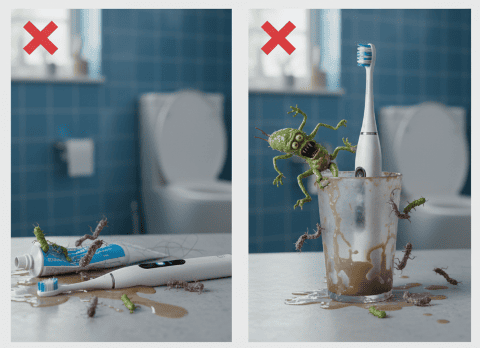
Most of us brush and rinse, then toss the brush back into a cup or bathroom counter without a second thought. But how you store your toothbrush can significantly affect your oral health. Toothbrushes can harbor harmful bacteria, especially when stored in moist, enclosed, or shared environments.
Poor storage habits can lead to:
Germ transmission
Mold or mildew growth
Premature wear of bristles
Contamination from nearby sinks or toilets
Here’s what dentists and experts recommend when it comes to daily storage:
Avoid keeping your toothbrush in drawers, sealed boxes, or dark cabinets. A toothbrush should be stored vertically in a well-ventilated holder to allow water to drip off and air to circulate. This prevents mold and bacterial growth.
Pro Tip: BrushO toothbrushes are designed with advanced water-resistant casing and quick-drying brush heads to support hygienic drying.
Toothbrushes should be stored at least 3 feet away from your toilet to prevent airborne particles (yes, the infamous “toilet plume”). Also, avoid placing it too close to the sink where dirty water might splash.
Make sure toothbrush heads don’t touch each other in multi-user households. Contact between bristles can transfer bacteria.
If you’re using BrushO’s replaceable brush head system, each family member can have their own personalized head, helping prevent cross-contamination.
A closed or airtight case may seem hygienic, but it actually traps moisture, encouraging bacteria. Choose open or vented holders.
Tip for Travelers: While BrushO doesn’t currently offer a travel case, you can use a breathable toothbrush sleeve or silicone cap with air vents.
Toothbrush holders often accumulate grime, toothpaste residue, and water stains. Clean it weekly with soap and hot water to prevent bacterial buildup.
Electric toothbrushes like BrushO often come with charging docks. Here’s how to store them safely:
Avoid laying the brush flat, which can trap water around the base. BrushO supports wireless QI charging, so storing it upright ensures efficient drying and charging.
Every few days, detach the head to let the internal grooves dry. BrushO’s snap-on design makes this effortless.
Wipe the base weekly with a dry cloth. If there’s buildup, use a slightly damp cloth but avoid soaking.
Proper storage prolongs life, but you still need to replace your brush head every 3 months, or sooner if the bristles are frayed. Dirty storage = faster wear.
✅ With BrushO’s lifetime free brush head program, users can redeem a new brush head regularly by brushing daily and earning points. It’s a smart incentive to keep both your brush and habits clean.
Taking a few extra seconds to store your toothbrush properly can protect your mouth from harmful bacteria and make your electric toothbrush last longer. With the help of innovative smart toothbrushes like BrushO, proper storage and hygiene are built into the product design.
By brushing smarter — and storing smarter — you’re one step closer to better oral health.
Jul 30
Jul 30
Jul 29
Jul 22
Jul 19
Jul 17

PPM describes concentration, not the amount to put on the brush. Learn how to read fluoride information while keeping regional guidance and individual advice in view.

That forgotten tube deserves a label check. Learn what toothpaste shelf-life information refers to, why storage matters, and how to avoid guessing from appearance.

Clear gel or opaque paste? Texture is only one feature. Learn which label details matter when comparing toothpastes for your brushing routine.

Minty toothpaste can create a cooling sensation without being chilled. Explore what menthol does and why a fresh feeling is different from complete cleaning.

The sound of a powered brush comes with its moving mechanism. Learn how normal operating noise differs from alerts or an unexpected change that needs checking.

Toothpaste on the mirror? Check when you switch the brush on and off, how you position it, and how to pause without rushing your routine.

A whitening brushing program and a bleaching treatment are different things. Learn how to interpret mode names, surface-stain claims, and realistic expectations.

A tiny cluster of bristles serves a different purpose from a full-size head. Learn where a single-tuft brush may fit into an individually recommended cleaning routine.

Angled tufts, different bristle heights, and the angle of your hand are separate design questions. Learn how to read a toothbrush-head description clearly.

A larger head is not an automatic shortcut to cleaner teeth. Learn how head size affects access, positioning, and the fit of your daily brushing routine.

A escova elétrica BrushO com IA oferece orientação em tempo real, feedback de pressão, rastreamento de cobertura e relatórios de progresso no app para uma rotina diária mais limpa.
A escova elétrica BrushO com IA oferece orientação em tempo real, feedback de pressão, rastreamento de cobertura e relatórios de progresso no app para uma rotina diária mais limpa.


Address: RM 1427, 14/F RADIO CITY 505, HENNESSY RD CAUSEWAY BAY, HONG KONG
Code: 000000
Phone: +852-53758652
Email: customerservice@brusho.com