
Jul 30
Jul 30
Jul 29
Jul 22
Jul 19
Jul 17
Teeth grinding, also known as bruxism, can significantly affect how you brush your teeth. From increased enamel wear to heightened gum sensitivity, it changes the needs of your mouth — and requires smarter, gentler brushing. In this post, we explore the hidden risks of bruxism on your brushing habits and how BrushO’s AI-powered technology can help protect your smile, every day.
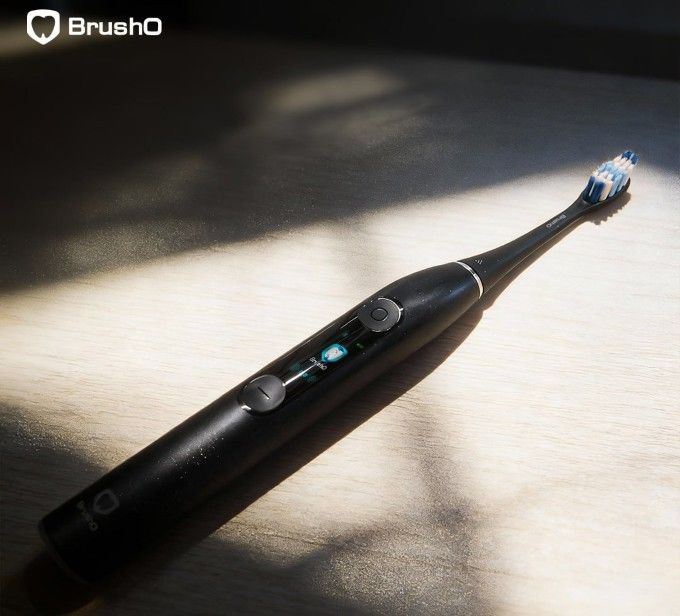
Many people unknowingly grind their teeth at night or during stress. This habit — called bruxism — puts immense pressure on your enamel, jaw, and gums. Over time, it can lead to:
• Enamel erosion
• Tooth sensitivity
• Microfractures
• Receding gums
• Jaw soreness
But what many don’t realize is that bruxism also affects how you should brush your teeth. Brushing the wrong way after grinding can make things worse — not better.
If you grind your teeth, standard brushing routines may actually add stress to already weakened enamel. Common issues include:
• Overbrushing pressure: Brushing too hard can accelerate enamel loss.
• Ignoring molars: These are often most affected by grinding but get neglected during brushing.
• Wrong bristle stiffness: Medium or hard bristles can be damaging to sensitive areas.
• Lack of feedback: Traditional brushes can’t alert you to excessive force.
To protect your teeth, a smarter brushing system is essential.
BrushO isn’t just a toothbrush — it’s a personal oral health assistant. For those who grind their teeth, its advanced features help prevent further damage:
BrushO detects when you’re brushing too hard and immediately alerts you through vibrations and app feedback — protecting your enamel after a night of grinding.
It divides your mouth into 6 zones and 16 surfaces, ensuring no area — especially grinding-affected molars — is missed.
Choose from Ultra-Gentle Mode or Gum Care Mode if your teeth or gums feel sore after bruxism episodes.
Get daily brushing scores and trend reports, helping you build habits that counteract the damage of teeth grinding.
In addition to using BrushO, here are practical brushing tips for bruxism:
• Use fluoride toothpaste for added enamel protection.
• Avoid brushing immediately after waking if your teeth feel sore — wait 20–30 minutes.
• Use gentle circular motions, not aggressive scrubbing.
• Replace your brush head more frequently if you notice excessive wear.
With the right technique and the right tool, you can still maintain excellent oral health — even with bruxism.
Bruxism might be silent, but its impact is real. Without the proper brushing adjustments, you risk long-term damage to your teeth and gums. BrushO makes it easy to adapt, adjust, and protect — giving you the smart brushing experience your mouth truly needs.
BrushO is an AI-powered smart toothbrush designed to revolutionize oral care. With real-time feedback, pressure tracking, brushing scores, and custom cleaning modes, BrushO turns daily brushing into a personalized, habit-forming experience for all users — including those affected by bruxism.
Jul 30
Jul 30
Jul 29
Jul 22
Jul 19
Jul 17

How long does it take to change a habit? The popular answer is 21 days, but reality is often more subtle than that. Many changes show up in the data long before you actually feel them. AI-powered toothbrushes deliver weekly and monthly reports, and many people just swipe past them as if they were an

You are sitting in the dentist's chair, listening to the ultrasonic scaler buzz against your teeth, when the dentist says, "You have quite a bit of tartar buildup behind your lower front teeth." You think to yourself: I brush every day. Why does it always collect there? Tartar is not distributed eve

Have you ever thought about what your teeth go through every time you eat, drink, or even sleep? Inside your mouth, a silent tug-of-war is constantly playing out. On one side is demineralization, the process where acid dissolves minerals from your enamel. On the other side is remineralization, where

Have you ever looked in the mirror and noticed your gum line seems to have crept a little lower than before? Your teeth look slightly longer, and you can almost see the root peeking out. That is gum recession happening right in front of you. Many people think gum recession is something only older ad

You have probably never heard the term "gingival crevicular fluid," but it is working silently in your mouth every single day, like an invisible health sentinel. Gingival crevicular fluid, or GCF for short, is the fluid that seeps out of the tiny groove between your gums and your teeth. Most of the

When it comes to taking care of your teeth, fluoride might be one of the most debated topics out there. Dentists call it a cavity-fighting superhero and recommend fluoride toothpaste for the whole family. But you have also probably seen articles online warning about fluorosis and even broader health

Enamel is the hardest substance in the human body, but it is not spread evenly across every tooth. Different teeth, and even different surfaces on the same tooth, can have dramatically different enamel thickness. Some spots are armored like a fortress wall, while others are as thin as a sheet of pap

"Should I brush my teeth right after eating?" This question sparks debates at dinner tables and in group chats that rival the great culinary divides. Some people swear by brushing immediately after a meal so food particles do not sit in their mouth causing cavities. Others insist that brushing right

Every parent has been there: your child comes to you holding a wobbly baby tooth, eyes wide with a mix of excitement and nerves. You give it a gentle tug, it comes right out, and you notice something odd. The root looks almost completely gone, as if something dissolved it away. For a split second, y

In the age of regular toothbrushes, everyone essentially brushed the same way. One type of bristle, one vibration mode, and you just went by feel. But every mouth is different. Some people have wide gaps between teeth, others have crowded arches. Some have sensitive gums, others have naturally thin

A escova elétrica BrushO com IA oferece orientação em tempo real, feedback de pressão, rastreamento de cobertura e relatórios de progresso no app para uma rotina diária mais limpa.
A escova elétrica BrushO com IA oferece orientação em tempo real, feedback de pressão, rastreamento de cobertura e relatórios de progresso no app para uma rotina diária mais limpa.


Address: RM 1427, 14/F RADIO CITY 505, HENNESSY RD CAUSEWAY BAY, HONG KONG
Code: 000000
Phone: +852-53758652
Email: customerservice@brusho.com