
Jul 30
Jul 30
Jul 29
Jul 22
Jul 19
Jul 17
Flavored water is widely marketed as a healthier alternative to soda, often perceived as harmless to oral health. However, wide varieties contain acids, sweeteners, and flavoring compounds that significantly lower oral pH and promote enamel erosion. Because flavored water is consumed frequently throughout the day, exposure duration may exceed that of traditional soft drinks. This prolonged acidic contact accelerates mineral loss, increases sensitivity risk, and weakens tooth surfaces over time. Understanding the chemistry behind beverage acidity and adopting strategic oral care practices allows consumers to make informed hydration choices while preserving enamel integrity.
Flavored water is commonly associated with wellness and hydration. However, many formulations contain:
• Citric acid
• Malic acid
• Phosphoric acid
• Artificial flavor stabilizers
• Sweeteners
These ingredients create a low-pH environment similar to or more persistent than soda, particularly when consumed frequently. Unlike soda, which is often consumed in single servings, flavored water is sipped continuously — extending enamel exposure time.
Tooth enamel begins to weaken when oral pH drops below critical thresholds. Acidic beverages dissolve protective minerals, making teeth vulnerable to:
• Sensitivity
• Surface roughness
• Structural thinning
Frequent sipping throughout the day:
• Prevents saliva from neutralizing acids
• Extends erosion windows
• Reduces remineralization opportunities
This behavioral pattern often makes flavored water more damaging over time than occasional soda consumption.
Some flavored waters include added sugars or fermentable sweeteners that:
• Feed acid-producing bacteria
• Increase plaque formation
• Elevate cavity risk
Even sugar-free versions remain erosive due to acidity.
• Increased temperature sensitivity
• Teeth appearing translucent
• Rough enamel texture
• Yellowing due to dentin exposure
• Gumline vulnerability
Detection at early stages enables preventive intervention.
• Limit continuous sipping
• Drink through a straw
• Consume alongside meals
• Choose plain water when possible
• Rinse with water afterward
• Stimulate saliva production
• Maintain hydration balance
Wait 30–60 minutes after acidic beverage consumption to avoid brushing softened enamel.
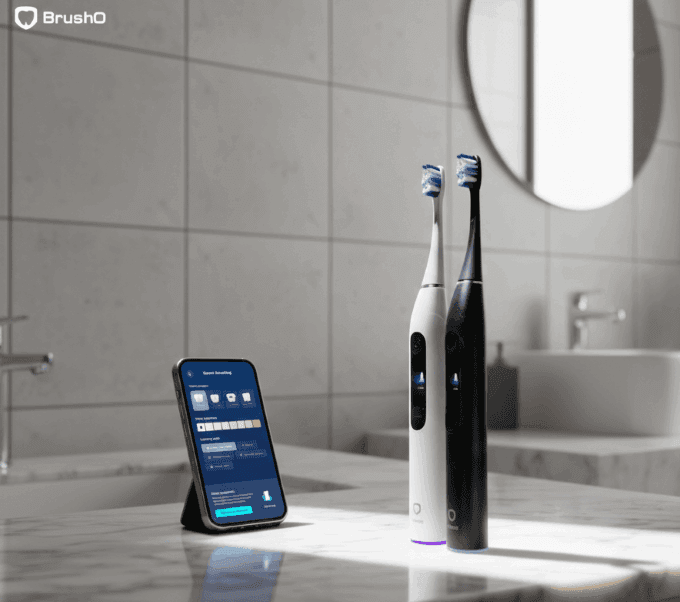
Advanced tools such as BrushO AI smart brushing enhance protection through:
• Pressure regulation reducing abrasion
• Zone mapping ensuring plaque removal
• Adaptive modes for enamel sensitivity
• Habit tracking improves routine consistency
Technology-driven brushing helps counteract lifestyle-based acid exposure.
Modern beverage trends emphasize flavor and convenience, often overlooking oral chemistry impacts.
Protecting enamel today requires:
• Awareness of acidity sources
• Behavioral adjustments
• Guided oral hygiene support
This integrated approach preserves long-term dental resilience.
Flavored water’s health halo can obscure its dental risks. Hidden acids combined with frequent consumption may contribute to enamel erosion more significantly than occasional soda intake. By moderating exposure patterns, rinsing appropriately, delaying brushing, and using precision brushing technologies like BrushO, individuals can maintain hydration habits without compromising oral health. Informed choices ensure wellness extends beyond marketing perception to measurable dental protection.
Feb 6
Feb 6
Jul 30
Jul 30
Jul 29
Jul 22
Jul 19
Jul 17

A lateral cephalometric radiograph is only as useful as the analysis applied to it. The same tracing can be read as a skeletal discrepancy by one method and as a dental compensation by another, and the conclusions reached about extraction, surgery or growth modification may differ accordingly. Un...

Premature fusion of the cranial sutures produces a group of conditions in which the skull, the midface and the occlusion develop abnormally, and the dental team is central to long-term care. Apert and Crouzon syndromes are the best known craniosynostosis syndromes with major oral consequences. Bo...

A dense opacity on a panoramic radiograph above the molar roots or within the nasal cavity is a familiar finding that is often dismissed as an incidental artifact. When that opacity proves to be an antrolith or a rhinolith, the discovery explains years of unilateral obstruction, discharge and fac...

A firm, board-like swelling at the angle of the jaw that slowly breaks down into multiple draining sinuses should raise suspicion of cervicofacial actinomycosis, a chronic bacterial infection that is easily mistaken for a tumor. Nocardiosis, caused by related filamentous organisms, can produce a ...

Enlargement of the jaw, widening spaces between the teeth and a slowly changing facial profile may bring a patient to the dental office years before the underlying endocrine disease is diagnosed. Acromegaly and Cushing syndrome both leave recognizable signatures in the craniofacial region, and th...

A slowly growing, painless lump at the angle of the jaw in a middle-aged or older man who smokes is the classic presentation of a Warthin tumor. Formally called papillary cystadenoma lymphomatosum, this benign neoplasm is one of the most common tumors of the parotid gland and the second most comm...

Painful ulcerated gums that bleed easily, a foul metallic taste and severe mouth odor can signal Vincent stomatitis, an acute fusospirochetal necrotizing infection of the gingival and oral tissues. First described during wartime and historically called trench mouth, the disease still occurs today...

A painful swelling under the jaw that appears at mealtimes and subsides slowly afterward is the classic symptom of a salivary stone blocking a duct. Sialolithiasis, the formation of calcified stones in the salivary glands, and sialodochitis, the inflammation of the ducts that follows, are common ...

Paget disease of bone, also called osteitis deformans, is a chronic disorder of bone remodeling that can silently affect the skull and the jaws. In the maxillofacial region it produces progressive bony enlargement, distinctive cotton-wool radiographs and dental complications such as hypercementos...

The sudden appearance of widespread, painful oral erosions with crusted lips can be alarming, and it may represent either erythema multiforme or a drug-induced severe reaction such as Stevens-Johnson syndrome. Both belong to a spectrum of immune-mediated mucocutaneous disorders, and both can begi...


Address: RM 1427, 14/F RADIO CITY 505, HENNESSY RD CAUSEWAY BAY, HONG KONG
Code: 000000
Phone: +852-53758652
Email: customerservice@brusho.com
