
Jul 30
Jul 30
Jul 29
Jul 22
Jul 19
Jul 17
Headaches are often blamed on stress, dehydration, or lack of sleep—but few people realize that dental issues can be a hidden trigger. Problems such as jaw tension, uneven biting, gum inflammation, or even improper brushing habits can place constant strain on facial muscles and nerves. Over time, this strain may radiate upward, resulting in persistent headaches that seem unrelated to oral health. Understanding the connection between your mouth and your head is key to preventing recurring discomfort and improving overall well‑being.
Your teeth, jaw, facial muscles, and nerves are deeply interconnected. When something goes wrong in the mouth, the effects often travel beyond it. The trigeminal nerve—one of the largest nerves in the face—plays a central role in both dental sensation and headache pain. Irritation or tension in this nerve pathway can easily manifest as headaches.
This is why headaches linked to dental issues often feel dull, pressure‑like, or concentrated around the temples, forehead, or behind the eyes.
Grinding or clenching your teeth—especially during sleep—puts excessive strain on the jaw muscles and temporomandibular joint (TMJ). This tension can radiate upward, leading to morning headaches or tightness around the temples.
Signs you may be grinding your teeth:
• Waking up with jaw soreness
• Tooth sensitivity without cavities
• Flattened or worn tooth surfaces
The temporomandibular joint connects your jaw to your skull. When this joint is misaligned or overworked, it can trigger headaches that mimic migraines or tension headaches.
TMJ‑related headaches are often accompanied by:
• Clicking or popping sounds when opening the mouth
• Limited jaw movement
• Pain near the ears or temples
Chronic gum inflammation doesn’t just affect your mouth. Inflammatory signals can spread through the body, contributing to facial discomfort and pressure‑type headaches. Advanced gum disease may also expose nerves, increasing sensitivity and pain perception.
An infected tooth can cause localized pain that spreads upward into the head. These headaches often worsen when chewing, bending over, or lying down and should never be ignored.
Brushing too aggressively or missing certain areas can lead to gum recession, enamel damage, and chronic sensitivity. Over time, this constant irritation can contribute to facial muscle tension and low‑grade headaches.
Dental‑related headaches don’t always come with obvious tooth pain. Many people treat them with painkillers without addressing the root cause. As a result, the headache keeps returning until the underlying oral issue is corrected.
This is why dentists often discover the source of chronic headaches during routine exams—sometimes long after symptoms begin.
Improving daily oral habits can significantly reduce the risk of dental‑related headaches:
• Use gentle, controlled brushing pressure to avoid jaw strain
• Maintain even coverage, especially near the gumline and molars
• Address grinding habits early
• Monitor gum health consistently
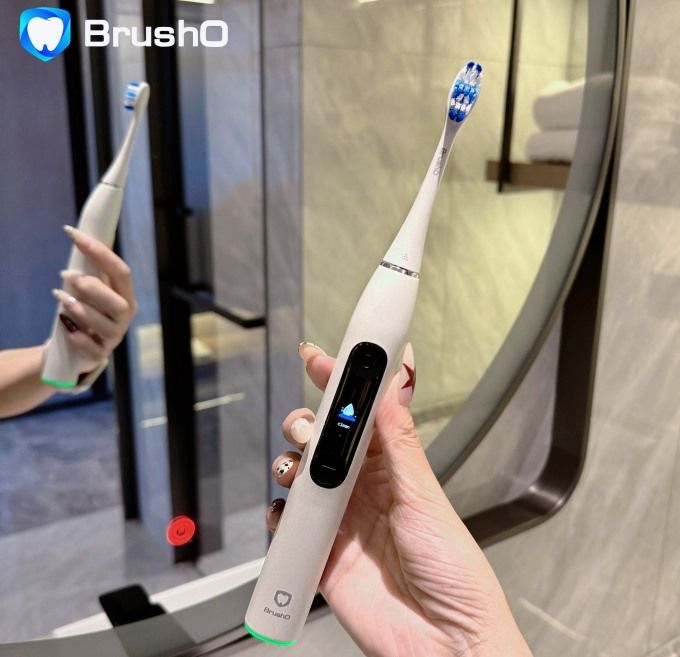
Smart oral‑care tools, such as BrushO, help by tracking brushing pressure, movement, and consistency—reducing unnecessary strain on jaw muscles and preventing inflammation before it escalates.
You should consult a dental professional if:
• Headaches occur regularly without a clear cause
• Pain worsens when chewing or clenching
• You experience jaw stiffness or clicking
• Headaches persist despite lifestyle changes
Early intervention can prevent long‑term discomfort and more serious dental complications.
Yes—dental issues can absolutely cause headaches. From jaw tension and teeth grinding to gum inflammation and poor brushing technique, oral health plays a far greater role in head pain than most people realize. By improving daily brushing habits and paying attention to early warning signs, many recurring headaches can be prevented before they become chronic.
BrushO is an AI‑powered smart toothbrush designed to protect both oral health and daily comfort. By monitoring brushing pressure, coverage, and technique in real time, BrushO helps users reduce jaw strain, prevent gum inflammation, and build healthier habits—supporting not just a cleaner mouth, but a more comfortable, headache‑free lifestyle.
Jul 30
Jul 30
Jul 29
Jul 22
Jul 19
Jul 17

Hyperdontia is the presence of one or more teeth in excess of the normal dental formula, and the resulting teeth are described as supernumerary. The condition is common enough to appear in routine practice but variable enough in presentation that the decision to intervene is rarely straightforwar...

Few patients complete orthodontic treatment without asking whether their teeth will move back. The honest answer is that they will, to some degree, in the majority of cases. Relapse is not a failure of treatment but a predictable biological response, and understanding why it happens is the basis ...

The mandible is the largest and most frequently fractured bone of the facial skeleton, and its management sits at the interface between trauma surgery and restorative dentistry. Treatment has shifted over four decades from prolonged maxillomandibular fixation towards rigid internal fixation with ...

Chronic liver disease affects hundreds of millions of people worldwide, and its prevalence continues to rise with the epidemic of metabolic liver disease. The liver is central to haemostasis, drug metabolism and immune competence, and its failure therefore alters the risk profile of almost every ...

Excessive gingival display, commonly described as a gummy smile, is one of the most frequent aesthetic concerns presented to dental practitioners. The condition is not a single entity but a clinical presentation that can arise from skeletal, gingival, muscular or dental factors, and the treatment...

Drug-induced gingival overgrowth is a well-recognised adverse effect of several widely prescribed medications, and it remains one of the most common drug-related findings in periodontal practice. The condition produces firm, fibrous enlargement of the gingiva that can interfere with speech, masti...

Denture stomatitis is an inflammatory condition of the denture-bearing mucosa that affects a large proportion of removable prosthesis wearers, yet it is frequently dismissed as a cosmetic annoyance. The condition is driven by a Candida biofilm on the fitting surface of the prosthesis, and it is m...

Chronic kidney disease affects an estimated 850 million people worldwide, and the number of patients surviving on dialysis or with a renal transplant continues to rise. These patients carry an oral disease burden that is substantially higher than that of the general population, and their medical ...

Angular cheilitis is an inflammatory lesion of the labial commissures that presents with erythema, fissuring and crusting at the corners of the mouth. It is one of the most common conditions encountered in general dental practice, yet it is frequently treated as a simple fungal infection and allo...

Adverse reactions to dental materials are uncommon but they are not rare, and they are frequently misdiagnosed because the oral mucosa responds to allergens in a limited number of ways. A burning sensation, a persistent ulcer or an unexplained area of erythema may all represent a hypersensitivity...


Address: RM 1427, 14/F RADIO CITY 505, HENNESSY RD CAUSEWAY BAY, HONG KONG
Code: 000000
Phone: +852-53758652
Email: customerservice@brusho.com
