
Jul 30
Jul 30
Jul 29
Jul 22
Jul 19
Jul 17
Most people replace their toothbrush only when it looks worn out—but by then, it may already be spreading more germs than it removes. That’s why removable toothbrush heads are a game-changer. From improving hygiene to reducing waste and enhancing your brushing performance, detachable heads are more than a convenience—they’re a necessity. In this article, we’ll explore the top benefits of using removable brush heads and why smart electric toothbrushes, such as BrushO, are making them the new standard in oral care.
Toothbrushes accumulate millions of bacteria over time. Without regular replacement, you’re reintroducing those germs into your mouth twice a day.
With detachable heads, swapping out old bristles becomes simple and quick—encouraging consistent hygiene without replacing the entire handle.
Only changing the brush head means less plastic going to landfills, making this a more sustainable oral care choice.
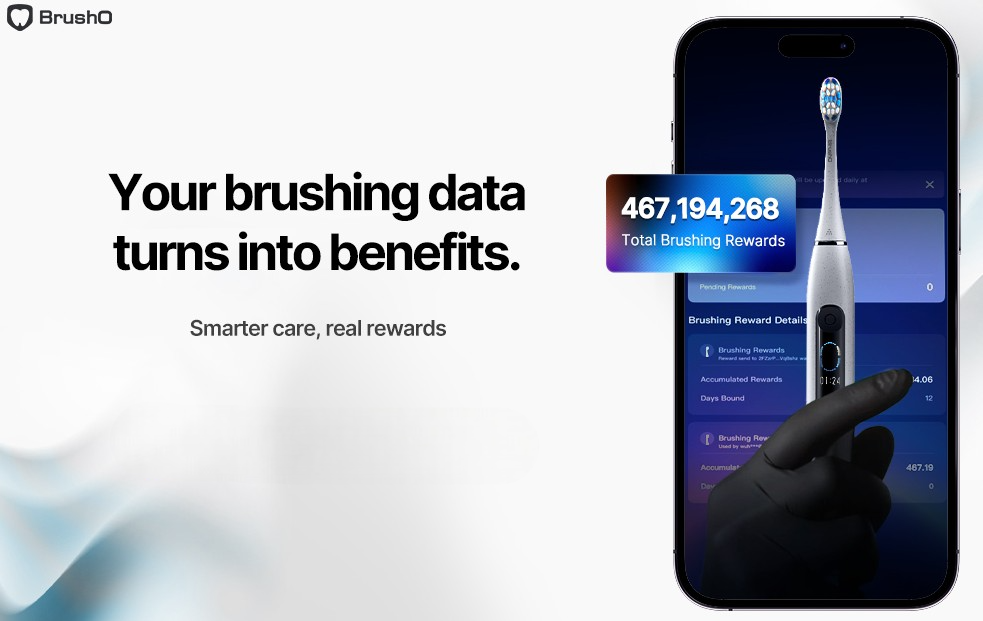
BrushO goes one step further by offering a lifetime brush head rewards program. Users can earn points through daily brushing and redeem them for free refills, combining cost savings with ecological benefits.
Removable heads allow you to switch between styles—soft bristles for sensitive gums, medium for everyday cleaning, or targeted designs for plaque control.
BrushO users can choose heads optimized for different AI-guided brushing modes, enhancing results without needing a new device.
With smart brushes like BrushO, the AI sensors and FSB motor are housed in the base. This makes the brush head replaceable while keeping the smart tech intact.
Each new head offers a like-new brushing experience while retaining your brushing data, preferences, and feedback through the app.
In shared households, everyone can have their own detachable head with color-coded rings—no need for separate handles.
Traveling? Bring just a few heads instead of several full brushes. BrushO’s long battery life (45 days) and waterproof design pair perfectly with this convenience.
Switching to a removable toothbrush head may seem minor, but it transforms how you approach oral care—making it more efficient, sustainable, and personalized. When paired with a smart brush like BrushO, this simple feature becomes a powerful tool in building healthier habits.
BrushO is an AI-powered smart toothbrush brand that helps users build better brushing habits through real-time feedback, customizable modes, and sustainable design. With its removable brush heads and lifetime refill program, BrushO empowers users to care for both their oral health and the environment.
Jul 30
Jul 30
Jul 29
Jul 22
Jul 19
Jul 17

Hyperdontia is the presence of one or more teeth in excess of the normal dental formula, and the resulting teeth are described as supernumerary. The condition is common enough to appear in routine practice but variable enough in presentation that the decision to intervene is rarely straightforwar...

Few patients complete orthodontic treatment without asking whether their teeth will move back. The honest answer is that they will, to some degree, in the majority of cases. Relapse is not a failure of treatment but a predictable biological response, and understanding why it happens is the basis ...

The mandible is the largest and most frequently fractured bone of the facial skeleton, and its management sits at the interface between trauma surgery and restorative dentistry. Treatment has shifted over four decades from prolonged maxillomandibular fixation towards rigid internal fixation with ...

Chronic liver disease affects hundreds of millions of people worldwide, and its prevalence continues to rise with the epidemic of metabolic liver disease. The liver is central to haemostasis, drug metabolism and immune competence, and its failure therefore alters the risk profile of almost every ...

Excessive gingival display, commonly described as a gummy smile, is one of the most frequent aesthetic concerns presented to dental practitioners. The condition is not a single entity but a clinical presentation that can arise from skeletal, gingival, muscular or dental factors, and the treatment...

Drug-induced gingival overgrowth is a well-recognised adverse effect of several widely prescribed medications, and it remains one of the most common drug-related findings in periodontal practice. The condition produces firm, fibrous enlargement of the gingiva that can interfere with speech, masti...

Denture stomatitis is an inflammatory condition of the denture-bearing mucosa that affects a large proportion of removable prosthesis wearers, yet it is frequently dismissed as a cosmetic annoyance. The condition is driven by a Candida biofilm on the fitting surface of the prosthesis, and it is m...

Chronic kidney disease affects an estimated 850 million people worldwide, and the number of patients surviving on dialysis or with a renal transplant continues to rise. These patients carry an oral disease burden that is substantially higher than that of the general population, and their medical ...

Angular cheilitis is an inflammatory lesion of the labial commissures that presents with erythema, fissuring and crusting at the corners of the mouth. It is one of the most common conditions encountered in general dental practice, yet it is frequently treated as a simple fungal infection and allo...

Adverse reactions to dental materials are uncommon but they are not rare, and they are frequently misdiagnosed because the oral mucosa responds to allergens in a limited number of ways. A burning sensation, a persistent ulcer or an unexplained area of erythema may all represent a hypersensitivity...

BrushO AI電動歯ブラシは、リアルタイムのブラッシングガイド、圧力フィードバック、磨き残しの確認、アプリでの進捗レポートにより、毎日のケアをより清潔にサポートします。


Address: RM 1427, 14/F RADIO CITY 505, HENNESSY RD CAUSEWAY BAY, HONG KONG
Code: 000000
Phone: +852-53758652
Email: customerservice@brusho.com