The Role of AI in Enhancing Smart Toothbrush Performance
Jan 22

Jan 22
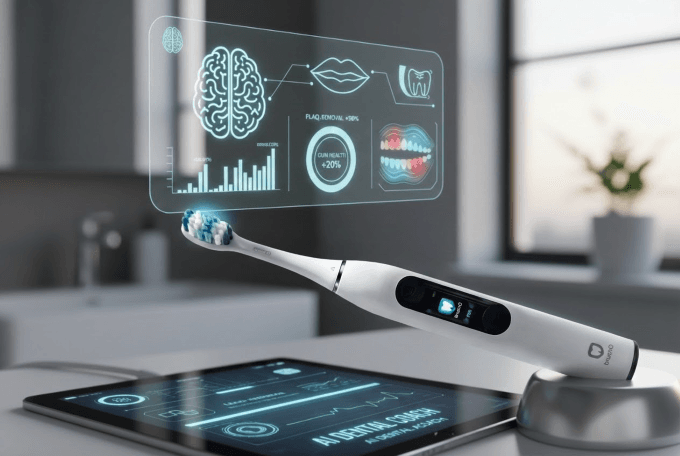
Artificial intelligence (AI) is transforming many industries, and oral care is no exception. The integration of AI into smart toothbrushes is enhancing their performance and ensuring better brushing habits. From real-time feedback to personalized brushing modes, AI-enabled toothbrushes provide more effective cleaning while adapting to individual needs. This blog delves into how AI enhances smart toothbrush performance and the benefits it brings to oral health.


Introduction: The Intersection of AI and Oral Health

Smart toothbrushes have become an essential tool for modern oral care, combining advanced technology with traditional brushing techniques. What truly sets these devices apart from regular electric toothbrushes is the integration of artificial intelligence (AI). AI is not just a buzzword in technology; it is significantly improving how we approach oral hygiene.
AI-enabled smart toothbrushes are designed to do more than just clean teeth. They leverage machine learning algorithms and sensors to offer personalized and efficient brushing experiences. By monitoring your brushing habits, AI helps optimize cleaning performance, prevent gum damage, and ensure your mouth is properly cleaned in all areas.
 

How AI Enhances Smart Toothbrushes: Key Features

1. Personalized Brushing Modes

AI-powered smart toothbrushes come equipped with various brushing modes, which adapt to the specific needs of the user. Whether you have sensitive teeth, gums, or need a deeper clean, the toothbrush can adjust its settings to suit your condition. By continuously analyzing your brushing technique, AI customizes the brushing experience for optimal results. The toothbrush can suggest the most effective brushing pattern and pressure for you, ensuring that your oral care is as efficient as possible.

2. Real-Time Feedback and Guidance

One of the standout features of AI in smart toothbrushes is the ability to provide real-time feedback during brushing. Sensors built into the toothbrush detect pressure, speed, and coverage, offering immediate guidance via a connected app or the toothbrush’s interface. For example, if you are brushing too hard, the toothbrush will alert you to prevent enamel damage. This immediate feedback helps users improve their brushing techniques, which in turn results in better oral health outcomes.

3. Adaptive Intelligence for Long-Term Benefits

Over time, the AI within a smart toothbrush can "learn" your brushing habits. Through this continuous data collection, the device can provide long-term insights into your brushing consistency, coverage, and areas that may require more attention. By analyzing this information, AI can recommend adjustments and improvements to your brushing routine. These improvements can contribute to healthier gums, stronger teeth, and less plaque buildup, ultimately lowering the risk of oral health problems such as cavities and gum disease.

4. Comprehensive Oral Health Tracking

Smart toothbrushes integrated with AI can also track your overall oral health progress. By syncing with mobile apps, users can monitor their brushing habits, detect problem areas, and keep a record of their oral hygiene routines. AI can even notify you when it’s time to replace your toothbrush head or when you need to book a dental appointment based on the data it gathers. This comprehensive health tracking ensures you stay on top of your dental hygiene regimen and empowers users to take more control over their oral health.
 

The Benefits of AI-Enhanced Smart Toothbrushes

The role of AI in smart toothbrushes goes far beyond just convenience. The real impact is on improving your overall dental health. Here’s how:
  • Better Brushing Technique: The feedback loop helps users understand the best brushing practices, minimizing the risk of brushing too aggressively or missing crucial areas.
  • Healthier Gums: Personalized brushing modes tailored to gum health can prevent overbrushing, reducing irritation and the risk of gum recession.
  • Consistency: AI ensures that users maintain the recommended brushing time, intensity, and frequency, which are critical for effective oral care.
  • Prevention: With the continuous data analysis and insights, users can detect problems early, such as irregular brushing habits or areas of concern that may need professional attention.
By making real-time adjustments to your brushing technique and encouraging better habits, AI-powered toothbrushes significantly contribute to maintaining long-term oral health.
 

Conclusion: The Future of Smart Oral Care

As AI continues to evolve, its integration into everyday devices like smart toothbrushes will only get better. These advancements offer users a more personalized, efficient, and effective brushing experience. With AI’s ability to monitor and guide brushing habits, detect potential issues, and optimize cleaning, the future of oral care is brighter than ever. Whether you're using a smart toothbrush for the first time or are already a seasoned user, embracing AI-driven technology can be the key to achieving superior oral health.

Post recenti

What Weekly Brushing Data Reveals Before You Notice Any Progress

What Weekly Brushing Data Reveals Before You Notice Any Progress

How long does it take to change a habit? The popular answer is 21 days, but reality is often more subtle than that. Many changes show up in the data long before you actually feel them. AI-powered toothbrushes deliver weekly and monthly reports, and many people just swipe past them as if they were an

Why Tartar Picks on Certain Teeth — And How AI Toothbrushes Fight Back

Why Tartar Picks on Certain Teeth — And How AI Toothbrushes Fight Back

You are sitting in the dentist's chair, listening to the ultrasonic scaler buzz against your teeth, when the dentist says, "You have quite a bit of tartar buildup behind your lower front teeth." You think to yourself: I brush every day. Why does it always collect there? Tartar is not distributed eve

Your Mouth's pH Rollercoaster: The Daily Battle Between Demineralization and Remineralization

Your Mouth's pH Rollercoaster: The Daily Battle Between Demineralization and Remineralization

Have you ever thought about what your teeth go through every time you eat, drink, or even sleep? Inside your mouth, a silent tug-of-war is constantly playing out. On one side is demineralization, the process where acid dissolves minerals from your enamel. On the other side is remineralization, where

How AI Toothbrushes Can Spot Early Gum Recession Before You Do

How AI Toothbrushes Can Spot Early Gum Recession Before You Do

Have you ever looked in the mirror and noticed your gum line seems to have crept a little lower than before? Your teeth look slightly longer, and you can almost see the root peeking out. That is gum recession happening right in front of you. Many people think gum recession is something only older ad

Gingival Crevicular Fluid: Your Mouth's Silent Health Monitor

Gingival Crevicular Fluid: Your Mouth's Silent Health Monitor

You have probably never heard the term "gingival crevicular fluid," but it is working silently in your mouth every single day, like an invisible health sentinel. Gingival crevicular fluid, or GCF for short, is the fluid that seeps out of the tiny groove between your gums and your teeth. Most of the

Fluoride and Your Teeth: Protector or Double-Edged Sword?

Fluoride and Your Teeth: Protector or Double-Edged Sword?

When it comes to taking care of your teeth, fluoride might be one of the most debated topics out there. Dentists call it a cavity-fighting superhero and recommend fluoride toothpaste for the whole family. But you have also probably seen articles online warning about fluorosis and even broader health

Enamel Thickness Across Your Teeth: Not All Surfaces Are Created Equal

Enamel Thickness Across Your Teeth: Not All Surfaces Are Created Equal

Enamel is the hardest substance in the human body, but it is not spread evenly across every tooth. Different teeth, and even different surfaces on the same tooth, can have dramatically different enamel thickness. Some spots are armored like a fortress wall, while others are as thin as a sheet of pap

Brush Before or After Breakfast? What Science Says About Timing

Brush Before or After Breakfast? What Science Says About Timing

"Should I brush my teeth right after eating?" This question sparks debates at dinner tables and in group chats that rival the great culinary divides. Some people swear by brushing immediately after a meal so food particles do not sit in their mouth causing cavities. Others insist that brushing right

Why Baby Teeth Roots Dissolve Themselves: The Science Behind Losing Teeth

Why Baby Teeth Roots Dissolve Themselves: The Science Behind Losing Teeth

Every parent has been there: your child comes to you holding a wobbly baby tooth, eyes wide with a mix of excitement and nerves. You give it a gentle tug, it comes right out, and you notice something odd. The root looks almost completely gone, as if something dissolved it away. For a split second, y

How AI Toothbrushes Learn Your Mouth: The Science of Personalized Cleaning Modes

How AI Toothbrushes Learn Your Mouth: The Science of Personalized Cleaning Modes

In the age of regular toothbrushes, everyone essentially brushed the same way. One type of bristle, one vibration mode, and you just went by feel. But every mouth is different. Some people have wide gaps between teeth, others have crowded arches. Some have sensitive gums, others have naturally thin