
Jul 30
Jul 30
Jul 29
Jul 22
Jul 19
Jul 17
Caffeine is beloved for its energy-boosting benefits — but its effects don’t stop at your brain. This powerful stimulant also interacts with your mouth in surprising ways. From reducing saliva flow to contributing to enamel erosion, your daily coffee may be doing more harm than you think if you’re not brushing smart. In this article, we explore the science behind caffeine’s impact on your saliva and teeth, and how a smarter brushing routine with tools like BrushO can help balance your daily habits.
Caffeine is known to have diuretic properties, which can lead to dehydration. Dehydration, in turn, affects saliva production — a key factor in maintaining oral health.
Saliva helps wash away food particles, neutralize acids, and prevent bacterial overgrowth. When saliva is reduced, your mouth becomes more acidic, increasing the risk of cavities and bad breath.
Common signs of reduced saliva from caffeine:
• Dry mouth
• Sticky feeling in the mouth
• Morning breath even after brushing
Most caffeinated beverages (coffee, tea, energy drinks, sodas) are acidic. This acid can weaken enamel over time — especially when consumed frequently or sipped slowly over long periods.
• Acid exposure leads to:
• Tooth sensitivity
• Dull or yellowish appearance
• Higher susceptibility to cavities
Coffee and tea contain chromogens, which cling to enamel and cause tooth discoloration. A weakened enamel surface makes it easier for these pigments to stick.
Drink water alongside your coffee to combat the dehydrating effects. This helps maintain saliva flow and rinse away acids.
Wait at least 30 minutes before brushing your teeth. Brushing right after acid exposure may further damage softened enamel.
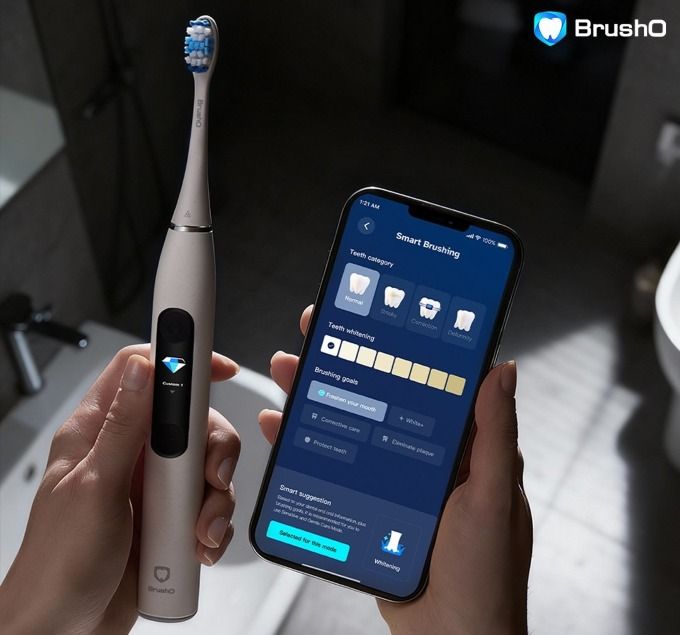
A smart brush like BrushO can help monitor pressure, ensure even coverage, and adapt to your enamel’s condition. Its feedback helps reinforce good brushing behavior, especially important for caffeine-heavy routines.
To counteract enamel loss, use fluoride or hydroxyapatite-based toothpaste that helps rebuild enamel over time.
BrushO’s AI brushing coach doesn’t just measure movement — it detects patterns that may indicate dry brushing or neglect of acid-prone areas. Pair it with saliva-promoting routines like chewing sugar-free gum or using a humidifier at night.
You don’t have to quit caffeine to protect your teeth — but you do need to understand its impact. By staying hydrated, timing your brushing properly, and using smarter oral care tools, you can enjoy your coffee without sacrificing your smile.
Jul 30
Jul 30
Jul 29
Jul 22
Jul 19
Jul 17

If you are thirsty after brushing, choose plain water. Plan your usual bedtime drink before brushing and skip the immediate rinse at the sink.

Waterpik recommends warm water for its flossers. Check your own model and use comfortably lukewarm water if cold water feels sharp.

Let an intact handle return to room temperature before you consider charging it. Check your manual and watch for signs of battery or housing damage.

Lift away the paste, check the care label, and use cool water on washable fabric. Here is a quick approach for a fresh spot.

Turn the brush off, then check the fit, the connection, and the condition of the head. A second compatible head can help you narrow it down.

Look for a clean, rigid container with a secure lid and keep it with your belongings. A napkin on a lunch tray is easy to clear away.

Check the care directions for your clear retainer. Clinics give different instructions, and the right cleaning method depends on the appliance you received.

Try a gentle rinse first. If the hull sits between teeth and floss moves freely, make a careful pass and stop if it still feels stuck.

A tight gap or rough edge can catch floss. Notice where it snags, keep the movement gentle, and find out when to ask your dentist to check.

Your first sip can taste sharp after brushing. Here is what may be changing and how to make breakfast taste like breakfast again.

BrushO AI इलेक्ट्रिक टूथब्रश रियल-टाइम ब्रशिंग गाइड, प्रेशर फीडबैक, कवरेज ट्रैकिंग और ऐप-आधारित प्रगति रिपोर्ट देता है, ताकि आपकी दैनिक दिनचर्या अधिक साफ और समझने योग्य बने।
BrushO AI इलेक्ट्रिक टूथब्रश रियल-टाइम ब्रशिंग गाइड, प्रेशर फीडबैक, कवरेज ट्रैकिंग और ऐप-आधारित प्रगति रिपोर्ट देता है, ताकि आपकी दैनिक दिनचर्या अधिक साफ और समझने योग्य बने।


Address: RM 1427, 14/F RADIO CITY 505, HENNESSY RD CAUSEWAY BAY, HONG KONG
Code: 000000
Phone: +852-53758652
Email: customerservice@brusho.com