
Jul 30
Jul 30
Jul 29
Jul 22
Jul 19
Jul 17
In today’s tech-driven world, AI is revolutionizing more than just smart homes or self-driving cars—it’s also changing how we care for our teeth. With rising global concerns about cavities, gum disease, and costly dental visits, early detection has become a top priority. Enter AI toothbrushes like BrushO, which use real-time sensors, smart data tracking, and personalized insights to monitor brushing behavior and spot warning signs of oral health issues—before you even notice symptoms.
This blog explores how AI toothbrushes support early dental diagnosis by detecting unusual patterns in brushing habits, identifying areas of plaque buildup, monitoring gum pressure, and promoting proactive oral health. Read on to understand why your next dental checkup might start with your smart toothbrush.
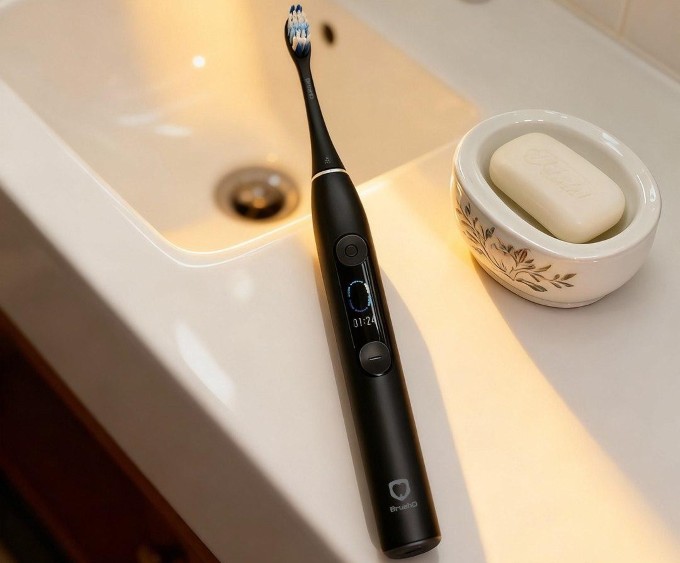
Cavities, gingivitis, and enamel erosion don’t happen overnight. They start as small, often invisible issues that gradually worsen. Traditional brushing habits may not effectively remove all plaque or alert users to early problems. Most people don’t notice symptoms like gum bleeding or tooth sensitivity until the damage is already done. That’s where AI technology can make a difference—by detecting subtle changes in your oral habits and helping you take action before it’s too late.
BrushO is a next-generation smart toothbrush equipped with:
• AI-powered pressure sensors: Detect when you’re brushing too hard or not enough, reducing gum trauma and enamel wear.
• Real-time zone tracking: Ensures you’re covering all quadrants of your mouth equally.
• Brushing duration analysis: Confirms that you’re spending enough time in each area.
• Personalized brushing reports: Delivered via the BrushO App to highlight irregularities that may signal early oral health concerns.
These features aren’t just for better brushing—they can help uncover patterns like recurring missed areas, sudden sensitivity, or overbrushing that may hint at developing problems.
What makes AI toothbrushes truly revolutionary is their ability to detect behavioral red flags, such as:
• Repeated neglect of certain areas → potential plaque buildup or early-stage decay.
• Consistent high pressure → early warning sign for gum recession or enamel damage.
• Short brushing time in key zones → higher risk for bacteria accumulation.
By identifying these patterns over time, BrushO helps users adjust their habits—before they turn into dental problems that require professional treatment.
One of the most powerful aspects of AI brushing is real-time correction. Unlike a regular toothbrush that simply ticks down a timer, BrushO nudges you when you’re brushing too fast, too hard, or skipping zones. It’s like having a dental hygienist in your bathroom—minus the awkward small talk.
The “Brushprint” feature visualizes your progress, helps you build consistent habits, and motivates long-term oral wellness.
BrushO bridges the gap between daily hygiene and clinical insight. While it’s not a replacement for a dentist, its smart feedback system can:
• Track early signs of gum sensitivity.
• Detect decreased brushing time during periods of illness or stress.
• Alert you to potential problem areas that deserve closer attention during your next dental visit.
In the age of teledentistry, this data can also be shared with dental professionals for remote consultations, making preventative care more accessible than ever.
As one of the most advanced AI toothbrushes on the market, BrushO combines:
• AI + sensor tech for smarter monitoring
• App integration for habit tracking and personalized insights
• Reward system (“Brush & Earn”) to build consistency
• Eco-friendly brush heads for sustainable health routines
With praise from dental professionals and institutions like Stanford School of Medicine, BrushO is reshaping how we understand—and improve—daily oral care.
So, can AI toothbrushes detect early signs of dental problems? The answer is a confident yes. While they don’t diagnose in the way dentists do, smart toothbrushes like BrushO help detect unhealthy patterns, promote proactive changes, and empower you with knowledge about your own brushing behavior. This is the future of oral health—preventative, data-driven, and smarter with every brush.
Jul 30
Jul 30
Jul 29
Jul 22
Jul 19
Jul 17

Hyperdontia is the presence of one or more teeth in excess of the normal dental formula, and the resulting teeth are described as supernumerary. The condition is common enough to appear in routine practice but variable enough in presentation that the decision to intervene is rarely straightforwar...

Few patients complete orthodontic treatment without asking whether their teeth will move back. The honest answer is that they will, to some degree, in the majority of cases. Relapse is not a failure of treatment but a predictable biological response, and understanding why it happens is the basis ...

The mandible is the largest and most frequently fractured bone of the facial skeleton, and its management sits at the interface between trauma surgery and restorative dentistry. Treatment has shifted over four decades from prolonged maxillomandibular fixation towards rigid internal fixation with ...

Chronic liver disease affects hundreds of millions of people worldwide, and its prevalence continues to rise with the epidemic of metabolic liver disease. The liver is central to haemostasis, drug metabolism and immune competence, and its failure therefore alters the risk profile of almost every ...

Excessive gingival display, commonly described as a gummy smile, is one of the most frequent aesthetic concerns presented to dental practitioners. The condition is not a single entity but a clinical presentation that can arise from skeletal, gingival, muscular or dental factors, and the treatment...

Drug-induced gingival overgrowth is a well-recognised adverse effect of several widely prescribed medications, and it remains one of the most common drug-related findings in periodontal practice. The condition produces firm, fibrous enlargement of the gingiva that can interfere with speech, masti...

Denture stomatitis is an inflammatory condition of the denture-bearing mucosa that affects a large proportion of removable prosthesis wearers, yet it is frequently dismissed as a cosmetic annoyance. The condition is driven by a Candida biofilm on the fitting surface of the prosthesis, and it is m...

Chronic kidney disease affects an estimated 850 million people worldwide, and the number of patients surviving on dialysis or with a renal transplant continues to rise. These patients carry an oral disease burden that is substantially higher than that of the general population, and their medical ...

Angular cheilitis is an inflammatory lesion of the labial commissures that presents with erythema, fissuring and crusting at the corners of the mouth. It is one of the most common conditions encountered in general dental practice, yet it is frequently treated as a simple fungal infection and allo...

Adverse reactions to dental materials are uncommon but they are not rare, and they are frequently misdiagnosed because the oral mucosa responds to allergens in a limited number of ways. A burning sensation, a persistent ulcer or an unexplained area of erythema may all represent a hypersensitivity...

BrushO AI इलेक्ट्रिक टूथब्रश रियल-टाइम ब्रशिंग गाइड, प्रेशर फीडबैक, कवरेज ट्रैकिंग और ऐप-आधारित प्रगति रिपोर्ट देता है, ताकि आपकी दैनिक दिनचर्या अधिक साफ और समझने योग्य बने।
BrushO AI इलेक्ट्रिक टूथब्रश रियल-टाइम ब्रशिंग गाइड, प्रेशर फीडबैक, कवरेज ट्रैकिंग और ऐप-आधारित प्रगति रिपोर्ट देता है, ताकि आपकी दैनिक दिनचर्या अधिक साफ और समझने योग्य बने।


Address: RM 1427, 14/F RADIO CITY 505, HENNESSY RD CAUSEWAY BAY, HONG KONG
Code: 000000
Phone: +852-53758652
Email: customerservice@brusho.com