
Jul 30
Jul 30
Jul 29
Jul 22
Jul 19
Jul 17
Bad breath is often linked to poor oral hygiene or the foods we eat—but what if it signals something more serious? One lesser-known cause of persistent bad breath (halitosis) is kidney dysfunction. The kidneys play a crucial role in filtering waste from the body, and when they fail, toxins can accumulate, producing a distinct and unpleasant odor in the breath. In this article, we’ll explore how kidney problems can manifest in the mouth, what symptoms to watch for, and how maintaining strong oral care routines with smart tools like BrushO can help you detect early signs and support overall health.
When the kidneys are no longer able to filter out waste products efficiently, compounds like urea begin to accumulate in the body. This can lead to a condition known as uremic fetor—a distinctive ammonia- or fish-like odor on the breath. It’s not the typical “morning breath” or post-meal odor, but rather a persistent issue that brushing alone may not fully eliminate.
In addition to halitosis, kidney disease may also cause:
• Dry mouth (xerostomia) due to decreased saliva production
• Metallic taste in the mouth
• Swollen gums or tongue
• Increased plaque buildup due to changes in saliva composition
These symptoms often go unnoticed in early stages but can be early warning signs.
The mouth is more than just where digestion starts—it’s a reflection of your body’s internal state. Poor oral health has been linked to systemic diseases like diabetes, cardiovascular conditions, and now, kidney disease. In fact, researchers have found that chronic kidney disease (CKD) patients are more likely to suffer from periodontitis, and untreated gum disease may worsen kidney function due to chronic inflammation.
Chronic bad breath that doesn’t improve with brushing, flossing, or tongue cleaning could indicate an underlying health issue—especially if accompanied by fatigue, swelling, or changes in urination. While not always caused by kidney issues, halitosis should not be ignored if it becomes persistent and foul-smelling.
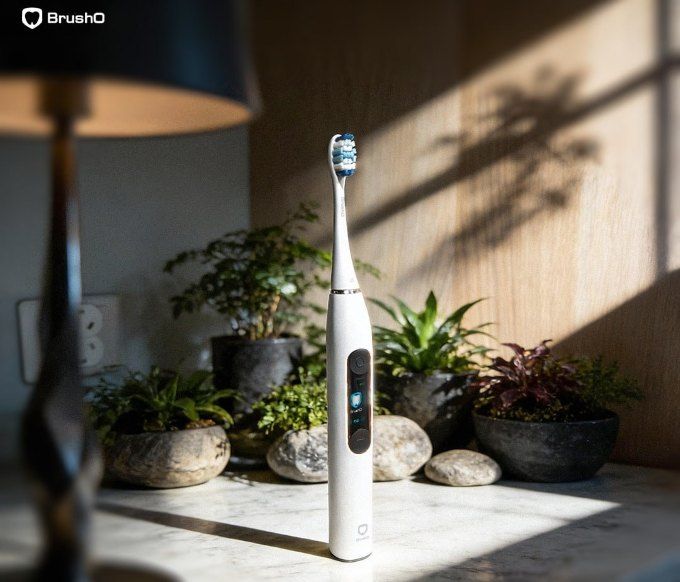
While BrushO cannot diagnose kidney disease, it plays a key role in early detection and prevention by maintaining optimal oral hygiene and making it easier to notice irregularities.
• AI-Powered Detection: Identifies missed spots and poor brushing zones that may contribute to bacterial buildup and worsening halitosis.
• Pressure Sensor: Prevents gum damage by alerting users if they brush too hard—ideal for users with inflammation or sensitive gums.
• Smart Reports: Daily brushing data helps track habits and recognize persistent breath issues that don’t resolve with regular cleaning.
Using BrushO regularly ensures that food particles, plaque, and odor-causing bacteria are thoroughly removed, which is essential when your body is more vulnerable due to conditions like CKD. Plus, BrushO’s habit tracking and $BRUSH token rewards encourage long-term care routines.
If you notice persistent halitosis alongside other symptoms such as fatigue, swollen ankles, or unusual urine output, consult a doctor. But also don’t neglect your mouth—a healthy oral environment can help reduce overall inflammation and support your general well-being.
Bad breath isn’t always a simple nuisance—it could be your body sounding an alarm. With the help of smart brushing tools like BrushO, you can take better control of your oral health and stay alert to signs that may point to broader health concerns. Never underestimate the power of your toothbrush—it might be the first step in protecting your kidneys too.
Jul 30
Jul 30
Jul 29
Jul 22
Jul 19
Jul 17

Fluoride in drinking water is the most cost-effective caries preventive measure in public health, and it is also the source of most avoidable fluoride exposure in young children. The balance between benefit and risk depends on concentration, on total intake from all sources and on the age of the ...

A mouthguard is the only piece of protective equipment that a dentist can prescribe, and the difference between the cheapest and the best version is often less than the cost of a single repair. This guide explains what each type of mouthguard actually protects, how to judge fit, and what to check...

Distinguishing reversible from irreversible pulpitis is the single most consequential decision in endodontic diagnosis, because one leads to a restoration and the other to root canal treatment or extraction. The distinction rests on symptoms and pulp testing rather than on radiographs alone, and ...

A pregnancy epulis is a benign overgrowth of gum tissue that appears during pregnancy, most often in the second or third trimester. It can alarm patients because it grows quickly and bleeds easily, yet in most cases it needs no surgery and settles after delivery. Understanding what drives the gro...

When several teeth are missing, the choice usually narrows to a removable partial denture or a fixed implant-supported restoration, and cost is the factor patients raise first. Upfront price is only part of the comparison, because the two options differ in maintenance, comfort, effects on neighbo...

Most root canal failures are not caused by inadequate cleaning of canals that were found, but by canals that were never located. Molar anatomy varies widely, and the variation is not random: specific teeth in specific populations have predictable additional canals. Knowing where they hide is the ...

Gum massage is one of the oldest recommendations in oral care and one of the least understood. It has been described as a treatment for bleeding gums, a route to firmer tissue and, more recently, a way to reduce brushing force. This article separates the mechanisms that are supported by physiolog...

Interdental cleaning is the part of oral hygiene most people abandon first, and the choice between a floss pick and a length of string floss is often made on convenience. Convenience matters, because a tool that is used daily outperforms a superior tool that stays in the drawer, but the two devic...

Dementia changes the way a denture is worn, cleaned and tolerated, and the people who notice the change first are usually family carers rather than clinicians. Poor denture hygiene in this group is associated with mucosal infection, reduced food intake and, in frail patients, respiratory complica...

Chewing tobacco keeps nicotine and plant irritants in prolonged contact with a small area of mucosa, and the damage that results is concentrated exactly where the quid is held. The lesions that develop are often painless, which is why they are discovered during routine examination rather than bec...

La brosse à dents électrique BrushO avec IA offre un guidage en temps réel, un retour sur la pression, un suivi de la couverture et des rapports de progression dans l’app pour une routine quotidienne plus propre.
La brosse à dents électrique BrushO avec IA offre un guidage en temps réel, un retour sur la pression, un suivi de la couverture et des rapports de progression dans l’app pour une routine quotidienne plus propre.


Address: RM 1427, 14/F RADIO CITY 505, HENNESSY RD CAUSEWAY BAY, HONG KONG
Code: 000000
Phone: +852-53758652
Email: customerservice@brusho.com