
Jul 30
Jul 30
Jul 29
Jul 22
Jul 19
Jul 17
In today’s fast-paced world, a toothbrush isn't just a hygiene tool — it's a tech-enabled daily essential. The BrushO Smart Toothbrush combines AI-powered brushing guidance, premium materials, and user-focused design, making it a perfect upgrade from traditional or basic electric toothbrushes.
Whether you're at home or on the go, BrushO delivers a gentle yet powerful clean that fits modern lifestyles.
Not all electric toothbrushes are suitable for sensitive gums or first-time users. Many are too aggressive, causing discomfort or even gum recession over time.
BrushO, however, is designed with FSB mode (Fully Smart Brushing) – a technology that:
🛡️ Prevents foam splashing even if you accidentally turn it on after applying toothpaste
🌊 Ensures gentle contact pressure to protect enamel and gums
💡 Reminds you when to switch areas, adjust pressure, or slow down
✨ Offers a smooth brushing rhythm ideal for those with gum sensitivity
It's gentle enough for beginners, yet powerful enough to remove deep-set plaque.
Forget one-size-fits-all brushing. BrushO offers 8 pre-set brushing modes plus 3 customizable modes to match your unique needs. Whether you’re preparing for bed or heading into a meeting, there's a mode for every mood.
Ever packed a bulky, heavy toothbrush that ran out of battery mid-trip? BrushO eliminates these problems with:
🔋 40-day ultra-long battery life
⚡ 6.5-hour fast charging
🔌 Supports Qi wireless charging protocols — charge with most fast-charging pads
👝 Compact body & travel case included
🛫 Perfect size for carry-on or luggage
Whether you're backpacking through Europe or commuting daily, BrushO is built to move with you.
BrushO comes with a full IPX7 waterproof rating, meaning you can use it:
In the shower 🚿
Over a sink without worry 💧
During travel in humid environments ✈️
Even after accidental drops in water 💦
This ensures full flexibility and durability — no more limiting yourself to dry spaces when brushing.
BrushO isn’t just smart for the sake of being smart — it actively helps you brush better.
Monitor your brushing time, frequency, and coverage directly in the BrushO companion app. No more wondering if you brushed enough or missed spots.
Brush heads fade in color and the app will notify you when it’s time to replace, typically every 3 months. Hygiene and efficiency — all in one.
Despite its powerful motor, BrushO is whisper-quiet, making it perfect for shared spaces or early mornings without disturbing others.
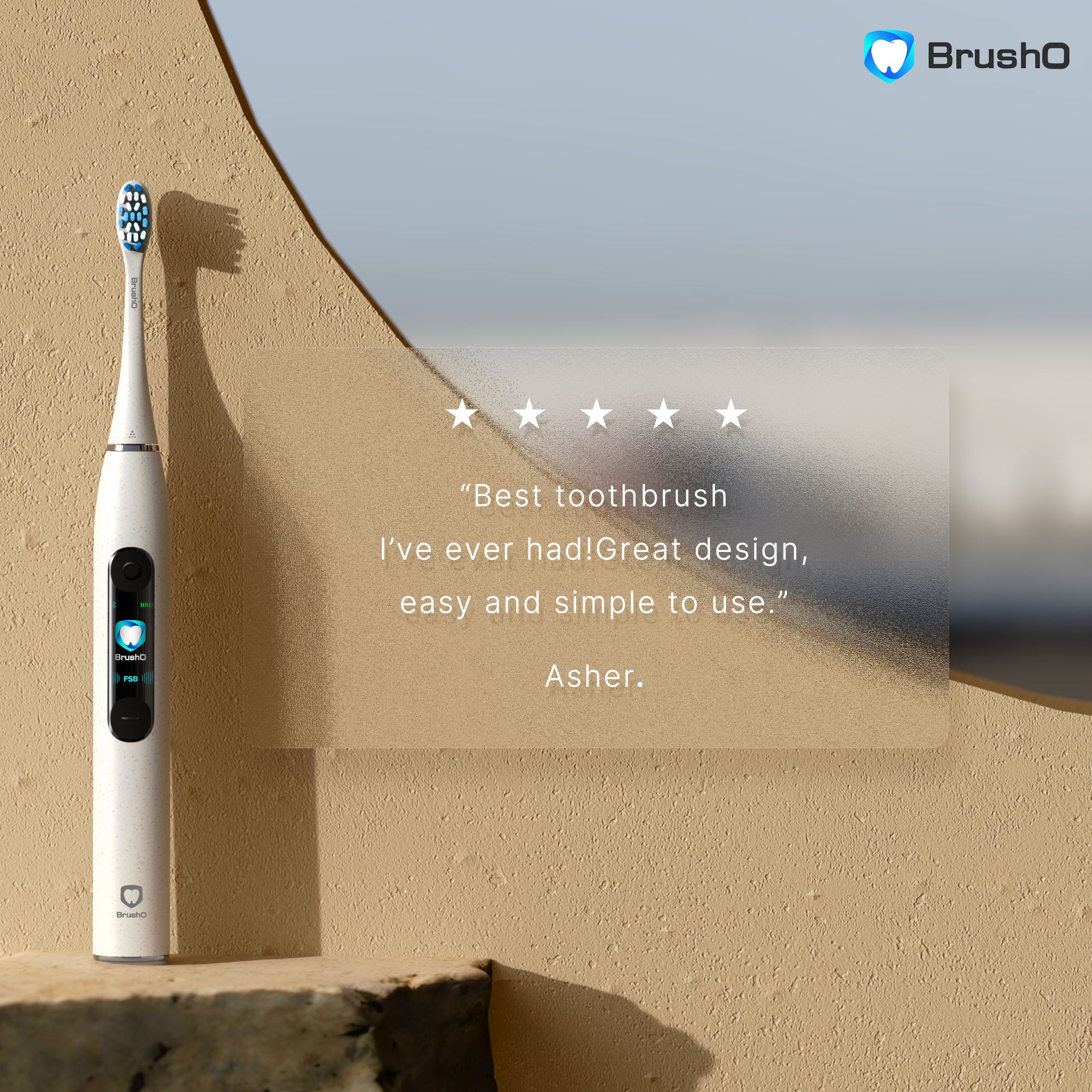
Here’s what real users have said:
“I finally found a toothbrush that doesn’t hurt my gums and fits in my carry-on. Total win!”
– Emily L., Frequent Traveler
“The custom brushing modes are amazing. It’s like having a dentist in your hand.”
– Marcus V., Tech Enthusiast
“After 3 weeks with BrushO, my teeth feel cleaner than ever — and I love the silent motor.”
– Lisa K., Busy Mom
In 2025, a smart toothbrush isn’t just a luxury — it’s an investment in your health and daily confidence.
BrushO blends innovation with practicality:
✅ Gentle enough for sensitive mouths
✅ Powerful enough for deep cleaning
✅ Travel-ready for any lifestyle
So if you're ready to upgrade your brushing experience and bring your smile to the next level — whether at home or on the go — BrushO is your perfect match.
Shop now at brusho.com
✨ Enjoy free shipping, 1-year warranty, and free brush head replacement program!
Jul 21
Jul 19
Jul 30
Jul 30
Jul 29
Jul 22
Jul 19
Jul 17

Hyperdontia is the presence of one or more teeth in excess of the normal dental formula, and the resulting teeth are described as supernumerary. The condition is common enough to appear in routine practice but variable enough in presentation that the decision to intervene is rarely straightforwar...

Few patients complete orthodontic treatment without asking whether their teeth will move back. The honest answer is that they will, to some degree, in the majority of cases. Relapse is not a failure of treatment but a predictable biological response, and understanding why it happens is the basis ...

The mandible is the largest and most frequently fractured bone of the facial skeleton, and its management sits at the interface between trauma surgery and restorative dentistry. Treatment has shifted over four decades from prolonged maxillomandibular fixation towards rigid internal fixation with ...

Chronic liver disease affects hundreds of millions of people worldwide, and its prevalence continues to rise with the epidemic of metabolic liver disease. The liver is central to haemostasis, drug metabolism and immune competence, and its failure therefore alters the risk profile of almost every ...

Excessive gingival display, commonly described as a gummy smile, is one of the most frequent aesthetic concerns presented to dental practitioners. The condition is not a single entity but a clinical presentation that can arise from skeletal, gingival, muscular or dental factors, and the treatment...

Drug-induced gingival overgrowth is a well-recognised adverse effect of several widely prescribed medications, and it remains one of the most common drug-related findings in periodontal practice. The condition produces firm, fibrous enlargement of the gingiva that can interfere with speech, masti...

Denture stomatitis is an inflammatory condition of the denture-bearing mucosa that affects a large proportion of removable prosthesis wearers, yet it is frequently dismissed as a cosmetic annoyance. The condition is driven by a Candida biofilm on the fitting surface of the prosthesis, and it is m...

Chronic kidney disease affects an estimated 850 million people worldwide, and the number of patients surviving on dialysis or with a renal transplant continues to rise. These patients carry an oral disease burden that is substantially higher than that of the general population, and their medical ...

Angular cheilitis is an inflammatory lesion of the labial commissures that presents with erythema, fissuring and crusting at the corners of the mouth. It is one of the most common conditions encountered in general dental practice, yet it is frequently treated as a simple fungal infection and allo...

Adverse reactions to dental materials are uncommon but they are not rare, and they are frequently misdiagnosed because the oral mucosa responds to allergens in a limited number of ways. A burning sensation, a persistent ulcer or an unexplained area of erythema may all represent a hypersensitivity...

La brosse à dents électrique BrushO avec IA offre un guidage en temps réel, un retour sur la pression, un suivi de la couverture et des rapports de progression dans l’app pour une routine quotidienne plus propre.
La brosse à dents électrique BrushO avec IA offre un guidage en temps réel, un retour sur la pression, un suivi de la couverture et des rapports de progression dans l’app pour une routine quotidienne plus propre.


Address: RM 1427, 14/F RADIO CITY 505, HENNESSY RD CAUSEWAY BAY, HONG KONG
Code: 000000
Phone: +852-53758652
Email: customerservice@brusho.com