
Jul 30
Jul 30
Jul 29
Jul 22
Jul 19
Jul 17
Many people unknowingly damage their gums by brushing too hard or using poor technique. Gum recession, bleeding, and sensitivity are often the result of excessive force, not lack of brushing. Smart toothbrush technology is changing the game by offering real-time feedback, adaptive pressure sensors, and personalized guidance. In this article, we’ll explore how AI-powered toothbrushes like BrushO protect your gums, correct bad habits, and help you build a healthy brushing routine.
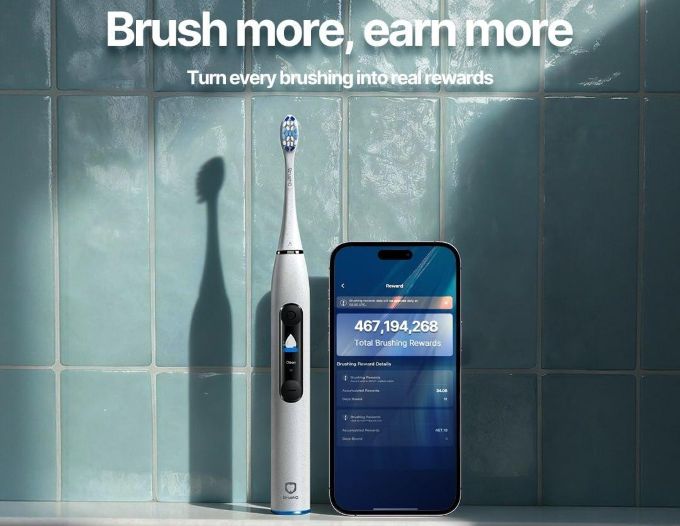
Gums aren’t just pink padding—they’re vital for protecting tooth roots and maintaining overall oral health. Yet, they’re also highly sensitive. Over time, aggressive brushing can cause gum recession, inflammation, and even tooth loss.
Research shows that one of the most common causes of gum problems is brushing too hard or with the wrong technique. Many people assume firmer brushing means cleaner teeth, but in reality, it can wear down enamel and damage soft tissue.
Before we dive into solutions, here are a few signs that your brushing style might be harming your gums:
• Gum bleeding during or after brushing
• Gum recession or teeth appearing “longer”
• Frayed toothbrush bristles within a few weeks
• Tooth sensitivity, especially near the gumline
If any of these sound familiar, it’s time to rethink your brushing routine.
Smart toothbrushes like BrushO come equipped with AI-powered pressure sensors that detect if you’re brushing too hard. Instead of letting you unknowingly cause damage, they send gentle alerts—visual or tactile cues that guide you back to safe pressure levels.
This is especially useful for children, older adults, and anyone with sensitive gums or a history of gum disease.
BrushO includes brushing modes like:
• Gum Care: Low-intensity, gentle vibration for sensitive days
• Adaptive Cleaning: Automatically adjusts based on your brushing zones
• Whitening / Deep Clean: Higher intensity but still controlled
Users can choose the “Gum Protection” or “Gentle Mode” in the BrushO app, ensuring a soft yet effective clean.
Every BrushO session generates a personalized brushing report. This includes pressure data, missed zones, and brushing time—giving you actionable tips to improve your habits. Over time, this data creates patterns that prevent gum issues before they start.
| Feature | BrushO Smart AI Toothbrush | Traditional Electric Toothbrush |
| Pressure detection | ✅ Real-time adaptive | ❌ Limited or none |
| Feedback | ✅ App with full reports | ❌ Often lacks tracking |
| Gum-focused modes | ✅ Multiple gentle settings | ⚠️ Few or none |
| Personalized coaching | ✅ AI learning and progress tracking | ❌ None |
| Data ownership | ✅ Web3-based privacy system | ❌ No user control |
• Use soft-bristle toothbrush heads
• Brush for 2 minutes, twice a day
• Focus on technique, not force
• Replace brush heads every 3 months
• Visit your dentist regularly
• Let smart tools like BrushO guide your progress
You don’t need to scrub hard to clean well. In fact, the opposite is true. With the right smart toothbrush technology, you can brush effectively and gently—avoiding long-term gum damage while building healthy habits. BrushO empowers you to brush smarter, not harder, one gentle stroke at a time.
BrushO is an AI-powered electric toothbrush brand built on smart tech and gentle design. Its adaptive feedback system, real-time pressure sensors, and personalized app experience help users protect their gums, improve brushing habits, and enjoy healthier smiles for life.
Nov 7
Nov 6
Jul 30
Jul 30
Jul 29
Jul 22
Jul 19
Jul 17

Hyperdontia is the presence of one or more teeth in excess of the normal dental formula, and the resulting teeth are described as supernumerary. The condition is common enough to appear in routine practice but variable enough in presentation that the decision to intervene is rarely straightforwar...

Few patients complete orthodontic treatment without asking whether their teeth will move back. The honest answer is that they will, to some degree, in the majority of cases. Relapse is not a failure of treatment but a predictable biological response, and understanding why it happens is the basis ...

The mandible is the largest and most frequently fractured bone of the facial skeleton, and its management sits at the interface between trauma surgery and restorative dentistry. Treatment has shifted over four decades from prolonged maxillomandibular fixation towards rigid internal fixation with ...

Chronic liver disease affects hundreds of millions of people worldwide, and its prevalence continues to rise with the epidemic of metabolic liver disease. The liver is central to haemostasis, drug metabolism and immune competence, and its failure therefore alters the risk profile of almost every ...

Excessive gingival display, commonly described as a gummy smile, is one of the most frequent aesthetic concerns presented to dental practitioners. The condition is not a single entity but a clinical presentation that can arise from skeletal, gingival, muscular or dental factors, and the treatment...

Drug-induced gingival overgrowth is a well-recognised adverse effect of several widely prescribed medications, and it remains one of the most common drug-related findings in periodontal practice. The condition produces firm, fibrous enlargement of the gingiva that can interfere with speech, masti...

Denture stomatitis is an inflammatory condition of the denture-bearing mucosa that affects a large proportion of removable prosthesis wearers, yet it is frequently dismissed as a cosmetic annoyance. The condition is driven by a Candida biofilm on the fitting surface of the prosthesis, and it is m...

Chronic kidney disease affects an estimated 850 million people worldwide, and the number of patients surviving on dialysis or with a renal transplant continues to rise. These patients carry an oral disease burden that is substantially higher than that of the general population, and their medical ...

Angular cheilitis is an inflammatory lesion of the labial commissures that presents with erythema, fissuring and crusting at the corners of the mouth. It is one of the most common conditions encountered in general dental practice, yet it is frequently treated as a simple fungal infection and allo...

Adverse reactions to dental materials are uncommon but they are not rare, and they are frequently misdiagnosed because the oral mucosa responds to allergens in a limited number of ways. A burning sensation, a persistent ulcer or an unexplained area of erythema may all represent a hypersensitivity...

Die BrushO KI-Elektrozahnbürste bietet Echtzeit-Anleitung, Druckfeedback, Abdeckungsverfolgung und Fortschrittsberichte in der App für eine sauberere tägliche Routine.
Die BrushO KI-Elektrozahnbürste bietet Echtzeit-Anleitung, Druckfeedback, Abdeckungsverfolgung und Fortschrittsberichte in der App für eine sauberere tägliche Routine.


Address: RM 1427, 14/F RADIO CITY 505, HENNESSY RD CAUSEWAY BAY, HONG KONG
Code: 000000
Phone: +852-53758652
Email: customerservice@brusho.com