
Jul 30
Jul 30
Jul 29
Jul 22
Jul 19
Jul 17
Pacifiers can be lifesavers for fussy babies, helping them sleep better and self-soothe. But prolonged or improper use of pacifiers may have long-term effects on your child’s oral development. From misaligned teeth to altered jaw structure, it’s important to understand the dental risks associated with pacifier use—and how to avoid them. This article explores how to protect your baby’s future smile while still using pacifiers safely and mindfully.
Pacifiers mimic the sucking reflex, which is natural and comforting for infants. However, extended use—especially beyond the age of 2—can interfere with natural oral and facial development in ways such as:
• Open bite: A gap between upper and lower teeth, even when the mouth is closed
• Overbite: Upper teeth pushing far beyond the lower teeth
• Crossbite: Misalignment where the upper teeth fit inside the lower teeth
• Changes in palate shape: Narrowing of the upper jaw or high-arched palate
These changes may require orthodontic intervention later if not managed early.
• 0–6 months: Safe and beneficial. Reduces risk of SIDS (Sudden Infant Death Syndrome).
• 6–18 months: Still generally safe, but should start limiting usage to sleep time.
• 18 months–3 years: Risk of dental misalignment increases. Monitor closely.
• After age 3: Strongly advised to wean off. Dental complications become more likely.
Look out for these early red flags:
• Teeth not coming in straight
• Mouth always slightly open, even at rest
• Trouble chewing or speaking sounds clearly
• Receding gums or visible bite issues
Early detection allows for preventive action. Pediatric dentists can evaluate alignment and growth even before all baby teeth erupt.
✅ How to Use Pacifiers Without Harming Dental Development
• Choose orthodontic pacifiers: Designed to minimize pressure on gums and teeth
• Never dip in sweet substances: This can cause early childhood cavities
• Sterilize and replace regularly: Avoid bacterial buildup and material degradation
• Limit usage to bedtime: Avoid “all-day” reliance
• Wean off by age 2–3: Use gradual reduction methods like shortening usage time or offering a comforting toy instead
Although brushing starts later, early oral care routines lay the foundation for a healthy smile. Here’s how:
• Wipe baby’s gums with a soft cloth after feedings to reduce bacterial buildup
• Start brushing when the first tooth appears, using a baby toothbrush
• Switch to a smart toothbrush like BrushO once they’re older to build good brushing habits from the start
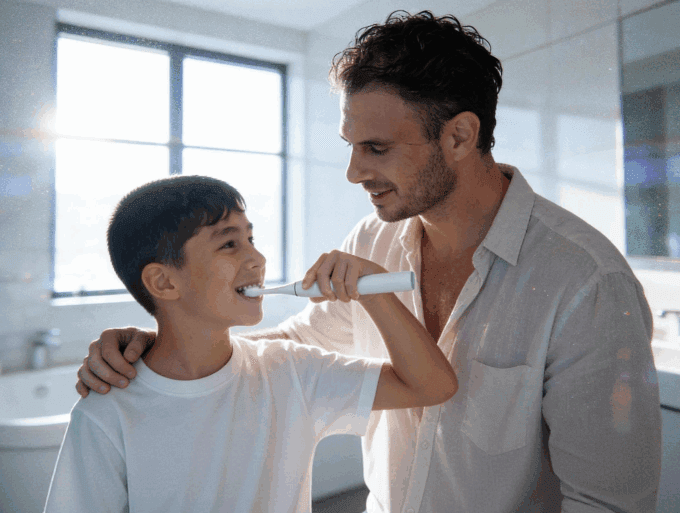
BrushO’s child-friendly AI brushing assistant helps guide kids through brushing routines, ensuring they learn correct techniques and avoid common brushing mistakes—supporting healthy smiles for years to come.
Pacifiers are not inherently bad—but how and how long you use them matters. With age-appropriate weaning, careful monitoring, and early dental checkups, you can protect your child’s smile from long-term damage. And when brushing begins, combining those habits with BrushO’s smart brushing system ensures your child develops not just a straight smile, but a healthy one too.
Jan 12
Jan 9
Jul 30
Jul 30
Jul 29
Jul 22
Jul 19
Jul 17

Understand sonic bristle movement, laboratory fluid-dynamics claims, and BrushO’s practical timer and pressure-response features before buying.

Learn where BrushO may fit in care for healed implants and crowns, with tailored tools, surgical instructions and professional maintenance.

Plan comfortable brushing during pregnancy with BrushO’s timed prompts and pressure response, alongside advice from your dental and maternity teams.

Choose fluoride toothpaste for your dental needs and pair it with BrushO’s timed brushing and pressure response for a consistent daily routine.

Address common brushing mistakes with BrushO’s timer, pressure-responsive FSB hardware, and eligible CHECK and COACH software guidance.

Understand the difference between nighttime teeth grinding and brushing pressure, and where BrushO fits alongside a dentist-led care plan.

Explore how BrushO supports consistent daily brushing for coffee, tea and wine drinkers, with realistic expectations about surface stains and tooth color.

Build a lighter BrushO routine with pressure-responsive FSB hardware, comfortable settings, and dental advice about tooth wear and enamel care.

Combine BrushO’s powered brushing with daily interdental cleaning. Learn why timed prompts and pressure response complement flossing rather than replace it.

Make the two-minute brushing rule practical with BrushO’s timed prompts, pressure response, and a planned route around every tooth surface.

BrushO AI ইলেকট্রিক টুথব্রাশ রিয়েল-টাইম ব্রাশিং গাইড, চাপের ফিডব্যাক, কভারেজ ট্র্যাকিং এবং অ্যাপ-ভিত্তিক অগ্রগতি রিপোর্ট দেয়, যাতে দৈনন্দিন রুটিন আরও পরিষ্কার ও সহজ হয়।
BrushO AI ইলেকট্রিক টুথব্রাশ রিয়েল-টাইম ব্রাশিং গাইড, চাপের ফিডব্যাক, কভারেজ ট্র্যাকিং এবং অ্যাপ-ভিত্তিক অগ্রগতি রিপোর্ট দেয়, যাতে দৈনন্দিন রুটিন আরও পরিষ্কার ও সহজ হয়।


Address: RM 1427, 14/F RADIO CITY 505, HENNESSY RD CAUSEWAY BAY, HONG KONG
Code: 000000
Phone: +852-53758652
Email: customerservice@brusho.com