
Jul 30
Jul 30
Jul 29
Jul 22
Jul 19
Jul 17
Many people instinctively reach for their toothbrush right after vomiting to feel clean and fresh. However, this common habit might be doing more harm than good. Brushing immediately after throwing up can actually damage your tooth enamel, which is already weakened by stomach acid. In this article, we’ll break down why timing matters, what experts recommend, and how smart brushing habits with BrushO can protect your long-term oral health. Whether you’re dealing with occasional stomach issues, morning sickness, or food poisoning, understanding the right steps to take after vomiting is crucial for maintaining healthy teeth and gums.
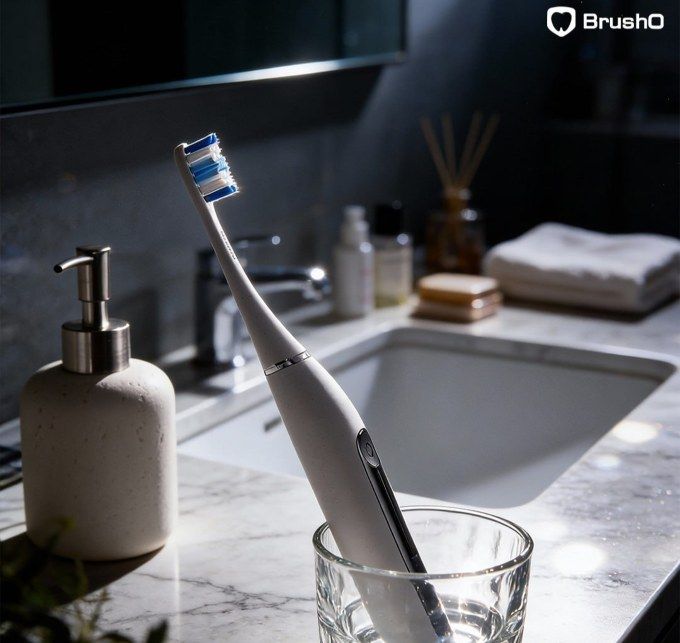
Vomiting isn’t just unpleasant—it exposes your mouth to a powerful mix of stomach acids that can significantly weaken your enamel. Many of us want to brush right away to get rid of the taste and feel clean again. But is that actually safe?
Let’s explore what dental professionals recommend and how smart oral care, with help from BrushO, can minimize damage and promote healing.
Stomach acid has a very low pH, usually between 1 and 3, which can temporarily soften tooth enamel. When you vomit, that acid coats your teeth. If you brush too soon afterward, you might actually scrub away the weakened enamel, leading to:
• Increased tooth sensitivity
• Long-term enamel erosion
• Yellowing of the teeth
• Higher risk of cavities
According to the American Dental Association (ADA) and most dentists, it’s best to wait at least 30 minutes after vomiting before brushing your teeth.
1. Rinse with water immediately – to remove acid residue from the mouth.
2. Rinse with a baking soda solution (1 teaspoon in a cup of water) – this neutralizes acid and protects enamel.
3. Chew sugar-free gum – to stimulate saliva, which naturally helps rebalance pH.
4. Wait 30–60 minutes – then brush gently with a soft-bristled toothbrush like BrushO.
When it’s finally safe to brush, using the right technique and tools is essential.
• Pressure sensors ensure you don’t overbrush sensitive enamel.
• Adaptive modes like “Sensitive” and “Gum Care” offer a gentler clean.
• Smart timing guides you through proper zone-by-zone brushing—even when your mouth is recovering.
• Brushing history tracking helps monitor patterns if vomiting is frequent (e.g., morning sickness, illness).
By using a smart toothbrush like BrushO, you’re less likely to cause additional harm when your enamel is most vulnerable.
Pregnant women dealing with morning sickness may vomit frequently. If so, consider:
• Keeping a bottle of water or mouth rinse nearby
• Switching to enamel-strengthening toothpaste
• Using BrushO’s sensitive mode to avoid triggering gag reflexes
For individuals recovering from bulimia or similar conditions, consistent education and gentle care are key. A smart toothbrush like BrushO offers non-judgmental tracking and habit coaching, helping users improve their oral health gradually.
It’s natural to want to brush right after vomiting—but resist the urge. Wait at least 30 minutes and rinse thoroughly to protect your enamel. Then brush gently with a smart, supportive tool like BrushO that adapts to your needs and helps prevent further damage.
BrushO is an AI-powered smart toothbrush that tracks your brushing performance in real time, from pressure to coverage. With features like adaptive brushing modes, personalized scoring, and app-based feedback, BrushO helps you build better brushing habits every day. Whether you’re managing a sensitive mouth or aiming for optimal oral health, BrushO is your smartest brushing companion.
Jul 30
Jul 30
Jul 29
Jul 22
Jul 19
Jul 17

The posterior maxilla is the most demanding site in implant dentistry, because the pneumatized maxillary sinus frequently leaves the clinician with less bone than the implant requires. Maxillary sinus augmentation, the surgical procedure that raises the sinus floor to create vertical bone, has be...

The rubber dam is the oldest and still the most effective isolation device in restorative dentistry, and its reputation as an inconvenient extra step survives among practitioners who have never measured the time it actually saves. The dam isolates the field from the saliva, the tongue, and the ch...

The margin is the most vulnerable line in fixed prosthodontics, because it is the only boundary between the prepared tooth, the restoration, and the oral environment that the clinician cannot fully seal by effort alone. A restoration that fits seamlessly at the margin resists leakage, caries, and...

The masticatory system is built for function, yet much of its damage comes from habits that serve no purpose. Parafunctional habits, the clenching, the grinding, and the tongue pressing performed outside of normal function, sit behind much of the tooth wear, the temporomandibular pain, and the my...

Chronic mouth breathing in the growing child is seldom a dental problem in origin and almost always a facial one in consequence. The child who sleeps with the mouth open bypasses the physiologic benefits of nasal respiration, and the posture that the airway forces upon the tongue, the mandible, a...

The immediate denture is the prosthesis placed on the day the teeth are extracted, sparing the patient the edentulous interval the conventional denture imposes and preserving the occlusal vertical dimension, the facial support, and the appearance through the transition. The clinical literature ha...

The Class III malocclusion in the growing child carries a special urgency, because the maxillary deficiency that marks the pattern does not correct itself and the window for the growth-modifying treatment closes with the skeletal maturity. Elastic protraction, the orthopedic therapy that pulls th...

The denture is the only prosthetic device in medicine that its owner is expected to wear daily and to clean personally, yet it is also the device most commonly neglected until the signs of disease appear. A biofilm that forms on the acrylic base within hours is a reservoir of candida and bacteria...

The complete denture stands or falls on the impression, because the impression determines how well the base follows the mucous membrane and how evenly the occlusal load is distributed across the basal seat. For a century the profession has argued about whether the impression should record the muc...

The all-ceramic crown has moved from a niche product to the default restoration for the anterior single tooth in a single clinical generation, driven by patient demand for metal-free appearance and by materials that now survive functional loading as reliably as their metal-ceramic predecessors. A...

BrushO AI Electric Toothbrush offers real-time brushing guidance, pressure feedback, coverage tracking, and app-based progress reports for a cleaner daily routine.
BrushO AI Electric Toothbrush offers real-time brushing guidance, pressure feedback, coverage tracking, and app-based progress reports for a cleaner daily routine.


Address: RM 1427, 14/F RADIO CITY 505, HENNESSY RD CAUSEWAY BAY, HONG KONG
Code: 000000
Phone: +852-53758652
Email: customerservice@brusho.com