
Jul 30
Jul 30
Jul 29
Jul 22
Jul 19
Jul 17
Unlike skin or hair, your teeth endure daily mechanical stress, acid exposure, and bacterial attacks without the ability to regenerate lost tissue. This makes them more vulnerable to premature aging. From enamel thinning to gum recession, discover how everyday habits contribute to early dental aging—and how smart toothbrushes like BrushO help you protect your smile for years to come.
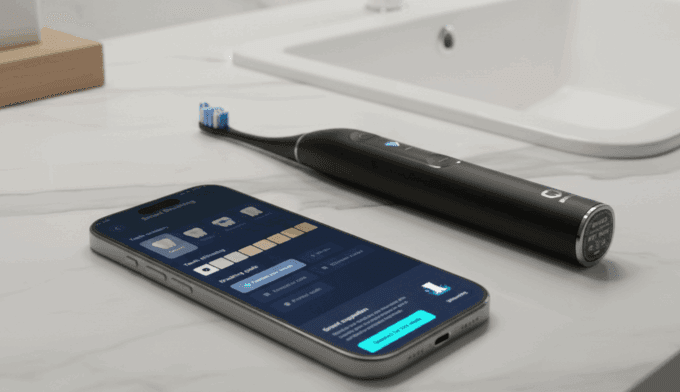
While aging affects every part of the body, your oral environment is particularly harsh:
• Constant chewing pressure
• Acidic foods and drinks
• Plaque bacteria release corrosive acids
• Microtraumas from grinding or overbrushing
Unlike skin cells, tooth enamel doesn’t regenerate. Once it wears down, it’s gone for good—making proactive care essential.
Acidic foods (citrus, soda, wine) and sugar fuel acid-producing bacteria, softening enamel.
Clenching or grinding—often during sleep—slowly wears enamel and flattens tooth surfaces.
Brushing too hard or missing key zones speeds up enamel wear and plaque buildup.
Skipping brushing sessions or avoiding floss leads to tartar buildup and gum recession.
Uncontrolled bacterial growth accelerates decay and causes chronic gum inflammation.
• Translucent or glassy tooth edges
• Yellowing (exposed dentin under thinning enamel)
• Sharp sensitivity to hot or cold
• Receding gums or exposed roots
• Uneven or worn bite surfaces
⚠️ Note: These signs often appear before pain does. Early detection is key.
• Frequent snacking: Keeps acid levels high throughout the day
• Late-night eating: Saliva production drops at night, reducing protection
• Overbrushing: Using stiff bristles or applying too much pressure damages enamel
• DIY whitening: Harsh chemicals weaken enamel over time
Even subtle habits like chewing ice or biting pens contribute to long-term dental wear.
AI-powered brushes like BrushO track pressure, coverage, and timing for every brushing session—minimizing risk of overbrushing or missed areas.
Never brush immediately after acidic foods or drinks. Wait 30–60 minutes for saliva to neutralize pH.
Cut back on sugary or acidic snacks. Hydrate often to support saliva production and natural enamel protection.
Schedule bi-annual cleanings and checkups to detect early enamel erosion or gum issues.
Protect your enamel from nighttime grinding with a custom-fitted dental guard.
Unlike traditional brushes, BrushO combines AI sensors + real-time app feedback to prevent overbrushing and enamel wear.
✅ Apply safe brushing pressure
✅ Follow dentist-approved brushing time
✅ Ensure all 6 zones, 16 surfaces are covered
✅ Track daily brushing consistency
✅ Earn $BRUSH tokens for brushing streaks
It turns your routine into a science-backed oral wellness habit.
Your teeth are under constant attack from food, bacteria, and lifestyle habits—yet they don’t regenerate like skin or hair. To prevent irreversible aging effects, you need more than just toothpaste and luck. With BrushO’s smart technology, you gain the precision, data, and feedback needed to slow down dental aging and maintain a healthy, youthful smile for life.
Jan 22
Jan 22
Jul 30
Jul 30
Jul 29
Jul 22
Jul 19
Jul 17

The posterior maxilla is the most demanding site in implant dentistry, because the pneumatized maxillary sinus frequently leaves the clinician with less bone than the implant requires. Maxillary sinus augmentation, the surgical procedure that raises the sinus floor to create vertical bone, has be...

The rubber dam is the oldest and still the most effective isolation device in restorative dentistry, and its reputation as an inconvenient extra step survives among practitioners who have never measured the time it actually saves. The dam isolates the field from the saliva, the tongue, and the ch...

The margin is the most vulnerable line in fixed prosthodontics, because it is the only boundary between the prepared tooth, the restoration, and the oral environment that the clinician cannot fully seal by effort alone. A restoration that fits seamlessly at the margin resists leakage, caries, and...

The masticatory system is built for function, yet much of its damage comes from habits that serve no purpose. Parafunctional habits, the clenching, the grinding, and the tongue pressing performed outside of normal function, sit behind much of the tooth wear, the temporomandibular pain, and the my...

Chronic mouth breathing in the growing child is seldom a dental problem in origin and almost always a facial one in consequence. The child who sleeps with the mouth open bypasses the physiologic benefits of nasal respiration, and the posture that the airway forces upon the tongue, the mandible, a...

The immediate denture is the prosthesis placed on the day the teeth are extracted, sparing the patient the edentulous interval the conventional denture imposes and preserving the occlusal vertical dimension, the facial support, and the appearance through the transition. The clinical literature ha...

The Class III malocclusion in the growing child carries a special urgency, because the maxillary deficiency that marks the pattern does not correct itself and the window for the growth-modifying treatment closes with the skeletal maturity. Elastic protraction, the orthopedic therapy that pulls th...

The denture is the only prosthetic device in medicine that its owner is expected to wear daily and to clean personally, yet it is also the device most commonly neglected until the signs of disease appear. A biofilm that forms on the acrylic base within hours is a reservoir of candida and bacteria...

The complete denture stands or falls on the impression, because the impression determines how well the base follows the mucous membrane and how evenly the occlusal load is distributed across the basal seat. For a century the profession has argued about whether the impression should record the muc...

The all-ceramic crown has moved from a niche product to the default restoration for the anterior single tooth in a single clinical generation, driven by patient demand for metal-free appearance and by materials that now survive functional loading as reliably as their metal-ceramic predecessors. A...


Address: RM 1427, 14/F RADIO CITY 505, HENNESSY RD CAUSEWAY BAY, HONG KONG
Code: 000000
Phone: +852-53758652
Email: customerservice@brusho.com
