
Jul 30
Jul 30
Jul 29
Jul 22
Jul 19
Jul 17
Saliva is one of the most important — yet underestimated — protective systems in oral health. It neutralizes acids, controls bacterial growth, supports digestion, and remineralizes enamel. However, saliva production is not constant. It naturally fluctuates throughout the day due to biological rhythms, hydration status, eating patterns, and nervous system activity. These fluctuations influence cavity risk, plaque formation, breath freshness, and gum resilience. Understanding when saliva protection is strongest — and when it is weakest — allows individuals to adjust hygiene habits and prevent long-term damage. With guided brushing systems like BrushO supporting consistent plaque removal during low-saliva periods, users can maintain oral stability even when natural defenses temporarily decline.
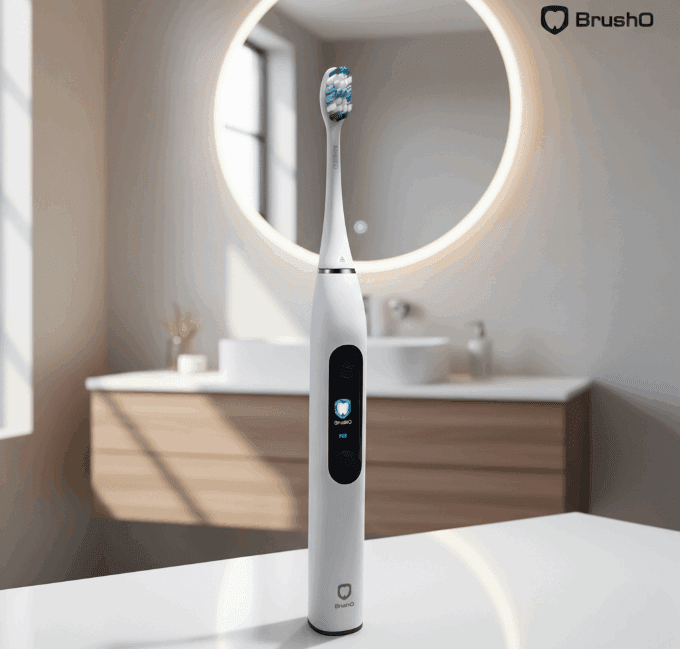
Saliva is not just moisture — it is a multifunctional biological defense system. Healthy saliva performs several essential tasks:
• Neutralizes acidic byproducts from bacteria
• Washes away food particles
• Delivers calcium and phosphate for enamel repair
• Supports microbial balance
• Lubricates oral tissues
A decrease in saliva flow reduces these protections, allowing plaque accumulation and enamel vulnerability to increase.
Human physiology follows a 24-hour internal clock. Saliva secretion aligns with this rhythm:
• Morning: Production rises after waking
• Afternoon: Peak flow during meals
• Evening: Gradual decline
• Night: Lowest output
During sleep, salivary flow may drop by up to 90%, making nighttime the highest-risk window for bacterial activity.
This biological pattern explains:
• Morning breath
• Overnight plaque accumulation
• Increased cavity risk without bedtime brushing
Fluid balance strongly influences saliva production. Dehydration or stimulant intake can reduce output.
Common disruptors include:
• Caffeine consumption
• Alcohol intake
• Low water intake
• High-sodium diets
Conversely, chewing and eating stimulate salivary glands, temporarily increasing flow and buffering acids.
Saliva secretion is regulated by the autonomic nervous system.
• Relaxed states: Promote saliva production
• Stress responses: Suppress flow
This is why anxiety often produces dry mouth sensations. Chronic stress may contribute to long-term oral microbial imbalance and gum irritation.
Periods of reduced saliva correlate with:
• Faster plaque accumulation
• Higher enamel demineralization
• Increased gum sensitivity
• Stronger odor-causing bacterial activity
Because these changes occur silently, individuals may not notice elevated risk during low-flow windows. Consistent mechanical plaque removal through effective brushing becomes especially critical during these times.
Evidence-based habits include:
• Brushing before sleep to compensate for night-time dryness
• Hydrating regularly throughout the day
• Avoiding sugary snacks late at night
• Allowing saliva recovery after acidic intake
Smart brushing systems such as BrushO support oral protection by ensuring:
• Complete coverage across all 6 zones and 16 surfaces
• Controlled brushing pressure
• Consistent plaque disruption regardless of saliva variability
• Habit tracking during high-risk periods
When natural defenses decline, precise brushing helps maintain microbial balance.
Modern preventive dentistry increasingly recognizes saliva flow variability as a key factor in oral disease risk modeling.
Understanding personal patterns enables:
• Better cavity prevention
• Improved gum stability
• Reduced enamel wear
• More effective hygiene scheduling
Oral health outcomes are shaped not only by what we do, but by when biological protection is strongest or weakest.
Saliva production changes continuously throughout the day, influenced by circadian rhythm, hydration, diet, and stress. These fluctuations directly affect bacterial growth, enamel protection, and gum resilience. By aligning oral hygiene habits with biological rhythms and utilizing intelligent brushing guidance, individuals can maintain oral health stability even during low-protection periods. Awareness transforms routine care into strategic prevention.
Feb 26
Feb 10
Jul 30
Jul 30
Jul 29
Jul 22
Jul 19
Jul 17

A lateral cephalometric radiograph is only as useful as the analysis applied to it. The same tracing can be read as a skeletal discrepancy by one method and as a dental compensation by another, and the conclusions reached about extraction, surgery or growth modification may differ accordingly. Un...

Premature fusion of the cranial sutures produces a group of conditions in which the skull, the midface and the occlusion develop abnormally, and the dental team is central to long-term care. Apert and Crouzon syndromes are the best known craniosynostosis syndromes with major oral consequences. Bo...

A dense opacity on a panoramic radiograph above the molar roots or within the nasal cavity is a familiar finding that is often dismissed as an incidental artifact. When that opacity proves to be an antrolith or a rhinolith, the discovery explains years of unilateral obstruction, discharge and fac...

A firm, board-like swelling at the angle of the jaw that slowly breaks down into multiple draining sinuses should raise suspicion of cervicofacial actinomycosis, a chronic bacterial infection that is easily mistaken for a tumor. Nocardiosis, caused by related filamentous organisms, can produce a ...

Enlargement of the jaw, widening spaces between the teeth and a slowly changing facial profile may bring a patient to the dental office years before the underlying endocrine disease is diagnosed. Acromegaly and Cushing syndrome both leave recognizable signatures in the craniofacial region, and th...

A slowly growing, painless lump at the angle of the jaw in a middle-aged or older man who smokes is the classic presentation of a Warthin tumor. Formally called papillary cystadenoma lymphomatosum, this benign neoplasm is one of the most common tumors of the parotid gland and the second most comm...

Painful ulcerated gums that bleed easily, a foul metallic taste and severe mouth odor can signal Vincent stomatitis, an acute fusospirochetal necrotizing infection of the gingival and oral tissues. First described during wartime and historically called trench mouth, the disease still occurs today...

A painful swelling under the jaw that appears at mealtimes and subsides slowly afterward is the classic symptom of a salivary stone blocking a duct. Sialolithiasis, the formation of calcified stones in the salivary glands, and sialodochitis, the inflammation of the ducts that follows, are common ...

Paget disease of bone, also called osteitis deformans, is a chronic disorder of bone remodeling that can silently affect the skull and the jaws. In the maxillofacial region it produces progressive bony enlargement, distinctive cotton-wool radiographs and dental complications such as hypercementos...

The sudden appearance of widespread, painful oral erosions with crusted lips can be alarming, and it may represent either erythema multiforme or a drug-induced severe reaction such as Stevens-Johnson syndrome. Both belong to a spectrum of immune-mediated mucocutaneous disorders, and both can begi...


Address: RM 1427, 14/F RADIO CITY 505, HENNESSY RD CAUSEWAY BAY, HONG KONG
Code: 000000
Phone: +852-53758652
Email: customerservice@brusho.com
