
Jul 30
Jul 30
Jul 29
Jul 22
Jul 19
Jul 17
Many people notice a bit of blood in the sink while brushing and assume it’s nothing serious. But is occasional bleeding actually normal? The short answer: no, it shouldn’t be ignored. While it may result from brushing too hard or using a new flossing technique, it can also be a key warning sign of early gum disease or improper brushing habits. Understanding the cause—and using the right tools to fix it—can protect your gums before more serious issues arise.
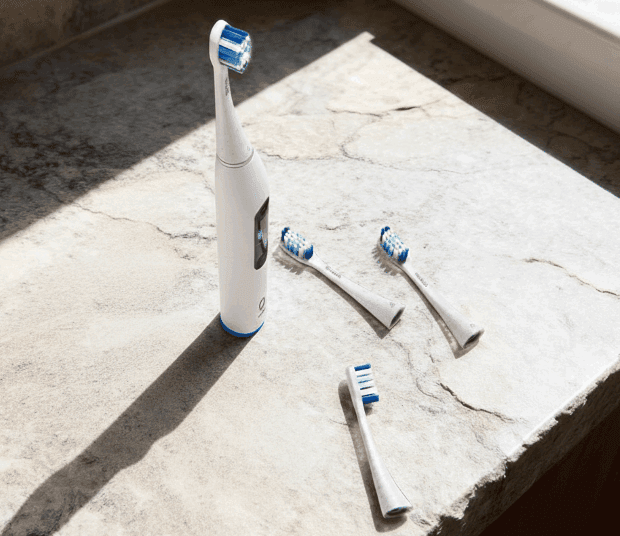
Occasional bleeding is common, but not normal. Healthy gums should not bleed during brushing or flossing. When they do, it’s typically a sign of:
• Gingivitis (early-stage gum disease): Caused by plaque buildup at the gumline.
• Poor brushing technique: Brushing too hard or with a stiff-bristle brush.
• New flossing routines: Gums may bleed slightly if flossing was previously neglected.
• Hormonal changes: Pregnancy or hormonal fluctuations can increase gum sensitivity.
If the bleeding happens repeatedly, even in small amounts, it’s time to take action.
Brushing through minor bleeding and hoping it stops isn’t a long-term strategy. Bleeding can lead to:
• Periodontitis: An advanced form of gum disease that damages gum tissue and bone.
• Tooth loss: Gum recession and bone loss can destabilize teeth.
• Systemic health issues: Gum disease has been linked to heart disease, diabetes, and inflammation throughout the body.
This is why early detection and behavior correction are critical.
Traditional brushes don’t tell you when you’re brushing too hard or missing key areas. But smart toothbrushes like BrushO provide real-time feedback that helps prevent gum bleeding by:
• Pressure Detection Alerts: Notifies you if you’re brushing too hard on sensitive gums.
• Zone Guidance: Ensures full mouth coverage, reducing missed plaque near the gumline.
• Daily Reports: Track when bleeding occurs and adjust technique over time.
• Custom Brushing Modes: Choose gentle modes for inflamed gums or post-treatment care.
This transforms brushing from a routine into a responsive, protective habit.
1. Switch to a soft-bristle brush (or use BrushO’s Gentle Mode).
2. Brush at a 45° angle to the gumline, not directly into it.
3. Floss daily, but be gentle and consistent.
4. Avoid smoking, which reduces blood flow and gum healing.
5. Eat a balanced diet rich in vitamin C and calcium.
6. Visit a dentist if bleeding persists longer than a week.
Occasional bleeding during brushing may be common, but it shouldn’t be dismissed. It’s your body’s way of signaling inflammation or poor technique. Using AI-powered tools like BrushO helps users prevent bleeding through better brushing awareness, pressure control, and routine tracking. BrushO is an AI-powered smart toothbrush designed to optimize oral health through precision brushing guidance, zone tracking, pressure sensing, and daily reports. Whether you’re managing sensitivity or aiming for better gum health, BrushO transforms daily brushing into a smart, rewarding experience.
Jul 30
Jul 30
Jul 29
Jul 22
Jul 19
Jul 17

How long does it take to change a habit? The popular answer is 21 days, but reality is often more subtle than that. Many changes show up in the data long before you actually feel them. AI-powered toothbrushes deliver weekly and monthly reports, and many people just swipe past them as if they were an

You are sitting in the dentist's chair, listening to the ultrasonic scaler buzz against your teeth, when the dentist says, "You have quite a bit of tartar buildup behind your lower front teeth." You think to yourself: I brush every day. Why does it always collect there? Tartar is not distributed eve

Have you ever thought about what your teeth go through every time you eat, drink, or even sleep? Inside your mouth, a silent tug-of-war is constantly playing out. On one side is demineralization, the process where acid dissolves minerals from your enamel. On the other side is remineralization, where

Have you ever looked in the mirror and noticed your gum line seems to have crept a little lower than before? Your teeth look slightly longer, and you can almost see the root peeking out. That is gum recession happening right in front of you. Many people think gum recession is something only older ad

You have probably never heard the term "gingival crevicular fluid," but it is working silently in your mouth every single day, like an invisible health sentinel. Gingival crevicular fluid, or GCF for short, is the fluid that seeps out of the tiny groove between your gums and your teeth. Most of the

When it comes to taking care of your teeth, fluoride might be one of the most debated topics out there. Dentists call it a cavity-fighting superhero and recommend fluoride toothpaste for the whole family. But you have also probably seen articles online warning about fluorosis and even broader health

Enamel is the hardest substance in the human body, but it is not spread evenly across every tooth. Different teeth, and even different surfaces on the same tooth, can have dramatically different enamel thickness. Some spots are armored like a fortress wall, while others are as thin as a sheet of pap

"Should I brush my teeth right after eating?" This question sparks debates at dinner tables and in group chats that rival the great culinary divides. Some people swear by brushing immediately after a meal so food particles do not sit in their mouth causing cavities. Others insist that brushing right

Every parent has been there: your child comes to you holding a wobbly baby tooth, eyes wide with a mix of excitement and nerves. You give it a gentle tug, it comes right out, and you notice something odd. The root looks almost completely gone, as if something dissolved it away. For a split second, y

In the age of regular toothbrushes, everyone essentially brushed the same way. One type of bristle, one vibration mode, and you just went by feel. But every mouth is different. Some people have wide gaps between teeth, others have crowded arches. Some have sensitive gums, others have naturally thin


Address: RM 1427, 14/F RADIO CITY 505, HENNESSY RD CAUSEWAY BAY, HONG KONG
Code: 000000
Phone: +852-53758652
Email: customerservice@brusho.com
