
Jul 30
Jul 30
Jul 29
Jul 22
Jul 19
Jul 17
Your daily brushing habits do more than keep your teeth clean—they may reveal hidden dental risks. In this article, we examine how minor variations in your oral care routine can indicate potential problems, such as cavities, gum disease, and enamel erosion. With AI-powered tools like BrushO, early detection and prevention are now possible through real-time feedback and habit analysis.
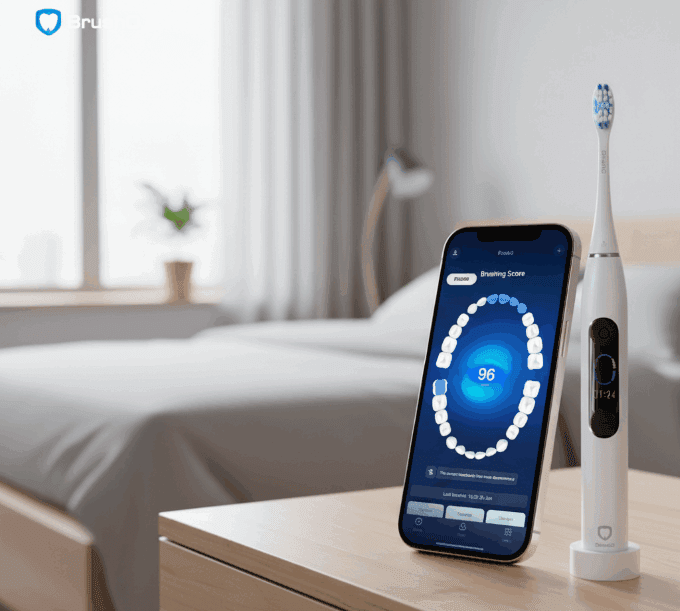
Most people believe brushing twice a day is enough for a healthy mouth. But how you brush—timing, duration, pressure, and coverage—can reveal subtle risks before they turn into bigger dental problems.
Many dental issues don’t appear overnight. They build up slowly through overlooked habits such as:
• Skipping certain areas of your mouth
• Applying too much or too little pressure
• Rushing your brushing sessions
• Ignoring your brushing consistency
These behaviors leave behind bacteria, plaque, and food particles, all of which contribute to long-term oral health damage.
Here’s how seemingly small routines might predict future dental problems:
Brushing for less than the recommended 2 minutes means some teeth don’t get enough attention—especially the molars and gumline.
Applying too much force wears down enamel and irritates your gums, leading to sensitivity and gum recession.
Skipping your nighttime brush or brushing only once per day gives bacteria more time to attack your teeth and gums.
People often miss the inside surfaces of their teeth or the back molars, where plaque can silently build up.
Smart toothbrushes like BrushO are transforming oral care from guesswork to precision.
Ensures that every area gets the attention it needs, identifying skipped or poorly brushed zones.
Warn you if you’re brushing too hard—helping preserve your enamel and prevent gum damage.
Confirms whether you’re meeting the 2-minute brushing guideline, zone by zone.
Shows brushing frequency, consistency, and progress over time—so you can spot patterns before they lead to issues.
Identifying risky brushing habits now helps prevent:
• Cavities in hard-to-reach places
• Gum inflammation from poor plaque removal
• Bad breath from bacterial buildup
• Enamel erosion from brushing too hard
And best of all? With smart brushing tools, you don’t need to guess what’s going wrong. The data tells you.
• Stick to twice daily brushing—especially at night
• Use light pressure, letting the brush do the work
• Cover all zones equally: front, back, inside, gumline
• Use the app’s brushing map to track improvement
• Incorporate flossing and tongue cleaning into your routine
Your brushing routine is more than a habit—it’s a health signal. With AI-powered tools like BrushO, you can decode your daily patterns, catch early warning signs, and make simple changes that protect your smile for life. BrushO is an AI-powered smart toothbrush designed to improve oral health through real-time guidance, habit tracking, and precision brushing reports. With $BRUSH token rewards and 6-zone feedback, it helps users build smarter, healthier routines—and stay one step ahead of dental problems.
Jan 22
Jan 22
Jul 30
Jul 30
Jul 29
Jul 22
Jul 19
Jul 17

PPM describes concentration, not the amount to put on the brush. Learn how to read fluoride information while keeping regional guidance and individual advice in view.

That forgotten tube deserves a label check. Learn what toothpaste shelf-life information refers to, why storage matters, and how to avoid guessing from appearance.

Clear gel or opaque paste? Texture is only one feature. Learn which label details matter when comparing toothpastes for your brushing routine.

Minty toothpaste can create a cooling sensation without being chilled. Explore what menthol does and why a fresh feeling is different from complete cleaning.

The sound of a powered brush comes with its moving mechanism. Learn how normal operating noise differs from alerts or an unexpected change that needs checking.

Toothpaste on the mirror? Check when you switch the brush on and off, how you position it, and how to pause without rushing your routine.

A whitening brushing program and a bleaching treatment are different things. Learn how to interpret mode names, surface-stain claims, and realistic expectations.

A tiny cluster of bristles serves a different purpose from a full-size head. Learn where a single-tuft brush may fit into an individually recommended cleaning routine.

Angled tufts, different bristle heights, and the angle of your hand are separate design questions. Learn how to read a toothbrush-head description clearly.

A larger head is not an automatic shortcut to cleaner teeth. Learn how head size affects access, positioning, and the fit of your daily brushing routine.


Address: RM 1427, 14/F RADIO CITY 505, HENNESSY RD CAUSEWAY BAY, HONG KONG
Code: 000000
Phone: +852-53758652
Email: customerservice@brusho.com
