
Jul 30
Jul 30
Jul 29
Jul 22
Jul 19
Jul 17
Maintaining oral hygiene isn’t just about fresh breath and healthy teeth—it also plays a powerful role in your psychological well-being. Studies show that having a clean mouth can elevate confidence, reduce anxiety, and improve mood. In this blog, we dive into the lesser-known mental health advantages of good oral care and how BrushO’s smart toothbrush helps you stay consistent, mindful, and emotionally balanced—one brush at a time.
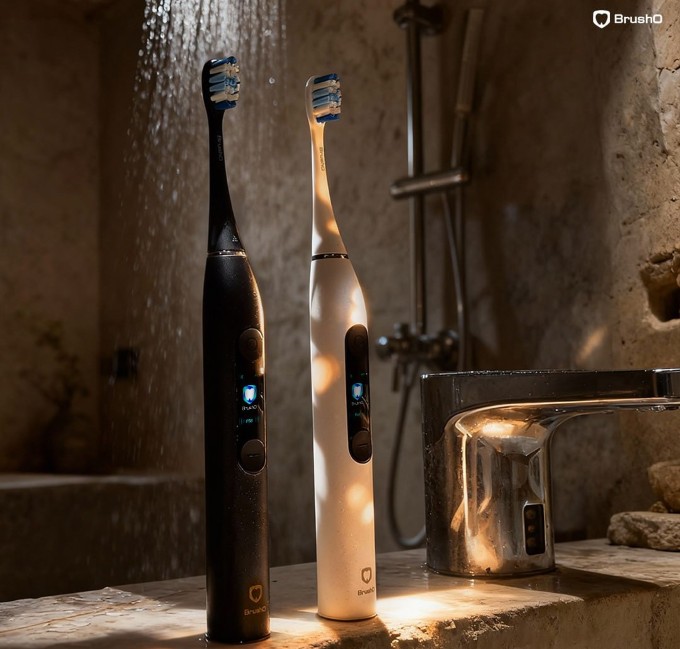
When your mouth feels fresh, you naturally feel more confident in conversations, social interactions, and even virtual meetings. Clean teeth and fresh breath reduce self-consciousness, allowing you to express yourself more freely and authentically. With BrushO’s smart feedback system, users are guided to brush thoroughly across all 16 surfaces in the mouth, ensuring every smile feels—and smells—clean.
Daily routines bring structure, and structured routines can reduce anxiety. Brushing your teeth with BrushO becomes a mindful, calming ritual rather than a rushed obligation. The soothing vibration, guided feedback, and visual app support help users slow down and focus, which contributes to a clearer and calmer mental state.
• The 2-minute brushing session becomes a grounding practice.
• Real-time feedback removes second-guessing and promotes control.
• Gamified rewards and reports bring a sense of accomplishment and closure to each day.
Oral inflammation is closely tied to chronic stress and low-grade inflammation in the brain. Poor oral hygiene can increase systemic inflammation, which may influence mental health conditions such as:
• Brain fog
• Depression
• Low energy
• Irritability
By consistently cleaning plaque and bacteria with BrushO’s AI-optimized pressure control, users can reduce oral inflammation—potentially lowering physiological stress markers over time.
There’s psychological power in small wins. When users consistently brush well—especially when they can track progress via the BrushO app—they build a habit loop of:
1. Action (brushing with feedback)
2. Reward (points, visual score, clean feel)
3. Satisfaction (internal validation)
This loop reinforces positive self-image, discipline, and behavioral consistency, which can spill over into other areas of life—such as eating better, sleeping earlier, or exercising regularly.
Children who brush regularly feel more in control of their routines and less anxious about dental visits. With BrushO’s family tracking function, parents can monitor brushing habits and offer gentle encouragement. This creates emotional security for kids while instilling confidence in parents, knowing their child’s oral health is on the right path.
Psychologically, clean sensations are linked to emotional renewal. That’s why people often shower, wash their face, or brush their teeth to “reset” emotionally. Starting or ending your day with BrushO’s cleaning modes + calming vibration feedback helps users feel ready to face the day—or unwind peacefully.
BrushO isn’t just smart—it’s emotionally supportive:
• Visual progress reports for reassurance
• Pressure alerts to prevent overthinking the brushing technique
• Mood-boosting designs with LED lights and celebratory animations
• Sustainable brush head reward system to reinforce feel-good eco behavior
A clean mouth does more than protect your teeth—it clears your mind, boosts your confidence, and helps regulate your mood. With smart features, AI-guided brushing, and gamified motivation, BrushO transforms oral care into a holistic self-care ritual that supports both your physical and mental wellness.
BrushO is a smart electric toothbrush brand that reimagines oral care through AI-powered guidance, real-time feedback, and a personalized brushing experience. Backed by dentists and introduced by Stanford, BrushO is loved by families and wellness-minded individuals who believe that a cleaner mouth leads to a clearer mind.
Jul 30
Jul 30
Jul 29
Jul 22
Jul 19
Jul 17

Fluoride in drinking water is the most cost-effective caries preventive measure in public health, and it is also the source of most avoidable fluoride exposure in young children. The balance between benefit and risk depends on concentration, on total intake from all sources and on the age of the ...

A mouthguard is the only piece of protective equipment that a dentist can prescribe, and the difference between the cheapest and the best version is often less than the cost of a single repair. This guide explains what each type of mouthguard actually protects, how to judge fit, and what to check...

Distinguishing reversible from irreversible pulpitis is the single most consequential decision in endodontic diagnosis, because one leads to a restoration and the other to root canal treatment or extraction. The distinction rests on symptoms and pulp testing rather than on radiographs alone, and ...

A pregnancy epulis is a benign overgrowth of gum tissue that appears during pregnancy, most often in the second or third trimester. It can alarm patients because it grows quickly and bleeds easily, yet in most cases it needs no surgery and settles after delivery. Understanding what drives the gro...

When several teeth are missing, the choice usually narrows to a removable partial denture or a fixed implant-supported restoration, and cost is the factor patients raise first. Upfront price is only part of the comparison, because the two options differ in maintenance, comfort, effects on neighbo...

Most root canal failures are not caused by inadequate cleaning of canals that were found, but by canals that were never located. Molar anatomy varies widely, and the variation is not random: specific teeth in specific populations have predictable additional canals. Knowing where they hide is the ...

Gum massage is one of the oldest recommendations in oral care and one of the least understood. It has been described as a treatment for bleeding gums, a route to firmer tissue and, more recently, a way to reduce brushing force. This article separates the mechanisms that are supported by physiolog...

Interdental cleaning is the part of oral hygiene most people abandon first, and the choice between a floss pick and a length of string floss is often made on convenience. Convenience matters, because a tool that is used daily outperforms a superior tool that stays in the drawer, but the two devic...

Dementia changes the way a denture is worn, cleaned and tolerated, and the people who notice the change first are usually family carers rather than clinicians. Poor denture hygiene in this group is associated with mucosal infection, reduced food intake and, in frail patients, respiratory complica...

Chewing tobacco keeps nicotine and plant irritants in prolonged contact with a small area of mucosa, and the damage that results is concentrated exactly where the quid is held. The lesions that develop are often painless, which is why they are discovered during routine examination rather than bec...

Bàn chải điện BrushO AI cung cấp hướng dẫn chải răng theo thời gian thực, phản hồi lực nhấn, theo dõi vùng chải và báo cáo tiến độ trong ứng dụng cho thói quen hằng ngày sạch hơn.
Bàn chải điện BrushO AI cung cấp hướng dẫn chải răng theo thời gian thực, phản hồi lực nhấn, theo dõi vùng chải và báo cáo tiến độ trong ứng dụng cho thói quen hằng ngày sạch hơn.


Address: RM 1427, 14/F RADIO CITY 505, HENNESSY RD CAUSEWAY BAY, HONG KONG
Code: 000000
Phone: +852-53758652
Email: customerservice@brusho.com