
Jul 30
Jul 30
Jul 29
Jul 22
Jul 19
Jul 17
Dental plaque may be invisible at first, but it plays a central role in nearly every oral health problem—from bad breath and cavities to gum disease and tooth loss. In this article, we’ll explore the science behind plaque formation, how lifestyle choices affect it, and how smart toothbrushes like BrushO help stop plaque before it causes lasting harm. Whether you’re brushing for prevention or recovery, understanding plaque is the foundation of a healthier smile.
Dental plaque is a soft, sticky film that forms on your teeth every single day. It’s made up of:
• Bacteria (especially Streptococcus mutans)
• Saliva proteins
• Food particles and sugars
Plaque begins forming within minutes after brushing and can harden into tartar if not removed within 24–72 hours.
Right after brushing, your teeth are coated by a thin protein layer from your saliva called the acquired pellicle. This layer protects enamel but also creates a surface for bacteria to attach.
Oral bacterial adhere to the pellicle and begin feeding on leftover sugars from food and drinks. They multiply rapidly and produce acids and sticky substances called extracellular polysaccharides.
As the bacteria colony grows, it forms a structured biofilm—what we call plaque. The biofilm becomes increasingly acidic and resistant to removal.
If plaque is not removed in time, it calcifies due to minerals in your saliva, forming tartar (calculus), which can only be removed professionally.
Unchecked plaque leads to:
• Cavities: Acids demineralize enamel and dentin.
• Gum Disease: Bacteria trigger inflammation, bleeding, and gum recession.
• Halitosis: Volatile sulfur compounds from bacterial breakdown cause bad breath.
• Systemic Health Risks: Chronic gum inflammation has been linked to heart disease, diabetes, and even Alzheimer’s.
Plaque tends to accumulate in hard-to-reach areas:
• Between teeth (interdental spaces)
• Along the gumline
• Behind molars
• On tongue surfaces
• Around dental restorations and braces
That’s why traditional brushing habits often leave key areas untreated.
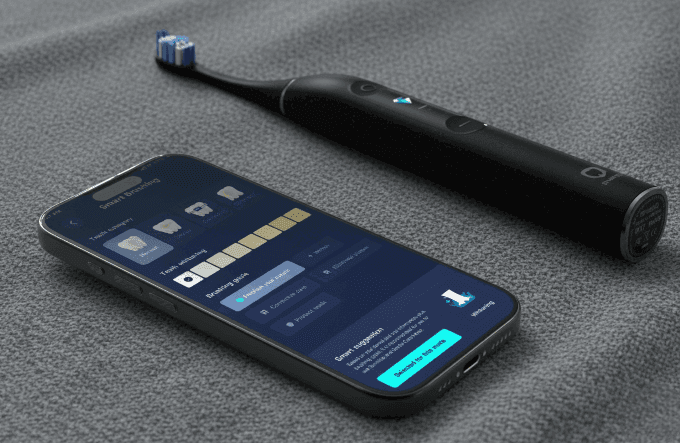
BrushO’s advanced sensors and algorithm analyze:
• Brushing zones (6-zone, 16-surface tracking)
• Coverage (to ensure no area is missed)
• Pressure (to prevent gum and enamel damage)
• Timing (to meet the full 2-minute guideline)
The BrushO app provides real-time feedback and daily brushing scores, making plaque removal more accurate and consistent than ever.
• Floss Daily: Only floss can remove plaque between teeth.
• Use Fluoride Toothpaste: Fluoride strengthens enamel and prevents bacterial acid erosion.
• Brush Before Bed: Saliva flow decreases at night, making plaque more damaging.
• Limit Sugar & Starch Intake: Less fuel for bacteria means slower plaque growth.
• Hydrate Often: Water helps wash away debris and neutralize acids.
• Regular Dental Cleanings: Remove hardened tartar and monitor early signs of buildup.
Unlike manual brushing that relies on guesswork, BrushO uses data to enhance oral hygiene routines. You receive:
• Zone-specific guidance
• Real-time feedback on pressure and duration
• Long-term habit tracking and brushing scores
• Motivation via the BrushO Reward System, turning consistency into redeemable points
Plaque may be invisible, but its impact is very real. Left untreated, it leads to cavities, gum disease, and long-term oral health problems. But with modern smart brushing tools like BrushO, you can disrupt plaque formation early, ensure full-mouth coverage, and protect your smile for life.
Jan 27
Jan 27
Jul 30
Jul 30
Jul 29
Jul 22
Jul 19
Jul 17

Saliva has moved from the byproduct of the examination to the fluid that the modern practice can read, and the diagnostics that the salivary sample supports now reach from the caries risk to the periodontal inflammation and beyond. The fluid is easy to collect, safe to handle, and rich in the pro...

The narrow alveolar ridge is the common obstacle that the implant plan meets in the healed posterior site, and the ridge split technique is the approach that widens the crest without the block graft and the second surgical site. The technique uses the viscoelastic property of the bone, and the co...

The resin-bonded bridge is the conservative alternative to the conventional fixed prosthesis, and its place in the modern practice has widened as the adhesive dentistry matured. The prosthesis replaces the missing tooth with the minimal removal of the enamel from the abutment, and the retention i...

The systemic antibiotic has a defined and a narrow place in the periodontal therapy, and the clinician who respects its limits uses it well while the clinician who reaches for it routinely erodes both the result and the antibiotic stewardship. The mechanical debridement remains the foundation of ...

The bond failure of the bracket is the interruption that the fixed orthodontic treatment can tolerate in the small number but not in the pattern, and the clinician who understands the cause reduces the frequency that the repeated rebonding records. The failure that recurs on the single tooth poin...

The prescription pad is one of the most common sources of the oral complaint that the patient brings to the dental office, and the clinician who does not think of the medication may spend the appointment treating the symptom that the drug created. The list of the agents that affect the mouth grow...

The intraoral scanner has moved from the novelty of the early adopters to the standard equipment of the modern prosthodontic practice, and the comparison with the conventional impression has become a daily question rather than an academic one. The scanner captures the surface of the teeth and the...

The endodontic retreatment is the second chance that the tooth receives when the initial treatment fails to resolve the infection or the symptoms, and the procedure is both more demanding and more rewarding than the primary treatment. The clinician who retreats the tooth encounters the filling ma...

The access preparation is the gateway of every root canal treatment, and it is the step at which the outcome of the case is most often decided, for good or for ill. A well-designed access straightens the canal system, removes the coronal obstruction, and allows the instruments and the irrigants t...

The restoration that the laboratory returns is only as good as the information that the clinician sends, and the communication between the dentist and the technician is the step that determines whether the crown, the veneer, or the bridge meets the expectation of the patient. The shade, the form,...

Bàn chải điện BrushO AI cung cấp hướng dẫn chải răng theo thời gian thực, phản hồi lực nhấn, theo dõi vùng chải và báo cáo tiến độ trong ứng dụng cho thói quen hằng ngày sạch hơn.
Bàn chải điện BrushO AI cung cấp hướng dẫn chải răng theo thời gian thực, phản hồi lực nhấn, theo dõi vùng chải và báo cáo tiến độ trong ứng dụng cho thói quen hằng ngày sạch hơn.


Address: RM 1427, 14/F RADIO CITY 505, HENNESSY RD CAUSEWAY BAY, HONG KONG
Code: 000000
Phone: +852-53758652
Email: customerservice@brusho.com