How Brushing Scores Motivate Better Oral Care
Jan 26

Jan 26
Brushing scores turn oral care into measurable progress. Smart toothbrushes like BrushO leverage AI, sensors, and app feedback to generate personalized brushing scores that educate users on technique, coverage, pressure, and consistency. This measurable feedback motivates users to improve habits, track progress, and build long-term healthy oral care routines. By turning brushing into a data-driven and rewarding experience, brushing scores help users brush better, not just more often.
 

What Are Brushing Scores and Why Do They Matter

Traditional brushing habits often rely on timing alone—most people brush “by feel” without knowing if they are cleaning all surfaces effectively or using proper technique. Research and consumer behavior both show that feedback and measurable outcomes improve habits across many health routines, such as fitness tracking and diet logging. Smart toothbrush technology takes oral hygiene one step further by converting each brushing session into actionable data—brushing scores—that reflect user performance in real time. Unlike manual or basic electric toothbrushes, smart brushes like BrushO’s smart toothbrush analyze brushing technique using advanced Fully Smart Brushing (FSB) technology. This system tracks coverage, pressure, duration, and consistency across zones in your mouth, transforming a routine task into a quantified health activity that encourages improvement and engagement.
 

What Goes Into a Brushing Score

Brushing scores are not arbitrary. They reflect multiple measurable aspects of your brushing behavior:
 
✔ Coverage: Did you reach all 6 zones and 16 surfaces in your mouth?
✔ Duration: Did you meet the dentist-recommended 2-minute brushing time?
✔ Pressure: Were you brushing with healthy pressure—not too hard and not too soft?
✔ Consistency: Are you brushing regularly and forming good habits?
 
Each category contributes to a composite score, giving you a snapshot of how well you take care of your oral health. This score becomes a benchmark—something you can compare daily, weekly, and monthly. Tracking improvements over time highlights progress that would otherwise be invisible with traditional manual brushing.
 

How Brushing Scores Create Motivation

1. Turn Routine Into Measurable Progress

When you see a brushing score after each session, you gain a clear understanding of how effective your oral care was. Seeing measurable progress over time motivates users to do better—not just to brush, but to brush well. This shift from routine to measurable outcome is key to improving habits.
Imagine two users:
  • User A brushes twice a day, but always with poor coverage.
  • User B brushes with full coverage and balanced pressure.
Even if both brush with the same frequency, User B’s brushing scores will be higher, reinforcing good technique and encouraging consistency.

2. Personalized Feedback Turns Data Into Action

Scores alone are informative—but when paired with personalized feedback, they become transformative. Smart toothbrush apps like BrushO’s provide detailed insights such as:
  • Which zones were missed
  • Whether the pressure was too high
  • Where technique needs improvement
This feedback acts as a personal brushing coach, helping users correct mistakes immediately and learn better habits faster.
 

Gamification and Reward Systems Amplify Motivation

Brush & Earn: Motivation With Rewards

BrushO’s unique “Brush & Earn” system ties brushing performance directly to rewards. Users earn points based on their brushing score, which can be redeemed for:
  • Free brush head replacements
  • Product discounts
  • Limited-edition accessories
  • Special perks and challenges
This gamified reward mechanism transforms oral care from a mundane chore into a progress-driven and even enjoyable experience. Instead of brushing because you should, you brush because you want to see progress and earn rewards.
 

Visual Progress and Habit Streaks Drive Consistency

Most humans respond positively to streaks and milestones. When brushing scores are aggregated into:
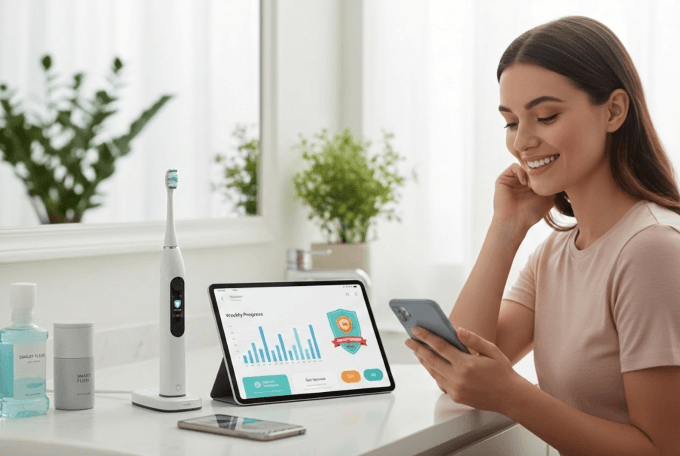
  • Daily progress charts
  • Weekly streaks
  • Long-term trends
Users naturally strive to beat their previous scores and maintain streaks. These visual insights reinforce consistency—one of the most important factors in preventing gum disease, cavities, and other oral issues.
 

Brushing Scores Lead to Better Oral Health Outcomes

Better brushing habits don’t just feel better—they produce real health benefits:
 
✔ Improved plaque removal
✔ Reduced gum irritation and inflammation
✔ Lower risk of cavities and gingivitis
✔ Better coverage of back teeth and gumline
✔ Higher engagement with oral care routines
 
Unlike guesswork brushing, the measurable outcomes from scoring guide users toward clinically meaningful behaviors. Smart toothbrush data turns daily action into better oral health results, validated by improvement in pressure control and coverage metrics that align with dental health recommendations.
 

Brushing Scores Make Oral Care Work for You

Brushing scores are a powerful motivational tool that encourages users to brush more effectively and consistently. By quantifying performance using real-time data and personalized feedback, smart toothbrushes like BrushO transform oral care from a routine chore into a measurable, rewarding, and health-oriented practice. With scores, progress charts, game-like rewards, and actionable insights, users build healthier brushing habits that lead to long-term oral wellness. Brushing your teeth shouldn’t be guesswork. With technology that scores your efforts and motivates improvement, you’re empowered to brush smarter—every time.

Bài viết mới

Teledentistry: Applications, Evidence, and Future Directions

Teledentistry: Applications, Evidence, and Future Directions

Teledentistry—the use of information and communication technologies to deliver dental care, consultation, education, and public health services across geographic distances—has undergone an unprecedented transformation in recent years. While the concept dates to the 1990s, the COVID-19 pandemic catal

Regenerative Endodontics: Stem Cells, Scaffolds, and Clinical Protocols

Regenerative Endodontics: Stem Cells, Scaffolds, and Clinical Protocols

The field of endodontics has undergone a paradigm shift over the past two decades. Traditional root canal therapy, while effective at eliminating infection and preserving teeth, ultimately results in a non-vital tooth that is more brittle and susceptible to fracture. Regenerative endodontics offers

Oral Microbiome: Dysbiosis and Periodontal-Systemic Disease Links

Oral Microbiome: Dysbiosis and Periodontal-Systemic Disease Links

The human oral cavity harbors one of the most diverse and dynamic microbial communities in the body, second only to the gut in complexity. Advances in culture-independent molecular techniques—particularly 16S rRNA gene sequencing and shotgun metagenomics—have transformed our understanding of the ora

Medication-Related Osteonecrosis of the Jaw (MRONJ): Prevention and Management

Medication-Related Osteonecrosis of the Jaw (MRONJ): Prevention and Management

Medication-related osteonecrosis of the jaw (MRONJ) is a serious adverse event characterized by exposed necrotic bone in the maxillofacial region that persists for more than eight weeks in patients with current or previous antiresorptive or antiangiogenic therapy and no history of head and neck radi

Dental Management of Medically Compromised Patients: A Comprehensive Guide

Dental Management of Medically Compromised Patients: A Comprehensive Guide

The dental patient population is aging, and the prevalence of chronic medical conditions continues to rise. The World Health Organization projects that by 2050, the proportion of the global population over 60 years will double from 12% to 22%, with a corresponding increase in the burden of multimorb

Salivary Diagnostics: Biomarkers for Oral and Systemic Disease

Salivary Diagnostics: Biomarkers for Oral and Systemic Disease

Saliva has emerged as a powerful diagnostic fluid that reflects the physiological and pathological state of the body. As an ultrafiltrate of blood, saliva contains a complex mixture of proteins, nucleic acids, metabolites, and microorganisms that originate from multiple sources: salivary glands, gin

Peri-Implantitis: Diagnosis, Risk Factors, and Surgical Management

Peri-Implantitis: Diagnosis, Risk Factors, and Surgical Management

Peri-implantitis has emerged as one of the most significant complications in implant dentistry, affecting an estimated 20% of patients and 10% of implants at the patient and implant levels respectively. As the global population of dental implants grows, the burden of peri-implant disease is expandin

Molar Incisor Hypomineralization (MIH): Diagnosis and Clinical Management

Molar Incisor Hypomineralization (MIH): Diagnosis and Clinical Management

Molar Incisor Hypomineralization (MIH) is a qualitative developmental enamel defect affecting one to four first permanent molars, frequently with concurrent involvement of permanent incisors. First described systematically by Weerheijm and colleagues in 2001, MIH has since been recognized as a globa

Digital Smile Design: Interdisciplinary Aesthetic Treatment Planning

Digital Smile Design: Interdisciplinary Aesthetic Treatment Planning

Digital Smile Design (DSD) has revolutionized aesthetic dentistry by providing a systematic, communication-centered approach to treatment planning. Developed by Dr. Christian Coachman in 2007, DSD integrates facial and dental analysis, intraoral and extraoral digital data, and interdisciplinary coll

3D Printing in Dentistry: Applications, Materials, and Clinical Evidence

3D Printing in Dentistry: Applications, Materials, and Clinical Evidence

Additive manufacturing, commonly known as 3D printing, has transformed dentistry over the past decade from a niche prototyping tool into an integral component of digital workflows. The technology enables the fabrication of surgical guides, dental models, temporary and permanent restorations, denture