
Jul 30
Jul 30
Jul 29
Jul 22
Jul 19
Jul 17
The design of your toothbrush handle—its shape, texture, and grip—directly influences how effectively you brush. A good handle supports better angles, control, and coverage. Most people focus on bristle softness or motor speed when choosing a toothbrush—but overlook the handle grip design. Yet studies show that a poorly designed, slippery, or awkward handle can lead to improper brushing technique, missed surfaces, and even fatigue. In this article, we’ll break down why an ergonomic, non‑slip toothbrush handle matters for brushing quality—and how the smart design of the BrushO handle supports better oral hygiene for all users.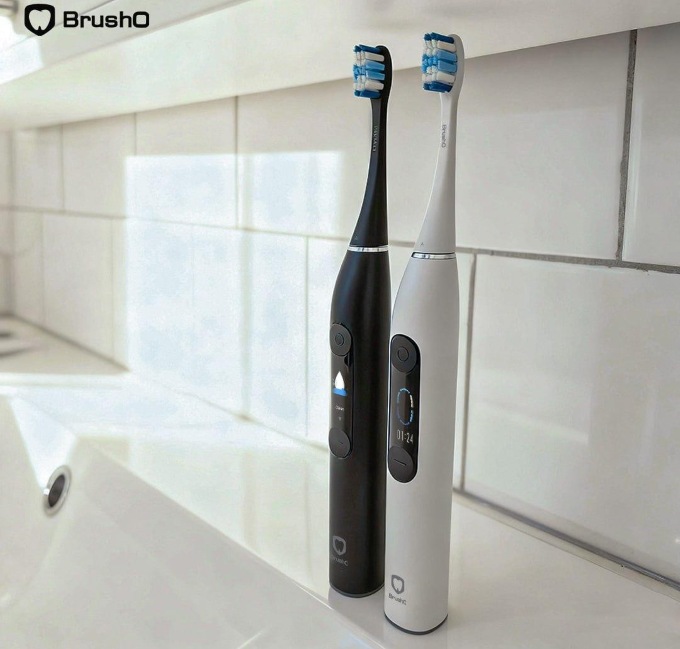
When you think of a toothbrush, you often picture the bristles or the head. But the handle—the part you hold—is where the action really begins. The way you grip the handle affects your angle, pressure, reach, and control during every brushing session. Thus, the handle’s design is far more than aesthetic—it’s functional and influences the outcome of your brushing.
An ergonomic handle is designed to fit your hand and your brushing motion naturally. Research indicates that handle diameter, texture, and balance affect grip comfort and brushing performance. When you have a secure, comfortable handle, you’re more likely to sustain correct brushing motion, cover all zones, and avoid over‑pressure or awkward angles.
Handles with non‑slip textures or ridged surfaces help maintain control, especially when your hand is wet. Many manufacturers now incorporate “no‑slip” grips to prevent slippage that can compromise control.
Studies show that the optimal handle dimensions reduce muscle fatigue and improve brushing outcomes. A handle too thin or too long may force awkward wrist angles, reducing effectiveness and increasing the risk of missing surfaces or brushing inconsistently.
A handle that enables you to naturally hold the brush at a 45° angle—ideal for cleaning the gum‑line—leads to better results. When the grip is comfortable and stable, you can maintain that angle without strain.
When the handle gives you good control, you’re less likely to press too hard—one of the biggest causes of gum recession. A secure grip helps you feel subtle feedback from the brush head, enabling gentler, more effective brushing.
Handles with balanced weight and good grip help you manoeuvre the brush behind molars and along the lower inner surfaces. This is especially helpful for users with braces, crowded teeth, or limited mobility.
For younger users, a thicker or textured handle improves grip and encourages proper technique, making brushing less of a chore and more of a success.
A non‑slip, ergonomic handle is critical for those with hand strength limitations or mobility issues. Good handle design supports independent brushing and reduces the risk of dropping or mis‑handling the toothbrush.
At BrushO, we’ve prioritised grip and control in the handle design:
• Textured, anti‑slip surface that remains steady in wet hands
• Ergonomically balanced weight to reduce wrist fatigue and improve manoeuvrability
• Extended grip zone allowing a stable hold whether you’re brushing in conventional or deep‑clean modes
Together, these features support better brushing technique, improved coverage, and a lower risk of missed zones or gum damage.
Brushing well is not just about bristles or technology—it starts with how you hold the brush. An ergonomic, non‑slip handle supports better angles, steadier pressure, and full‑mouth coverage. Think of it as the foundation of your brushing routine. With BrushO’s well‑designed handle, you’re not only getting smart features and powerful cleaning—you’re getting superior control that yields better results.
BrushO is a next‑generation AI‑powered smart toothbrush brand committed to improving daily oral care through precision design, intelligent features, and user‑centred engineering. With a handle crafted for comfort and control, BrushO helps users brush smarter, longer, and more effectively.
Jul 30
Jul 30
Jul 29
Jul 22
Jul 19
Jul 17

Hyperdontia is the presence of one or more teeth in excess of the normal dental formula, and the resulting teeth are described as supernumerary. The condition is common enough to appear in routine practice but variable enough in presentation that the decision to intervene is rarely straightforwar...

Few patients complete orthodontic treatment without asking whether their teeth will move back. The honest answer is that they will, to some degree, in the majority of cases. Relapse is not a failure of treatment but a predictable biological response, and understanding why it happens is the basis ...

The mandible is the largest and most frequently fractured bone of the facial skeleton, and its management sits at the interface between trauma surgery and restorative dentistry. Treatment has shifted over four decades from prolonged maxillomandibular fixation towards rigid internal fixation with ...

Chronic liver disease affects hundreds of millions of people worldwide, and its prevalence continues to rise with the epidemic of metabolic liver disease. The liver is central to haemostasis, drug metabolism and immune competence, and its failure therefore alters the risk profile of almost every ...

Excessive gingival display, commonly described as a gummy smile, is one of the most frequent aesthetic concerns presented to dental practitioners. The condition is not a single entity but a clinical presentation that can arise from skeletal, gingival, muscular or dental factors, and the treatment...

Drug-induced gingival overgrowth is a well-recognised adverse effect of several widely prescribed medications, and it remains one of the most common drug-related findings in periodontal practice. The condition produces firm, fibrous enlargement of the gingiva that can interfere with speech, masti...

Denture stomatitis is an inflammatory condition of the denture-bearing mucosa that affects a large proportion of removable prosthesis wearers, yet it is frequently dismissed as a cosmetic annoyance. The condition is driven by a Candida biofilm on the fitting surface of the prosthesis, and it is m...

Chronic kidney disease affects an estimated 850 million people worldwide, and the number of patients surviving on dialysis or with a renal transplant continues to rise. These patients carry an oral disease burden that is substantially higher than that of the general population, and their medical ...

Angular cheilitis is an inflammatory lesion of the labial commissures that presents with erythema, fissuring and crusting at the corners of the mouth. It is one of the most common conditions encountered in general dental practice, yet it is frequently treated as a simple fungal infection and allo...

Adverse reactions to dental materials are uncommon but they are not rare, and they are frequently misdiagnosed because the oral mucosa responds to allergens in a limited number of ways. A burning sensation, a persistent ulcer or an unexplained area of erythema may all represent a hypersensitivity...

แปรงสีฟันไฟฟ้า BrushO AI ให้คำแนะนำการแปรงแบบเรียลไทม์ ฟีดแบ็กแรงกด การติดตามพื้นที่แปรง และรายงานความคืบหน้าในแอป เพื่อกิจวัตรประจำวันที่สะอาดขึ้น
แปรงสีฟันไฟฟ้า BrushO AI ให้คำแนะนำการแปรงแบบเรียลไทม์ ฟีดแบ็กแรงกด การติดตามพื้นที่แปรง และรายงานความคืบหน้าในแอป เพื่อกิจวัตรประจำวันที่สะอาดขึ้น


Address: RM 1427, 14/F RADIO CITY 505, HENNESSY RD CAUSEWAY BAY, HONG KONG
Code: 000000
Phone: +852-53758652
Email: customerservice@brusho.com